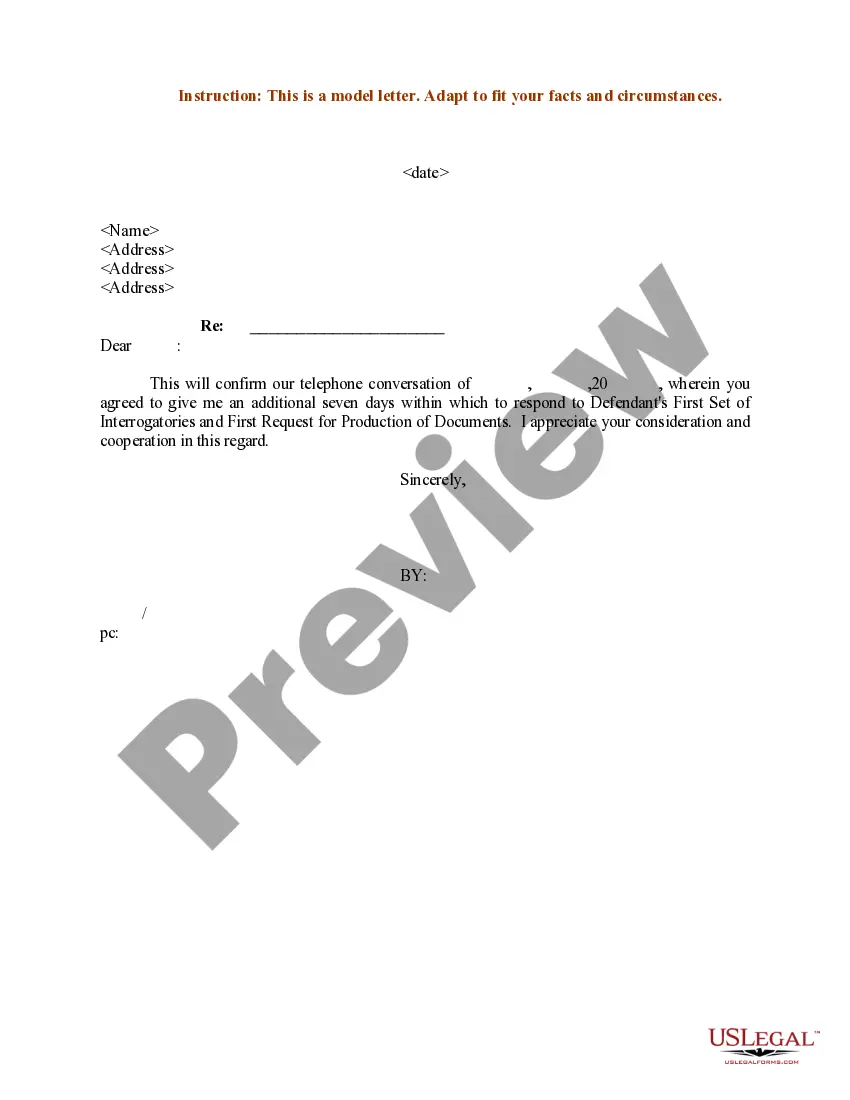
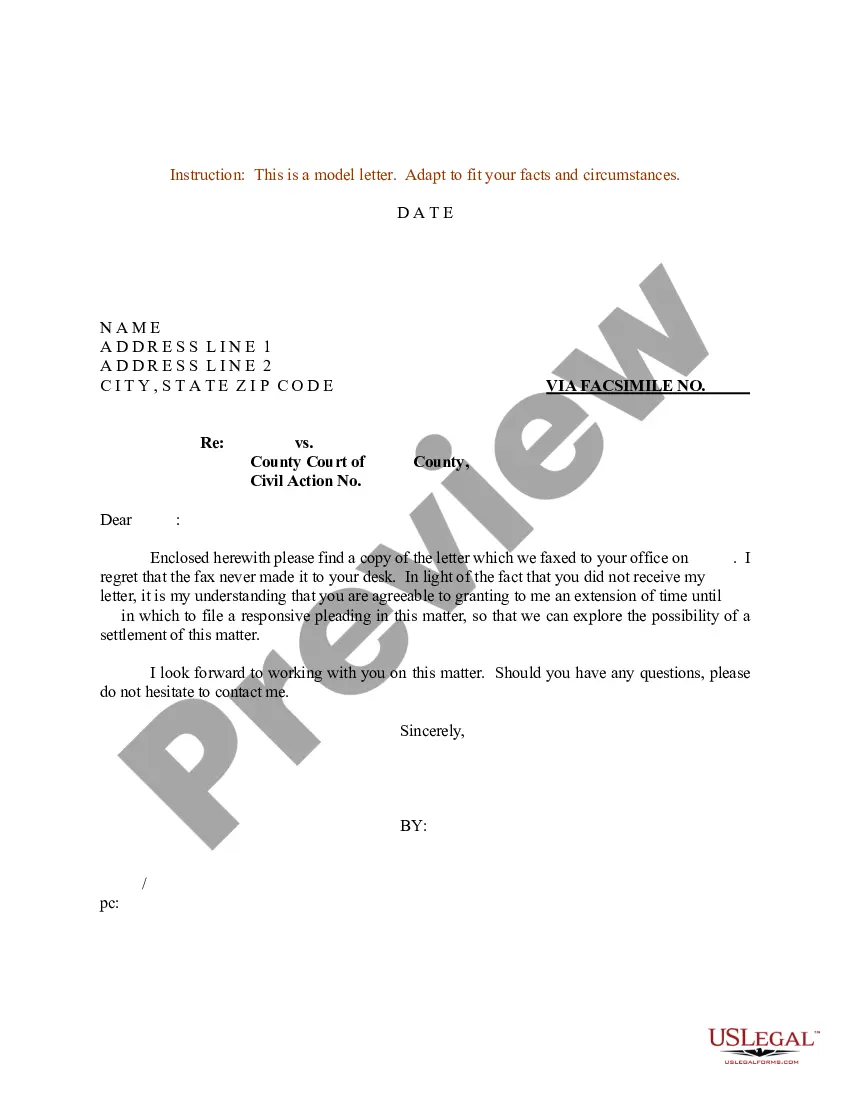
Confirmation Letter Example With Address In Ohio
Description


Get your form ready online
Our built-in tools help you complete, sign, share, and store your documents in one place.
Make edits, fill in missing information, and update formatting in US Legal Forms—just like you would in MS Word.
Download a copy, print it, send it by email, or mail it via USPS—whatever works best for your next step.
Sign and collect signatures with our SignNow integration. Send to multiple recipients, set reminders, and more. Go Premium to unlock E-Sign.
If this form requires notarization, complete it online through a secure video call—no need to meet a notary in person or wait for an appointment.
We protect your documents and personal data by following strict security and privacy standards.

Make edits, fill in missing information, and update formatting in US Legal Forms—just like you would in MS Word.

Download a copy, print it, send it by email, or mail it via USPS—whatever works best for your next step.

Sign and collect signatures with our SignNow integration. Send to multiple recipients, set reminders, and more. Go Premium to unlock E-Sign.

If this form requires notarization, complete it online through a secure video call—no need to meet a notary in person or wait for an appointment.

We protect your documents and personal data by following strict security and privacy standards.
Looking for another form?








Form popularity
FAQ
If you don't have utility bills in your name, official government documents like tax notices or voter registration letters can work as well. Additionally, you can request a proof of residency letter from your landlord and notarise it to confirm your residence.
Writing the Letter as a Resident Start with your legal name. Certify your address. State the length of time you've resided at the residence. Include any other residents. Type your oath. Follow with a closing phrase and your name. Sign and date the letter. Create a line for the notary's signature.
Common examples of proof of residency include utility bills, rental agreements, voter registration cards, or government-issued IDs that display your current address.
Some of the most common examples that count as valid proof of address are: Bank statements. Utility bills for gas, electricity, water, internet, etc. Letters from a recognized public authority or public servant/any government-issued correspondence.
To Whom It May Concern, I am writing to confirm that I, Your Full Name, reside at Full Address and have lived here since Move-In Date. This letter serves as proof of residency for the purpose of setting up Utility Name, e.g., electricity, water services.
Example 1: Proof of Residency Letter Sample I am writing to confirm the residency of my relationship to the family member, e.g., daughter, Full Name of the Family Member, at my address. Full Name has been a permanent resident at Full Address of Residence since start date of residency.
A proof of address can be a basic document such as a residence permit or a lease agreement. Alternatively, it can be a document from a reputable service provider, like utility bills, confirming your current address's active use. Tip: “Proof of address” and “proof of residence” are often used interchangeably.
Alternative proof of residence utility bills such as electricity or gas bills, or bills for fixed line telephone, internet or TV. a letter from you GP showing your name, address and dates of attendance. a letter confirming attendance at medical appointments which include your name and address.
Generally, a proof of address can be one of the following documents: Utility bill (such as water, electricity, gas, telephone, or Internet). Driver's licence. Credit card bill, or statement. Bank statement, or reference letter. Mortgage statement, or contract. Letter issued by a public authority (like a courthouse)

