Director Appointment In Egm In Texas
Description

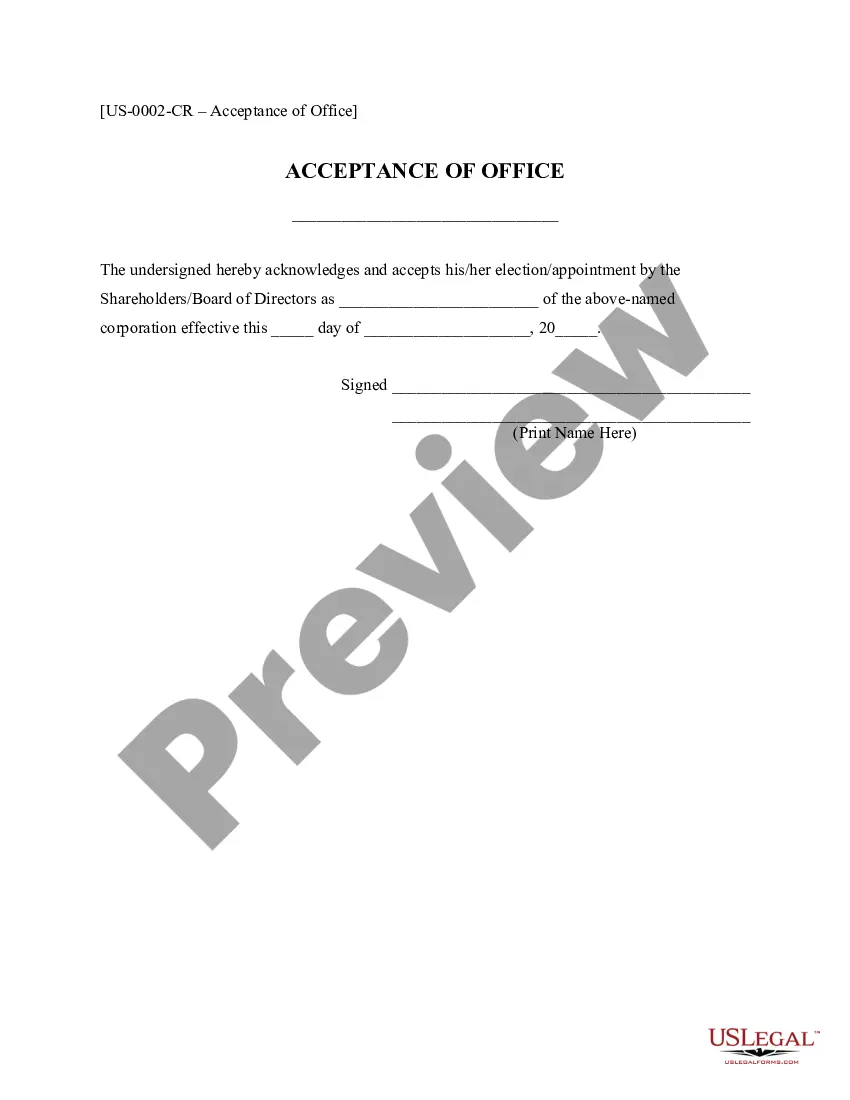

Get your form ready online
Our built-in tools help you complete, sign, share, and store your documents in one place.
Make edits, fill in missing information, and update formatting in US Legal Forms—just like you would in MS Word.
Download a copy, print it, send it by email, or mail it via USPS—whatever works best for your next step.
Sign and collect signatures with our SignNow integration. Send to multiple recipients, set reminders, and more. Go Premium to unlock E-Sign.
If this form requires notarization, complete it online through a secure video call—no need to meet a notary in person or wait for an appointment.
We protect your documents and personal data by following strict security and privacy standards.

Make edits, fill in missing information, and update formatting in US Legal Forms—just like you would in MS Word.

Download a copy, print it, send it by email, or mail it via USPS—whatever works best for your next step.

Sign and collect signatures with our SignNow integration. Send to multiple recipients, set reminders, and more. Go Premium to unlock E-Sign.

If this form requires notarization, complete it online through a secure video call—no need to meet a notary in person or wait for an appointment.

We protect your documents and personal data by following strict security and privacy standards.
Looking for another form?










Form popularity
FAQ
The steps include: Build Relevant Experience. Develop a Strong Professional Network. Develop a Value Proposition. Identify Open Positions. Participate in the Selection Process.
Conduct general meeting If the company decides to appoint a director in the middle of the year, it may appoint a director by passing a resolution in an Extraordinary General Meeting (EGM). In such a case, a company must conduct a board meeting to pass a resolution for conducting an Extraordinary General Meeting (EGM).
How do I appoint a director after company formation? Typically, new director appointments are approved by a resolution of the members at a general meeting or in writing. However, some companies may grant this decision-making power to the board of directors.
The principal types are: Executive Directors. Non-Executive Directors. Independent Directors. Step 1: Reviewing the Articles of Association (AOA) ... Step 2: Resolution at a General Meeting. Step 3: Application for DIN and DSC. Step 4: Obtaining Director's Consent (Form DIR-2) ... Step 5: Issuing the Letter of Appointment.
The principal types are: Executive Directors. Non-Executive Directors. Independent Directors. Step 1: Reviewing the Articles of Association (AOA) ... Step 2: Resolution at a General Meeting. Step 3: Application for DIN and DSC. Step 4: Obtaining Director's Consent (Form DIR-2) ... Step 5: Issuing the Letter of Appointment.
The appointment of directors will usually be covered by the company's articles (or possibly a shareholders' agreement) which may provide for appointment by the board, or by the shareholders via a written resolution or at a general meeting.
Public Comment Period In a typical case, an agency will allow 60 days for public comment. However, in some cases, they provide either shorter or longer comment periods. An agency may receive no comments or as many as thousands of comments or more.
The company may pass a resolution to appoint a director in an Annual General Meeting (AGM). If the company decides to appoint a director in the middle of the year, it may appoint a director by passing a resolution in an Extraordinary General Meeting (EGM).
The law is now codified as part of the Texas Open Meetings Act and protects the right of a “member of the public” to air their concerns at public governmental board meetings as long as those concerns are “regarding an item on the agenda for an open meeting.” The law allows the school board to adopt “reasonable rules,” ...
The Texas bill signed into law in 2021 required social media platforms like X, Facebook, Instagram and YouTube to produce regular reports of removed content, create a complaint system and disclose their content regulation procedures.

