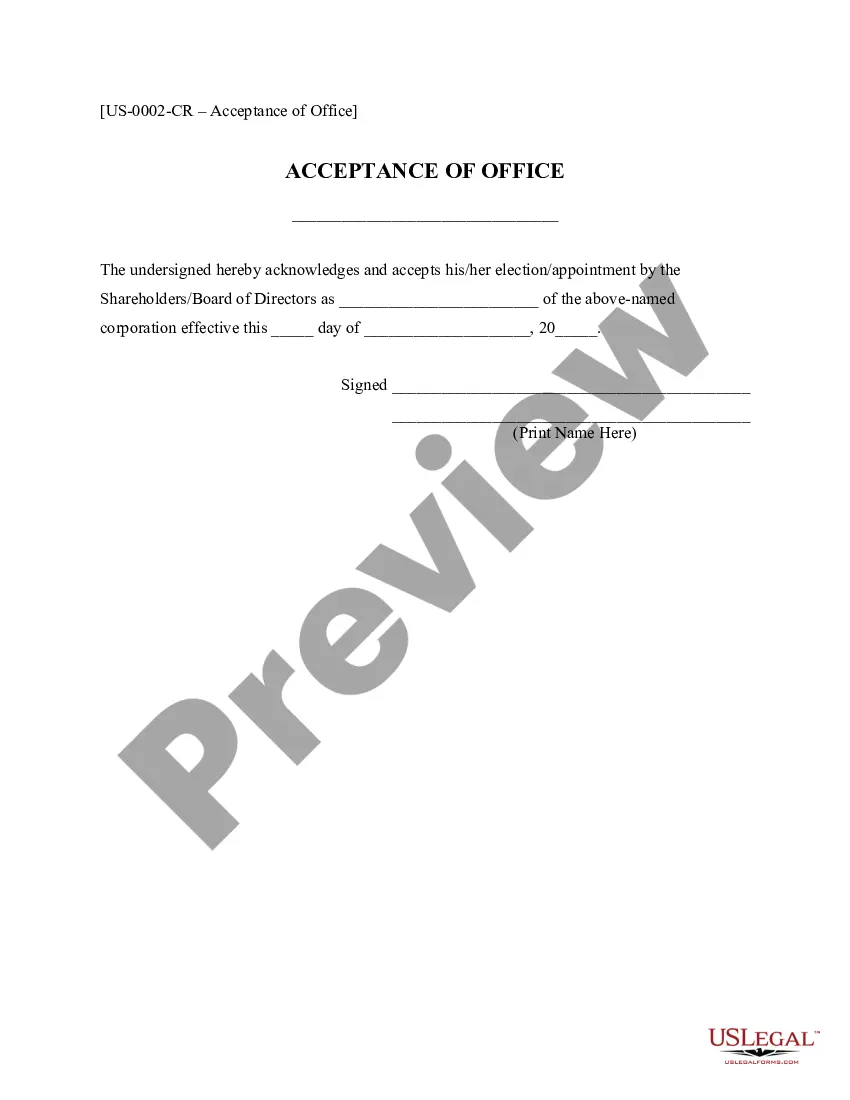
Appointment Of Director Format In Fulton
Description


Get your form ready online
Our built-in tools help you complete, sign, share, and store your documents in one place.
Make edits, fill in missing information, and update formatting in US Legal Forms—just like you would in MS Word.
Download a copy, print it, send it by email, or mail it via USPS—whatever works best for your next step.
Sign and collect signatures with our SignNow integration. Send to multiple recipients, set reminders, and more. Go Premium to unlock E-Sign.
If this form requires notarization, complete it online through a secure video call—no need to meet a notary in person or wait for an appointment.
We protect your documents and personal data by following strict security and privacy standards.

Make edits, fill in missing information, and update formatting in US Legal Forms—just like you would in MS Word.

Download a copy, print it, send it by email, or mail it via USPS—whatever works best for your next step.

Sign and collect signatures with our SignNow integration. Send to multiple recipients, set reminders, and more. Go Premium to unlock E-Sign.

If this form requires notarization, complete it online through a secure video call—no need to meet a notary in person or wait for an appointment.

We protect your documents and personal data by following strict security and privacy standards.
Looking for another form?







Form popularity
FAQ
What is required for a person to be appointed as a director? The individual must consent in the prescribed form (Form 18) to be a director and certify that they are not disqualified from being appointed or holding office as a director.
A company can seek approval from Central Government through 'MR-2' webform for approval of appointment of managing director or whole-time director or manager in certain special circumstances as mentioned in Schedule V of the Companies Act, 2013.
Section 152. Appointment of directors | Companies Act Integrated Ready Reckoner|Companies Act 2013|CAIRR.
Passing ordinary resolutions within a company is governed by the Companies Act, of 2013. Section 114 of the Act specifies the matters requiring ordinary resolutions and include the appointment of directors, approval of financial statements, declaration of dividends, and so on.
Who appoints directors? Most commonly, directors are appointed by the shareholders at the Annual General Meeting (AGM), or in extreme circumstances, at an Extraordinary General Meeting (EGM). A resolution for the appointment is put to a vote, and passed if a majority of shares are voted in favour.
What are the forms to be filed for adding a new director to a company? MGT-14 – Resolution passed in the general meeting regarding the appointment of the director. DIR-2 – Consent received by the proposed director to hold the position of a director in the company. DIR-12 – Particulars of appointment of the director.
I write to confirm your appointment as a director of name of co-operative with effect from date. This letter is intended to inform you of a number of important formal matters connected with your appointment, and accompanies an induction pack which provides more detail to assist you in your new role.
Most commonly, directors are appointed by the shareholders at the Annual General Meeting (AGM), or in extreme circumstances, at an Extraordinary General Meeting (EGM). A resolution for the appointment is put to a vote, and passed if a majority of shares are voted in favour.
A resolution for the appointment is put to a vote, and passed if a majority of shares are voted in favour. Directors are appointed when the company is first formed, if it is bought or sold (e.g. when buying a shelf company), on changes of control by shareholders, or to bring in new experience to a growing business.
A company must file the following forms with the ROC to add a new director: MGT-14 – Resolution passed in the general meeting regarding the appointment of the director. DIR-2 – Consent received by the proposed director to hold the position of a director in the company. DIR-12 – Particulars of appointment of the ...

