Director Appointment Without Din In Allegheny
Description

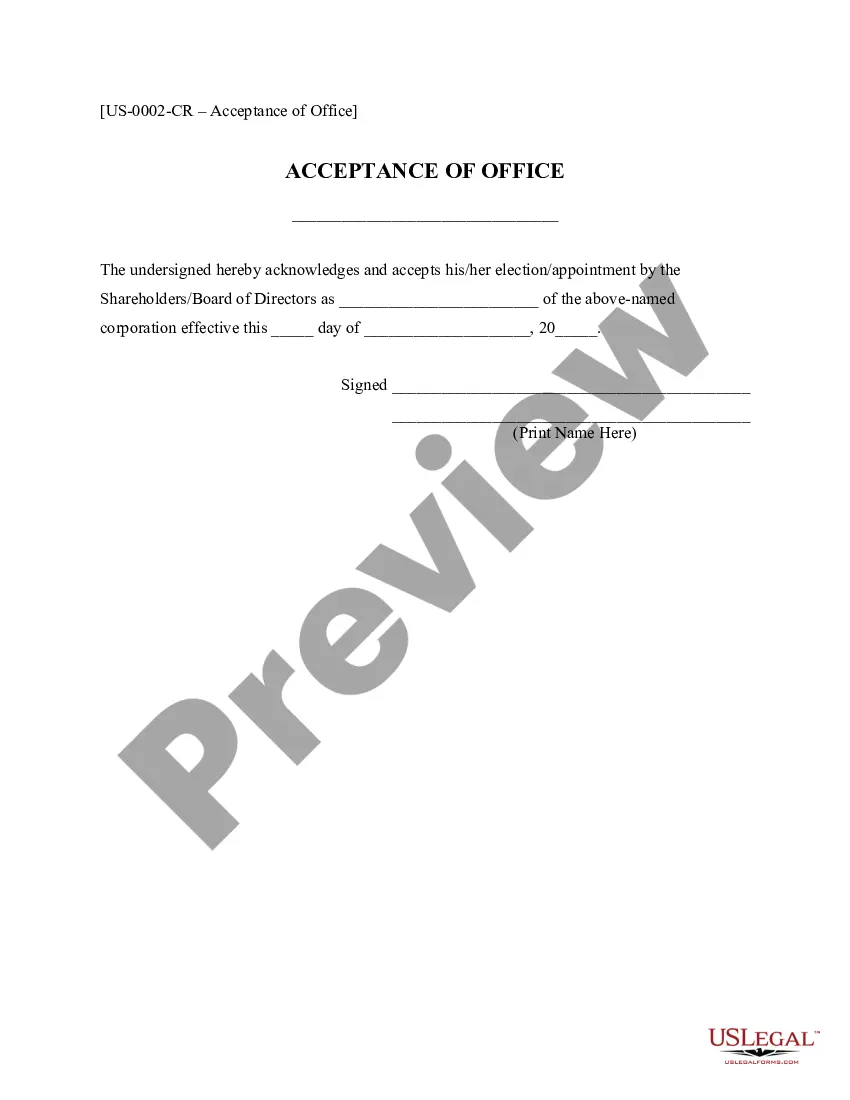

Get your form ready online
Our built-in tools help you complete, sign, share, and store your documents in one place.
Make edits, fill in missing information, and update formatting in US Legal Forms—just like you would in MS Word.
Download a copy, print it, send it by email, or mail it via USPS—whatever works best for your next step.
Sign and collect signatures with our SignNow integration. Send to multiple recipients, set reminders, and more. Go Premium to unlock E-Sign.
If this form requires notarization, complete it online through a secure video call—no need to meet a notary in person or wait for an appointment.
We protect your documents and personal data by following strict security and privacy standards.

Make edits, fill in missing information, and update formatting in US Legal Forms—just like you would in MS Word.

Download a copy, print it, send it by email, or mail it via USPS—whatever works best for your next step.

Sign and collect signatures with our SignNow integration. Send to multiple recipients, set reminders, and more. Go Premium to unlock E-Sign.

If this form requires notarization, complete it online through a secure video call—no need to meet a notary in person or wait for an appointment.

We protect your documents and personal data by following strict security and privacy standards.
Looking for another form?
Form popularity
FAQ
The appointment or reappointment of such Directors falls under ordinary business. Appointment of the auditors and fixing of their remunerations: The shareholders approve the appointment of Statutory Auditors and fix their remuneration.
Appointed Directors means any Director not elected by the Owners.
Most commonly, directors are appointed by the shareholders at the Annual General Meeting (AGM), or in extreme circumstances, at an Extraordinary General Meeting (EGM). A resolution for the appointment is put to a vote, and passed if a majority of shares are voted in favour.
Section 149(1) of the Companies Act, 2013 requires that every company shall have a minimum number of 3 directors in the case of a public company, two directors in the case of a private company, and one director in the case of a One Person Company. A company can appoint maximum 15 fifteen directors.
Procedure for Director Appointment or Addition in a Company Step 1: Reviewing the Articles of Association (AOA) ... Step 2: Resolution at a General Meeting. Step 3: Application for DIN and DSC. Step 4: Obtaining Director's Consent (Form DIR-2) ... Step 5: Issuing the Letter of Appointment. Step 6: Regulatory Filings with the ROC.
What are the forms to be filed for adding a new director to a company? MGT-14 – Resolution passed in the general meeting regarding the appointment of the director. DIR-2 – Consent received by the proposed director to hold the position of a director in the company. DIR-12 – Particulars of appointment of the director.
A resolution for the appointment is put to a vote, and passed if a majority of shares are voted in favour. Directors are appointed when the company is first formed, if it is bought or sold (e.g. when buying a shelf company), on changes of control by shareholders, or to bring in new experience to a growing business.
The directors are effectively the agents of the company, appointed by the shareholders to manage the company's day-to-day affairs. The basic rule is that the directors should act together as a board but typically the board may also delegate certain of its powers to individual directors or to a committee of the board.
The concept of a Director Identification Number (DIN) has been introduced for the first time with the insertion of Sections 266A to 266G of Companies (Amendment) Act, 2006. As such, all the existing and intending Directors have to obtain DIN within the prescribed time-frame as notified.

