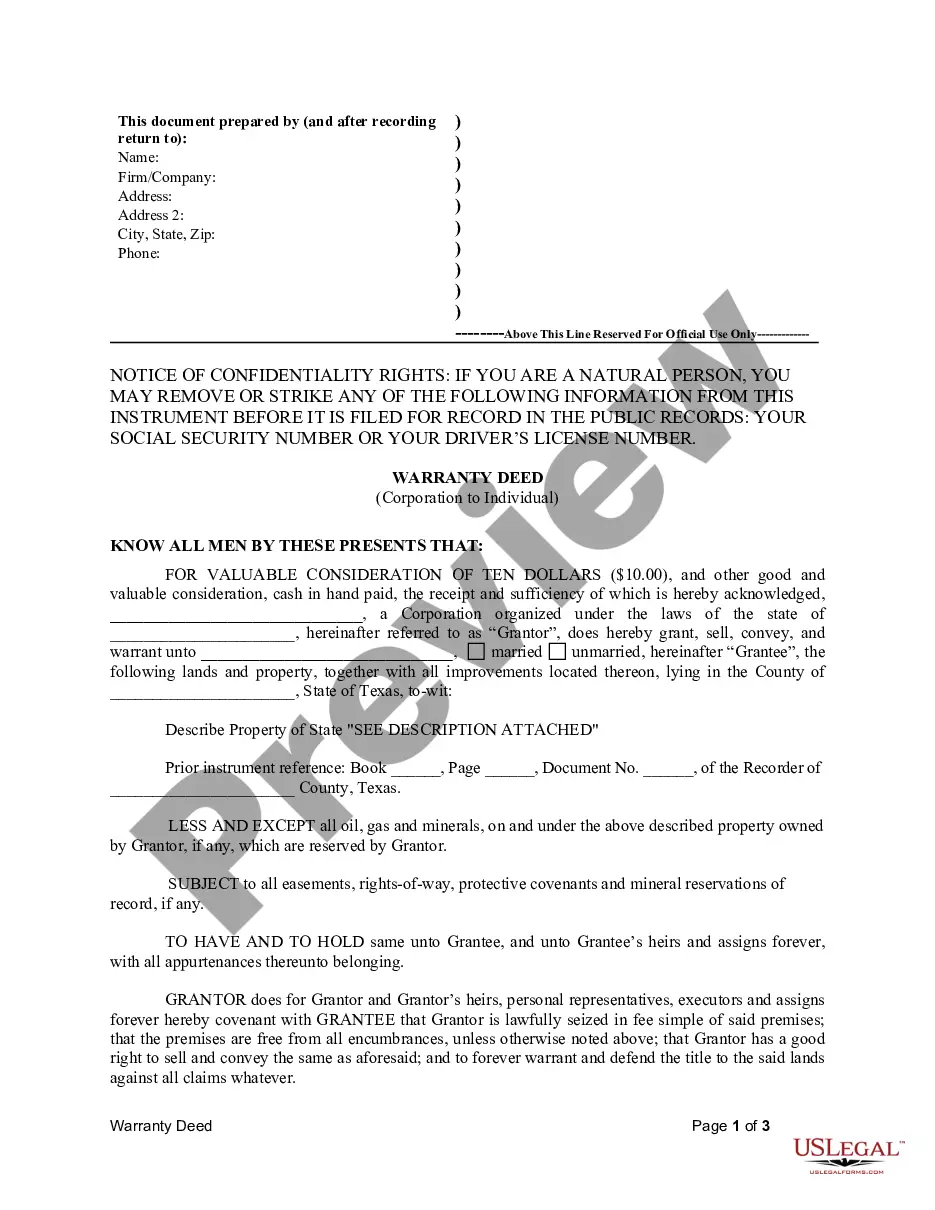
Change Deed Trust With Assignment Of Rents In Tarrant
Description








Get your form ready online
Our built-in tools help you complete, sign, share, and store your documents in one place.
Make edits, fill in missing information, and update formatting in US Legal Forms—just like you would in MS Word.
Download a copy, print it, send it by email, or mail it via USPS—whatever works best for your next step.
Sign and collect signatures with our SignNow integration. Send to multiple recipients, set reminders, and more. Go Premium to unlock E-Sign.
If this form requires notarization, complete it online through a secure video call—no need to meet a notary in person or wait for an appointment.
We protect your documents and personal data by following strict security and privacy standards.

Make edits, fill in missing information, and update formatting in US Legal Forms—just like you would in MS Word.

Download a copy, print it, send it by email, or mail it via USPS—whatever works best for your next step.

Sign and collect signatures with our SignNow integration. Send to multiple recipients, set reminders, and more. Go Premium to unlock E-Sign.

If this form requires notarization, complete it online through a secure video call—no need to meet a notary in person or wait for an appointment.

We protect your documents and personal data by following strict security and privacy standards.
Looking for another form?







Form popularity
FAQ
An assignment in a deed of trust is a legal transfer of the lender's interest in the security instrument (the deed of trust) to a new party (the assignee). The assignor (current lender) transfers all rights, title, and interest in the deed of trust to the assignee, who becomes the new lender of record.
Final answer: The assignment of rents clause primarily benefits the lender or financier in a mortgage arrangement. However, in some situations, tenants can indirectly benefit from the clause by ensuring continuation of essential services.
Final answer: The assignment of rents clause primarily benefits the lender or financier in a mortgage arrangement. However, in some situations, tenants can indirectly benefit from the clause by ensuring continuation of essential services.
The lower prices of rent-controlled apartments make housing affordable to low- and moderate-income people. This is important because in expensive cities, workers' wages often do not keep pace with rising rents.
The assignment of rents clause is a provision in a mortgage or deed of trust. It gives the lender the right to collect rents from mortgaged properties if the borrower defaults. All incomes and rents from a secured property flow to the lender and offset the outstanding debt. Clearly, this benefits the lender.
The beneficiary is the lender. Therefore, the only answer selection that applies is the bank. A clause in a trust deed calling for an assignment of rents most benefits the: beneficiary.
