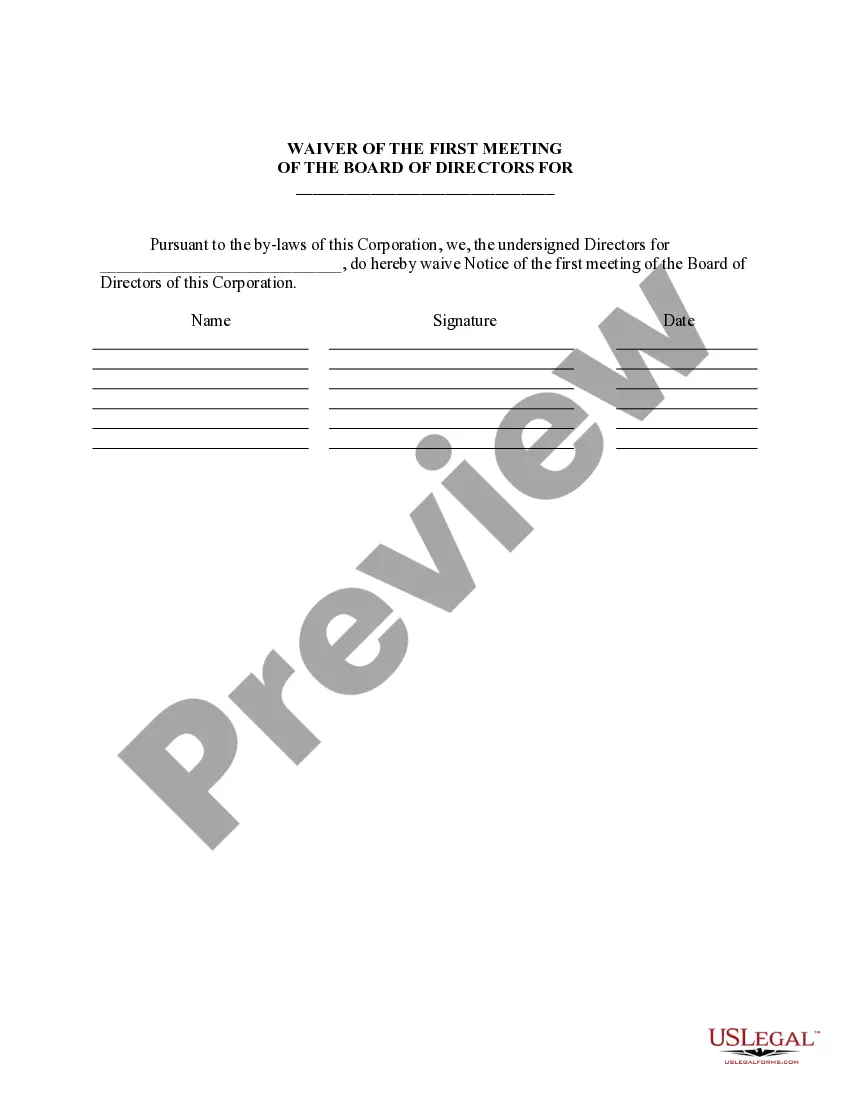
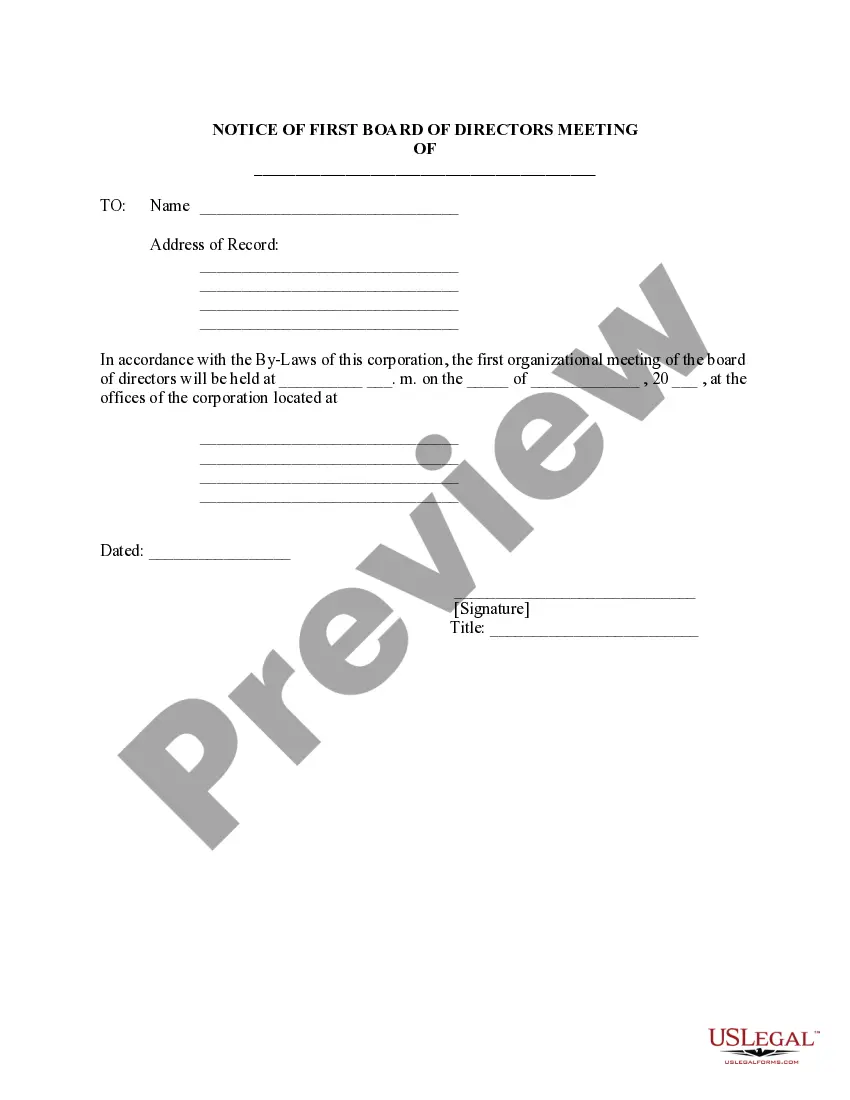
Board Directors Corporate With Shareholders In Virginia
Description


Get your form ready online
Our built-in tools help you complete, sign, share, and store your documents in one place.
Make edits, fill in missing information, and update formatting in US Legal Forms—just like you would in MS Word.
Download a copy, print it, send it by email, or mail it via USPS—whatever works best for your next step.
Sign and collect signatures with our SignNow integration. Send to multiple recipients, set reminders, and more. Go Premium to unlock E-Sign.
If this form requires notarization, complete it online through a secure video call—no need to meet a notary in person or wait for an appointment.
We protect your documents and personal data by following strict security and privacy standards.

Make edits, fill in missing information, and update formatting in US Legal Forms—just like you would in MS Word.

Download a copy, print it, send it by email, or mail it via USPS—whatever works best for your next step.

Sign and collect signatures with our SignNow integration. Send to multiple recipients, set reminders, and more. Go Premium to unlock E-Sign.

If this form requires notarization, complete it online through a secure video call—no need to meet a notary in person or wait for an appointment.

We protect your documents and personal data by following strict security and privacy standards.
Looking for another form?
Form popularity
FAQ
Although shareholders can't amend decisions already made, they can voice approval for specific actions or raise objections that will influence future decisions. If the shareholders disagree with the direction a director is taking the company, they may be able to remove the director from their position on the board.
A board of directors (BofD) is the governing body of a corporation or other organization, whose members are elected by shareholders (in the case of public companies) to set strategy, oversee management, and protect the interests of shareholders and stakeholders. Every public company must have a board of directors.
The Duty of Care Each publicly traded company's Board of Directors has a duty of care to its shareholders. That means that in making business decisions the Board must exercise reasonable care in the decisions that it makes for the company.
Distributions to shareholders. A. The board of directors may authorize and the corporation may make distributions to its shareholders, subject to restriction by the articles of incorporation and the limitation in subsection C.
Who should the board be accountable to? The board should be accountable to shareholders (the owners) regulators, the courts, accreditation bodies, clients, customers, and financial institutions.
While the board of directors is responsible for setting the strategic direction of the company and overseeing management, it is the shareholders who are the ultimate decision-makers. This is because shareholders own the company and have the right to elect the board of directors.
The answer to this question is both yes and no. While every board member is a shareholder, not every shareholder is automatically a board member. Shareholders who own a certain percentage of the company's shares (usually 10 percent or more) are eligible to serve on the board.
An individual can be a shareholder, director and officer in a corporation at the same time. A shareholder who also serves as a director or officer assumes the duties and liabilities of directors and officers while acting as such.
Corporate bylaws are legally required in Virginia. Per VA Code § 13.1-624 (2019), the incorporators or directors of a corporation must adopt initial bylaws. The law doesn't specify when bylaws must be adopted, but usually this happens at the organizational meeting.
When an FTA is issued on an underlying misdemeanor offense such as Reckless Driving, it will be charged as a misdemeanor. Failure to Appear in Virginia is charged under Virginia Code §19.2-128. It is a Class 1 misdemeanor punishable by zero to twelve months in jail and/or a fine of up to $2,500.00.