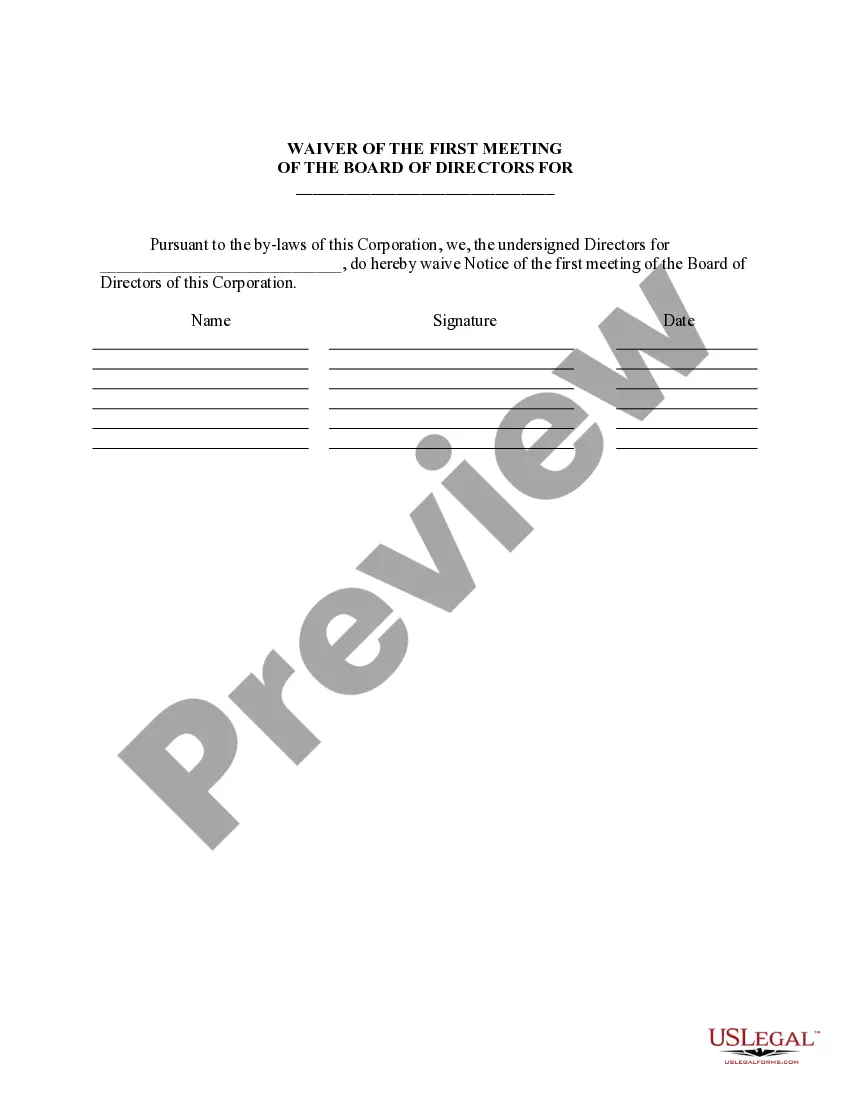
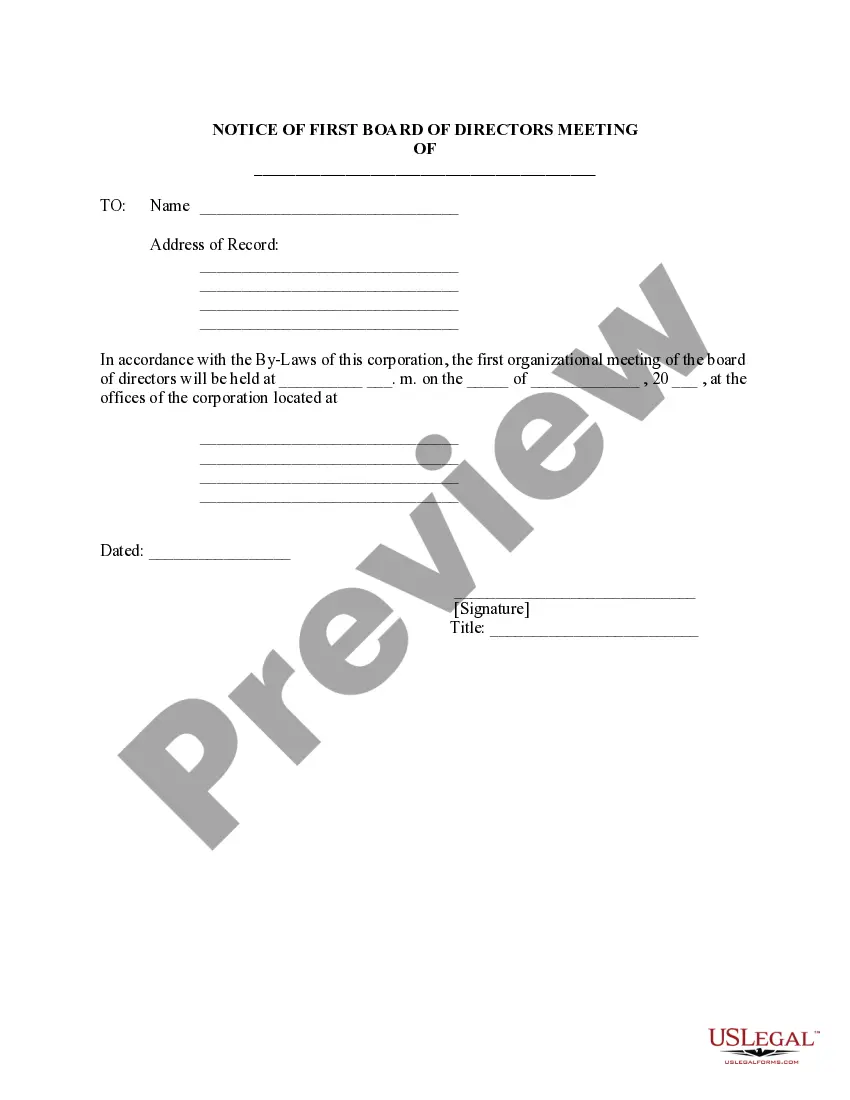
Board Directors Corporate With Shareholders In Tarrant
Description


Get your form ready online
Our built-in tools help you complete, sign, share, and store your documents in one place.
Make edits, fill in missing information, and update formatting in US Legal Forms—just like you would in MS Word.
Download a copy, print it, send it by email, or mail it via USPS—whatever works best for your next step.
Sign and collect signatures with our SignNow integration. Send to multiple recipients, set reminders, and more. Go Premium to unlock E-Sign.
If this form requires notarization, complete it online through a secure video call—no need to meet a notary in person or wait for an appointment.
We protect your documents and personal data by following strict security and privacy standards.

Make edits, fill in missing information, and update formatting in US Legal Forms—just like you would in MS Word.

Download a copy, print it, send it by email, or mail it via USPS—whatever works best for your next step.

Sign and collect signatures with our SignNow integration. Send to multiple recipients, set reminders, and more. Go Premium to unlock E-Sign.

If this form requires notarization, complete it online through a secure video call—no need to meet a notary in person or wait for an appointment.

We protect your documents and personal data by following strict security and privacy standards.
Looking for another form?










Form popularity
FAQ
In most legal systems, the appointment and removal of directors is voted upon by the shareholders in general meeting or through a proxy statement. For publicly traded companies in the U.S., the directors which are available to vote on are largely selected by either the board as a whole or a nominating committee.
The stockholders of a corporation elect the board of directors. The board of directors, in turn, elects the officers of the corporation. The board of directors is responsible for overseeing the management of the corporation and making decisions on major corporatepolicy issues.
The steps include: Build Relevant Experience. Develop a Strong Professional Network. Develop a Value Proposition. Identify Open Positions. Participate in the Selection Process.
So you want to join a board... Step 1: Approach your board search as you would a job search. Bring to the task the same due diligence you would bring to any career move. Step 2: Network, network, network. You'll also need a great network. Step 3: Assess the fit between you and the board.
The answer to this question is both yes and no. While every board member is a shareholder, not every shareholder is automatically a board member. Shareholders who own a certain percentage of the company's shares (usually 10 percent or more) are eligible to serve on the board.
A director is someone elected by the company shareholders to manage the company affairs as per the Memorandum of Association (MOA) and Articles of Association (AOA). The person wishing to be a director must have a Digital Signature Certificate (DSC) and Director Identification Number (DIN).
A public company's board of directors is chosen by shareholders, and its primary job is to look out for shareholders' interests. In fact, directors are legally required to put shareholders' interests ahead of their own.
Typically, a director is (or should be) a shareholder in the company. Directors are appointed, i.e. voted into office, by the shareholders of a company at a properly convened meeting of shareholders.
The Duty of Care Each publicly traded company's Board of Directors has a duty of care to its shareholders. That means that in making business decisions the Board must exercise reasonable care in the decisions that it makes for the company.
Who Should Not Serve On A Board Of Directors? Those Who Lack Objectivity. People Who Are All Talk And No Action. Those Who Are Conflict-Averse. People Who Don't Play Well With Others. Those Who Are Greedy. People Who Are Resistant To Change. People Who Are Not Team Players. People Who Don't Believe in the Mission.