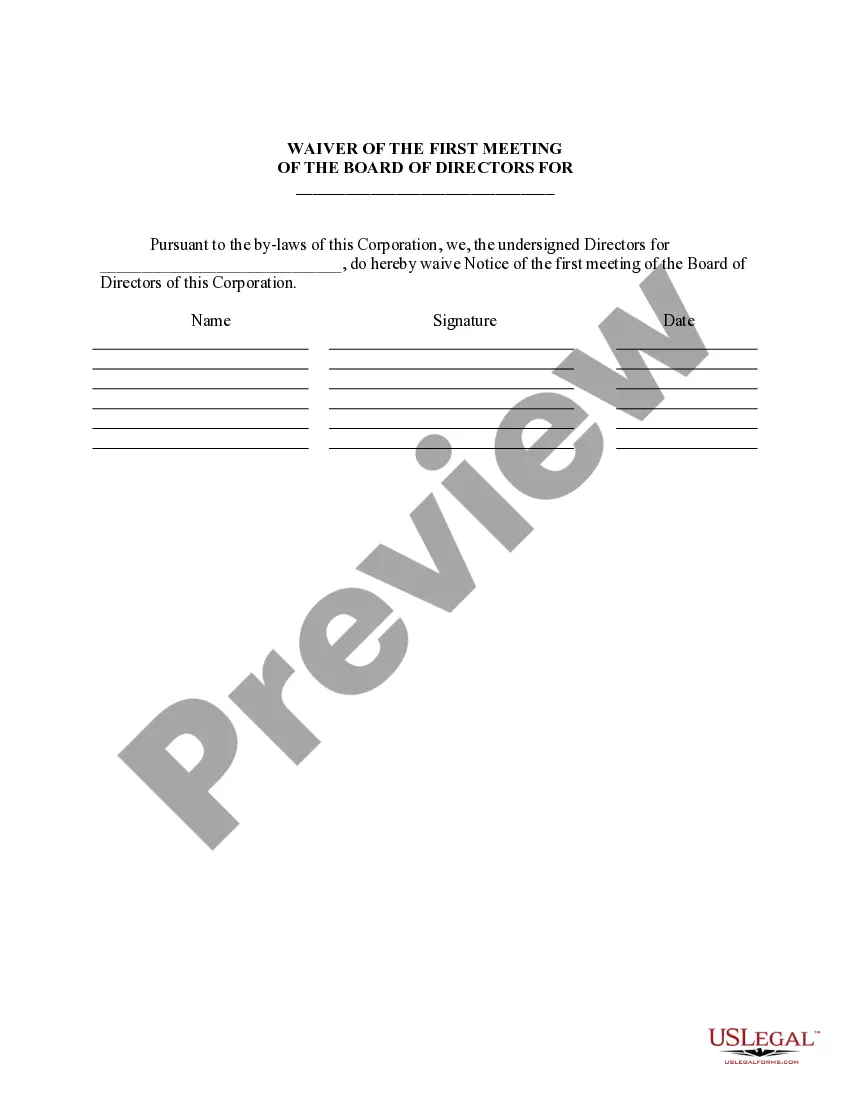
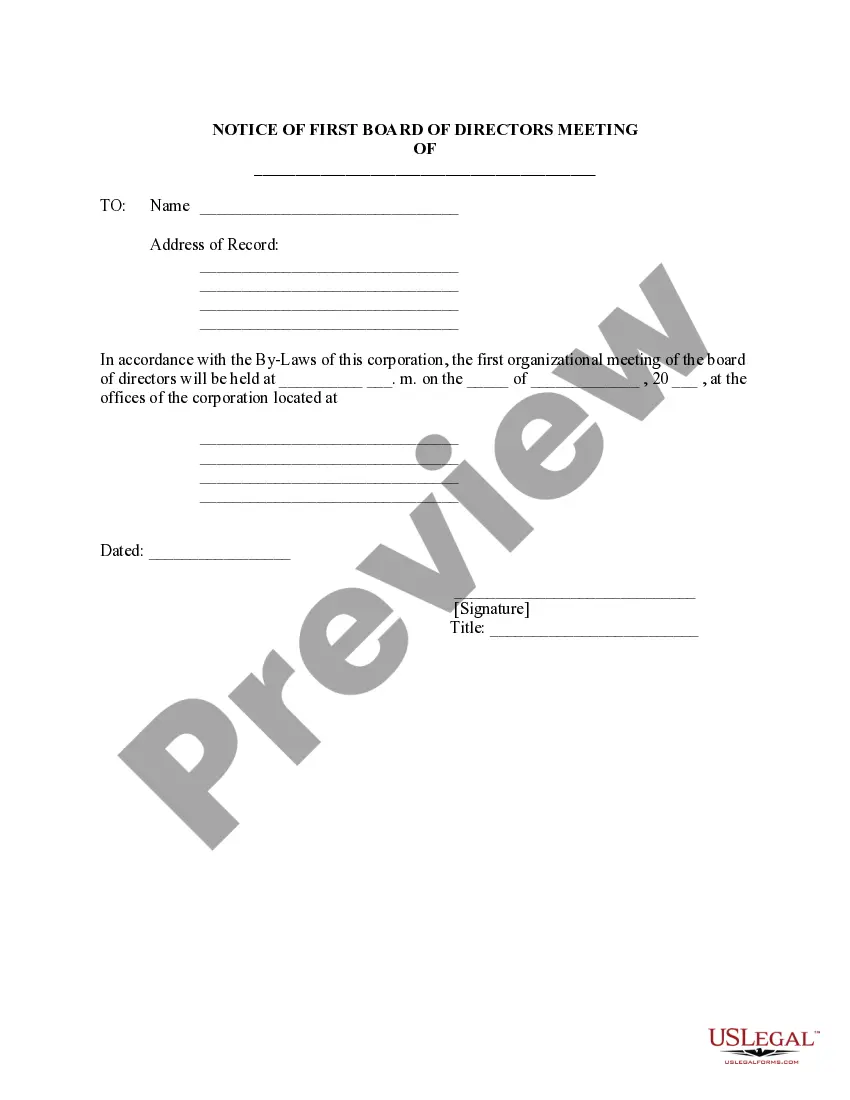
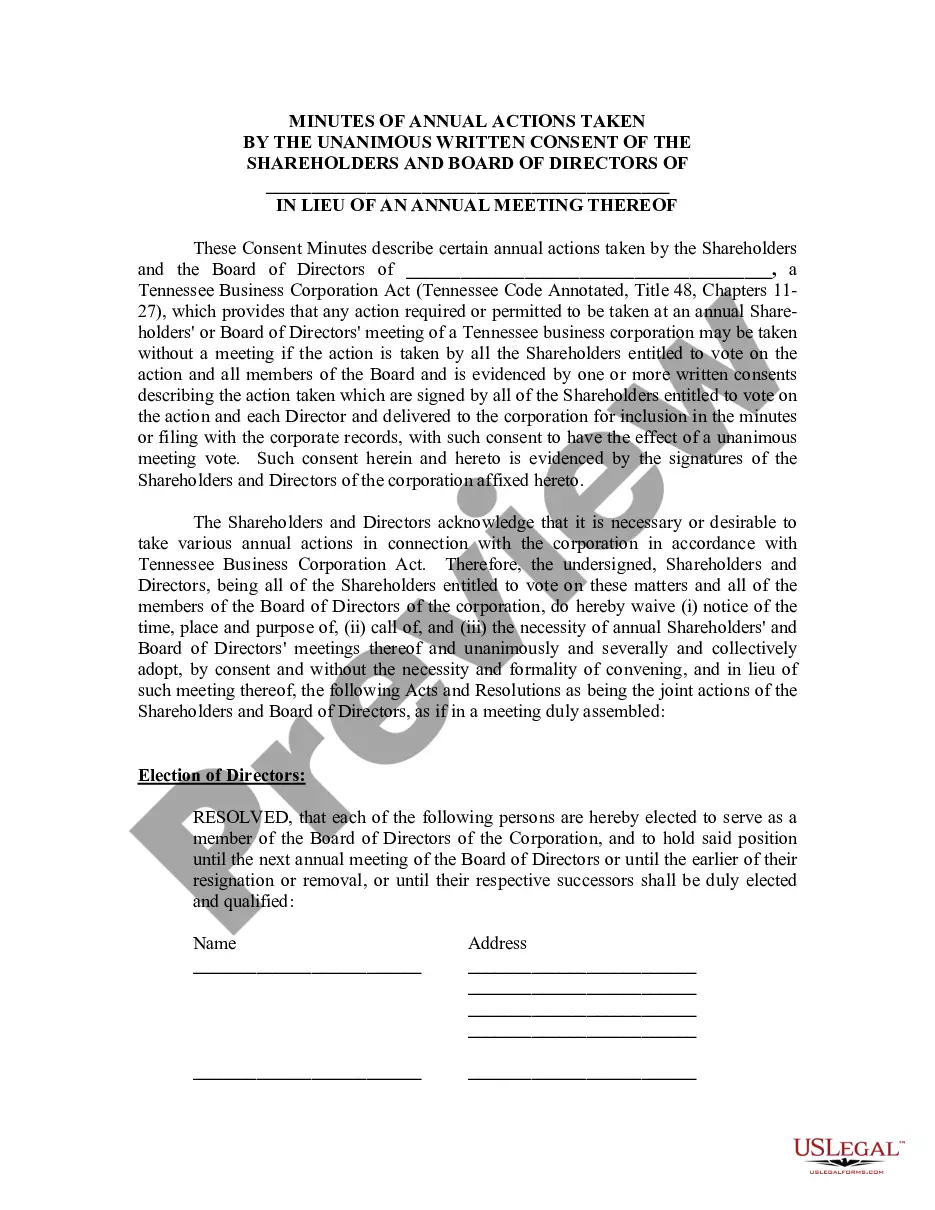
Board Directors Corporate Without In Pennsylvania
Description


Get your form ready online
Our built-in tools help you complete, sign, share, and store your documents in one place.
Make edits, fill in missing information, and update formatting in US Legal Forms—just like you would in MS Word.
Download a copy, print it, send it by email, or mail it via USPS—whatever works best for your next step.
Sign and collect signatures with our SignNow integration. Send to multiple recipients, set reminders, and more. Go Premium to unlock E-Sign.
If this form requires notarization, complete it online through a secure video call—no need to meet a notary in person or wait for an appointment.
We protect your documents and personal data by following strict security and privacy standards.

Make edits, fill in missing information, and update formatting in US Legal Forms—just like you would in MS Word.

Download a copy, print it, send it by email, or mail it via USPS—whatever works best for your next step.

Sign and collect signatures with our SignNow integration. Send to multiple recipients, set reminders, and more. Go Premium to unlock E-Sign.

If this form requires notarization, complete it online through a secure video call—no need to meet a notary in person or wait for an appointment.

We protect your documents and personal data by following strict security and privacy standards.
Looking for another form?


Form popularity
FAQ
How to gain an appointment to a board of directors Select the type of board to serve. Search for openings. Select the right company. Familiarize yourself with the directors. Conduct in-depth research on the board and company. Network at special events. Request an appointment. Craft a high-quality resume or CV for an interview.
The Directors are the individuals who serve on your organization's Board of Directors. The state of Pennsylvania requires a minimum of one director but encourages at least three. If you plan to apply for tax-exempt status with the Internal Revenue Service (IRS), you will need at least three directors.
For a smaller board, the process often involves being interviewed, whereas larger organizations tend to have a more formalized review before nominating someone for a seat. In publicly traded companies, board members are approved by shareholders at the recommendation of management.
If your business is a corporation, then you are required by law to have a board of directors. Depending on your particular corporate structure and your state, one or two directors may be all that's legally required.
The steps include: Build Relevant Experience. Develop a Strong Professional Network. Develop a Value Proposition. Identify Open Positions. Participate in the Selection Process.
Steps in becoming a board member Identify an organization you're interested in serving. If you are already a volunteer in an organization, you might investigate the possibility of joining its board. Contact the organization. Exchange information. Understand the expectations. Moving forward.
Becoming a member of a board of directors requires a combination of relevant experience, a nomination and election process, and adherence to the organization's governance policies. Networking and demonstrating expertise in relevant areas can also enhance one's chances of being considered for a board position.
Start Your Corporate Bylaws StateBylaws Required? Alaska No Arizona Yes Arkansas Yes California No47 more rows
In Pennsylvania, a corporation need not adopt bylaws at its formation, but bylaws are sometimes adopted by the incorporator or board of directors at formation or a later time.
In Pennsylvania, a corporation need not adopt bylaws at its formation, but bylaws are sometimes adopted by the incorporator or board of directors at formation or a later time.