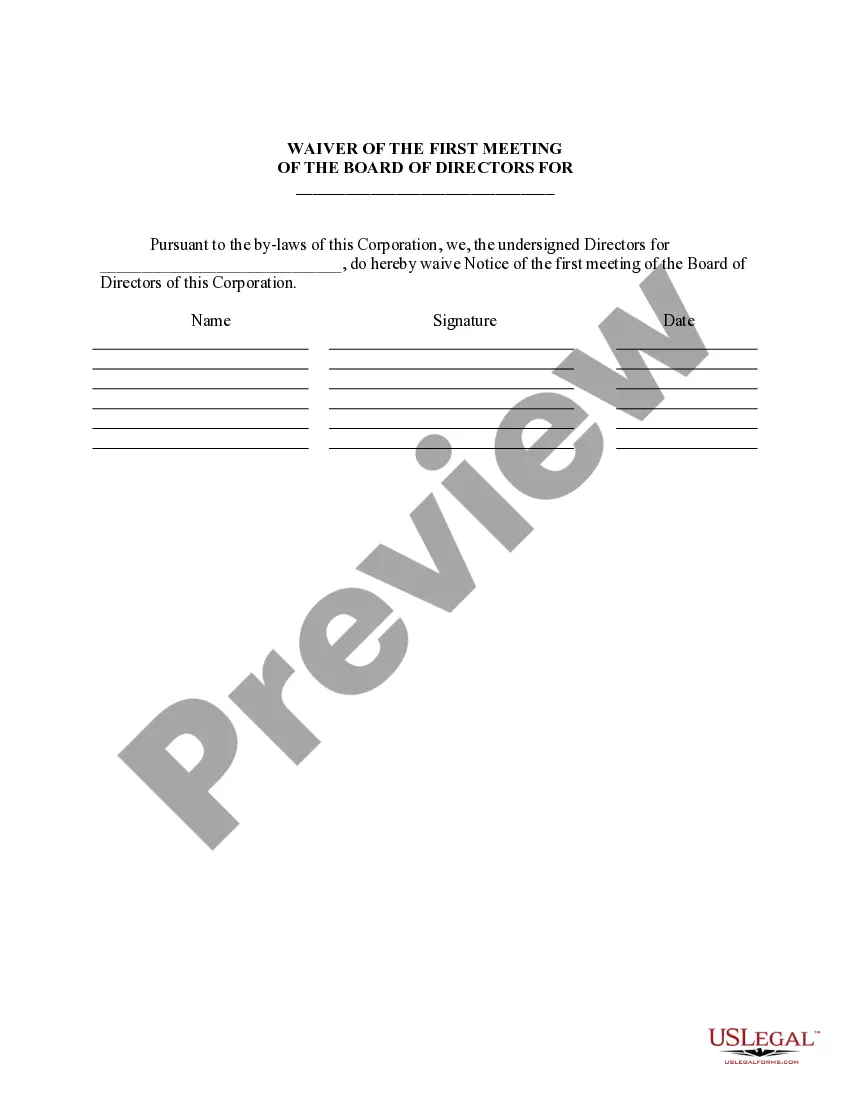
Board Directors Corporate Without In Montgomery
Description
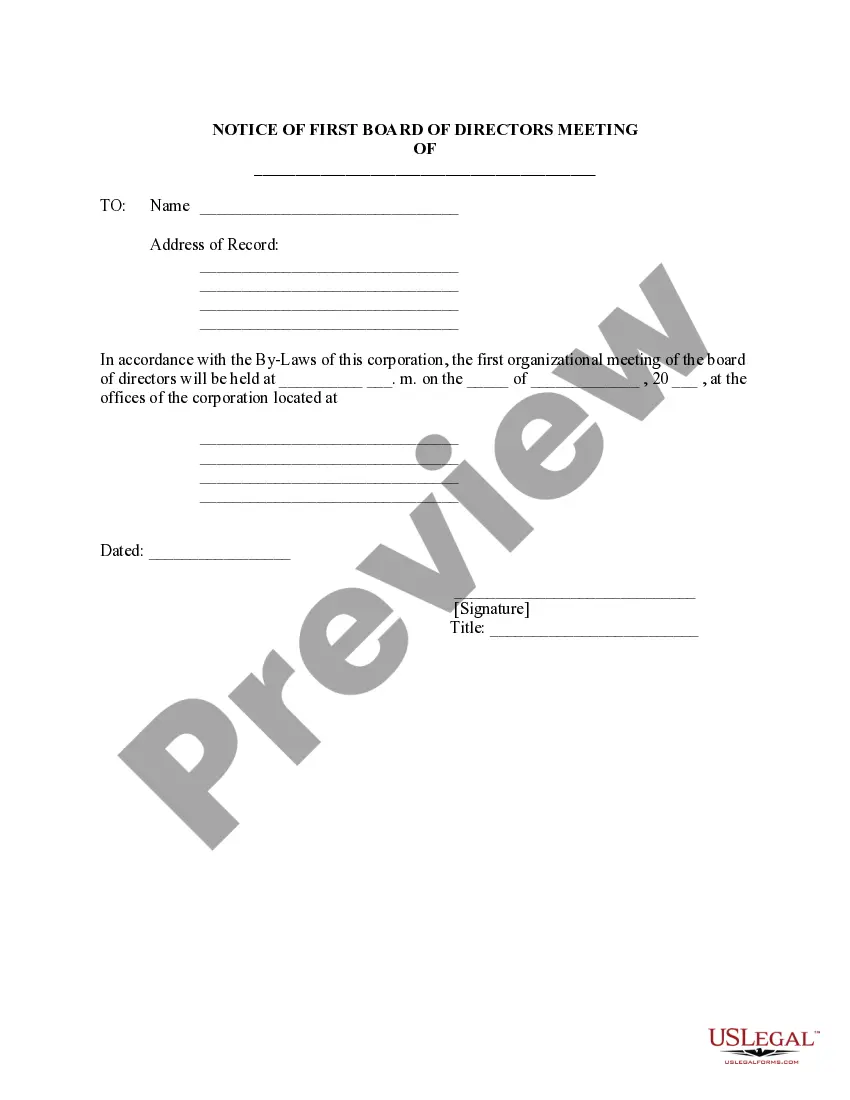


Get your form ready online
Our built-in tools help you complete, sign, share, and store your documents in one place.
Make edits, fill in missing information, and update formatting in US Legal Forms—just like you would in MS Word.
Download a copy, print it, send it by email, or mail it via USPS—whatever works best for your next step.
Sign and collect signatures with our SignNow integration. Send to multiple recipients, set reminders, and more. Go Premium to unlock E-Sign.
If this form requires notarization, complete it online through a secure video call—no need to meet a notary in person or wait for an appointment.
We protect your documents and personal data by following strict security and privacy standards.

Make edits, fill in missing information, and update formatting in US Legal Forms—just like you would in MS Word.

Download a copy, print it, send it by email, or mail it via USPS—whatever works best for your next step.

Sign and collect signatures with our SignNow integration. Send to multiple recipients, set reminders, and more. Go Premium to unlock E-Sign.

If this form requires notarization, complete it online through a secure video call—no need to meet a notary in person or wait for an appointment.

We protect your documents and personal data by following strict security and privacy standards.
Looking for another form?
Form popularity
FAQ
Federal and state-level laws, as well as a company's incorporation documents, require public and private corporations in the U.S. to have boards of directors (BoDs). Although private LLCs do not have the same requirements, some choose to elect a board of directors after incorporating.
The CEO is at the highest position in a company. They head C-level members such as the COO, CTO, CFO, etc. They also rank higher than the vice president and many times, the Managing Director. They only report to the board of directors and the chairperson of the board of directors.
The board of directors is not above the CEO because they are elected by the shareholders. The CEO is responsible for the day-to-day operations of the company and reports to the board of directors. The board of directors has the authority to hire and Fired CEOs, but they cannot tell the CEO what to do on a daily basis.
In some cases, the CEO may be able to effectively control the board of directors and use it to further his own interests rather than those of the shareholders. This can lead to a situation where the CEO is effectively above the board of directors.
Information about members of a company's current board of directors can be found in standard directory resources such as PitchBook, or S&P Capital IQ (see access details). S&P Capital IQ also includes prior board members and the ability to screen for board members by title, board job function or committee assignment.
SUMMARY. While the Chairman technically has higher level powers, the CEO is indeed “the boss” of a company. And yes, the CEO does (by the letter of the law) answer to their board of directors, which is ultimately headed by the chairman.
Chief Executive Officer (CEO): the highest-ranking executive of the corporation responsible for the corporation's operations at every level, the CEO reports directly to the Chairman of the Board.
If your business is a corporation, then you are required by law to have a board of directors. Depending on your particular corporate structure and your state, one or two directors may be all that's legally required.
How to write a board resolution Put the date and resolution number at the top. Give the resolution a title that relates to the decision. Use formal language. Continue writing out each critical statement. Wrap up the heart of the resolution in the last statement.
How to form a board of directors Register articles of incorporation. You must file articles of incorporation in your state to gain legal status as a corporation. Create bylaws. Set up a board of directors agreement. Select your board of directors. Have an initial shareholder meeting.