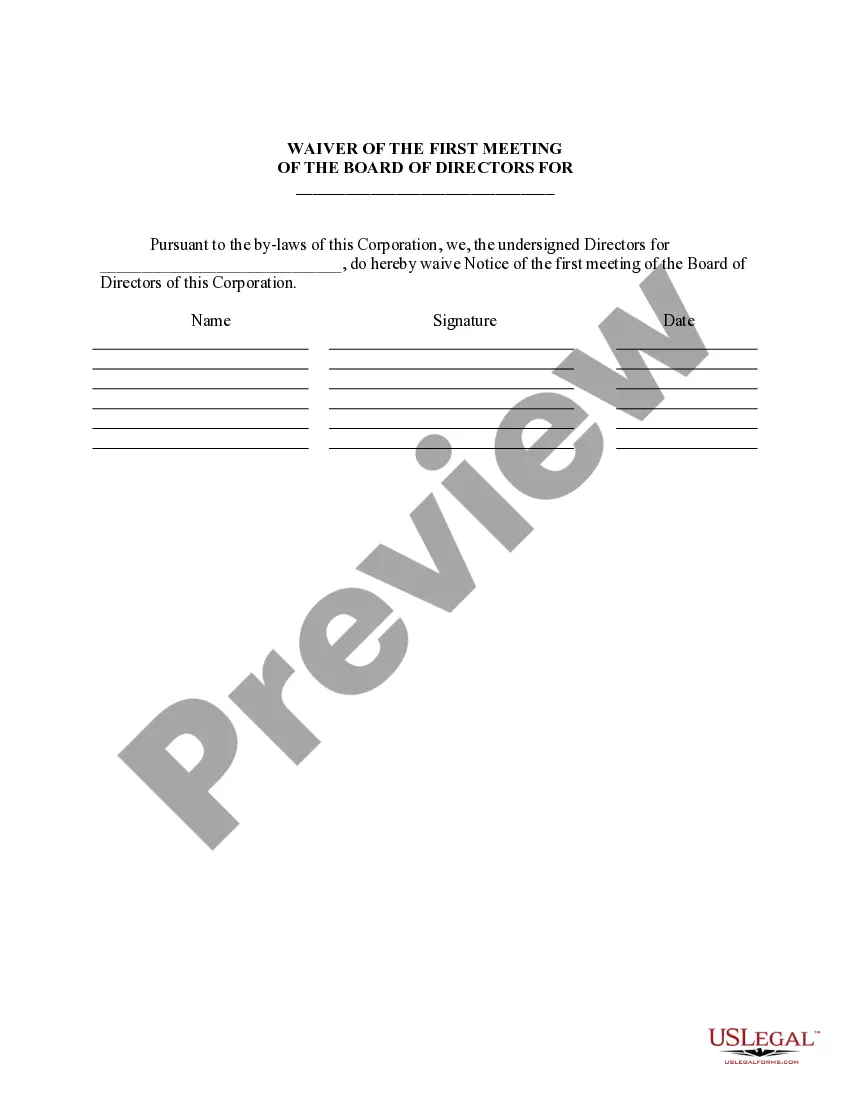
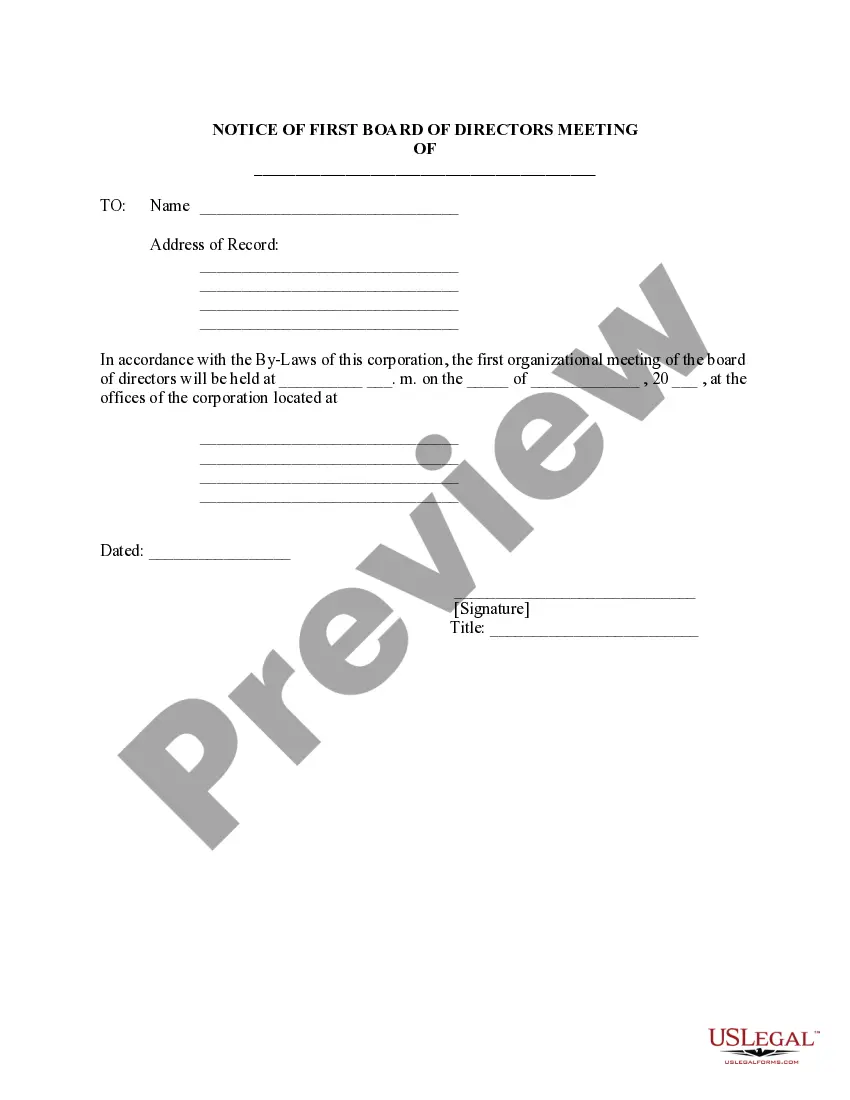
Board Directors Corporate With The Task Of Creating In Minnesota
Description


Get your form ready online
Our built-in tools help you complete, sign, share, and store your documents in one place.
Make edits, fill in missing information, and update formatting in US Legal Forms—just like you would in MS Word.
Download a copy, print it, send it by email, or mail it via USPS—whatever works best for your next step.
Sign and collect signatures with our SignNow integration. Send to multiple recipients, set reminders, and more. Go Premium to unlock E-Sign.
If this form requires notarization, complete it online through a secure video call—no need to meet a notary in person or wait for an appointment.
We protect your documents and personal data by following strict security and privacy standards.

Make edits, fill in missing information, and update formatting in US Legal Forms—just like you would in MS Word.

Download a copy, print it, send it by email, or mail it via USPS—whatever works best for your next step.

Sign and collect signatures with our SignNow integration. Send to multiple recipients, set reminders, and more. Go Premium to unlock E-Sign.

If this form requires notarization, complete it online through a secure video call—no need to meet a notary in person or wait for an appointment.

We protect your documents and personal data by following strict security and privacy standards.
Looking for another form?







Form popularity
FAQ
Minnesota corporate bylaws are rules that define a corporation's internal structure and daily operations. They allow the first board of directors or the incorporators to nominate officers and identify their liabilities, duties, and rights within the corporation.
Yes, it is possible to establish an S-corp as a one-person business. While traditionally S corporations are formed with multiple shareholders, the IRS allows a single individual to set up an S corporation. As an individual, you can be the sole shareholder, director, and employee of the S-corp.
Step 1: Name Your Minnesota LLC. Step 2: Choose a Registered Agent. Step 3: File the Minnesota Articles of Organization. Step 4: Create an Operating Agreement. Step 5: File Form 2553 to Elect Minnesota S Corp Tax Designation.
Step 1: Name Your Minnesota LLC. Step 2: Choose a Registered Agent. Step 3: File the Minnesota Articles of Organization. Step 4: Create an Operating Agreement. Step 5: File Form 2553 to Elect Minnesota S Corp Tax Designation.
Board members are added—and removed—by a vote. For publicly traded companies, shareholders vote for directors, typically during the annual stockholders' meeting.
Minnesota has a 9.8 percent corporate income tax rate. Minnesota also has a 6.875 percent state sales tax rate and an average combined state and local sales tax rate of 8.04 percent.
In the case of corporations, the structure and powers of a board are established by the company's articles of incorporation and its corporate bylaws. Bylaws can set the number of board members, how the board is elected (e.g., by a shareholder vote at an annual meeting), and how often the board meets.
For publicly traded companies, boards typically comprise executive, nonexecutive, and independent directors elected by shareholders. This is known as a one-tier board structure. The board of directors often includes the CEO and sometimes the CFO of the company.
In most legal systems, the appointment and removal of directors is voted upon by the shareholders in general meeting or through a proxy statement. For publicly traded companies in the U.S., the directors which are available to vote on are largely selected by either the board as a whole or a nominating committee.
How to form a board of directors Register articles of incorporation. You must file articles of incorporation in your state to gain legal status as a corporation. Create bylaws. Set up a board of directors agreement. Select your board of directors. Have an initial shareholder meeting.