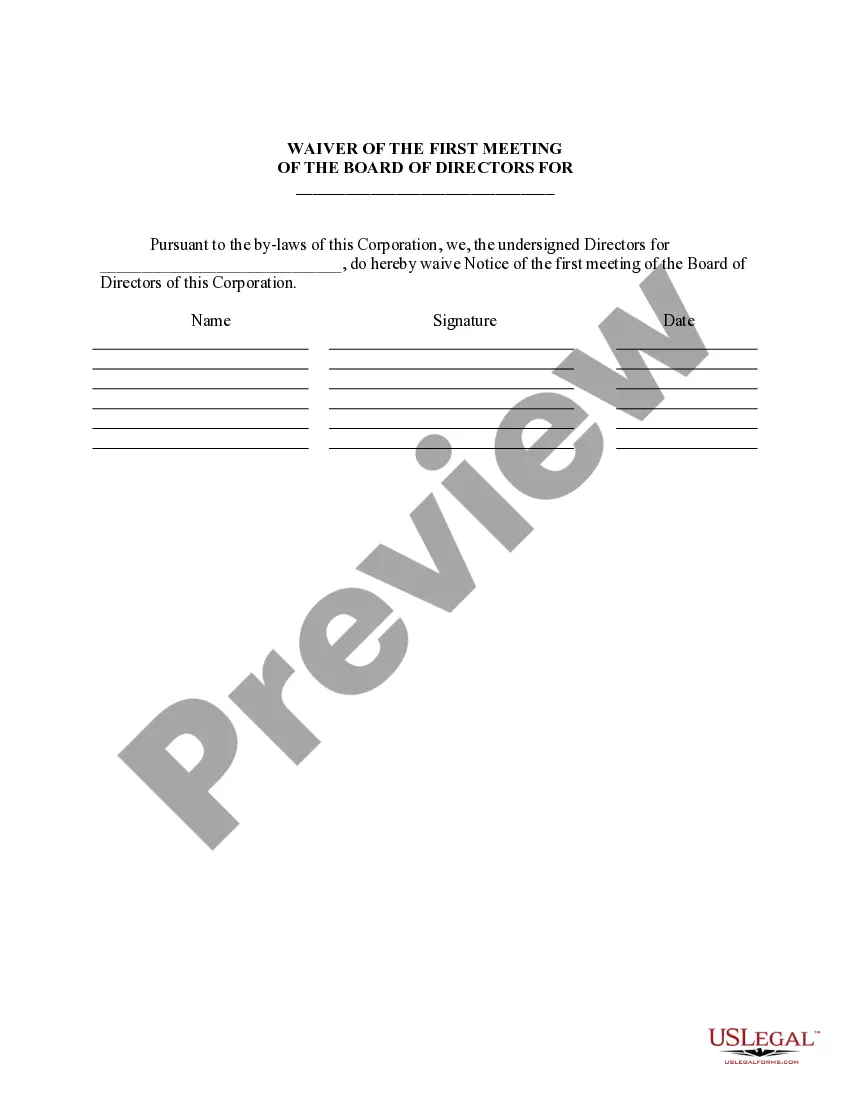
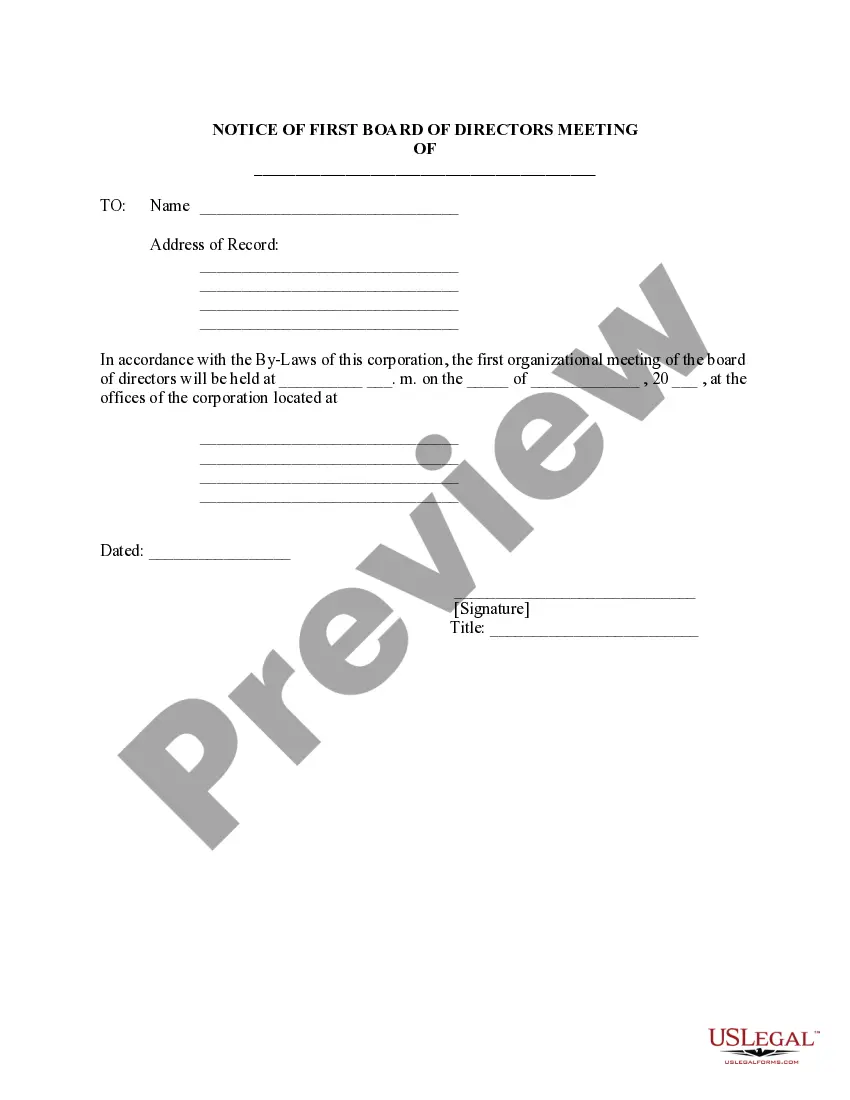
Board Directors Corporate Without Ceo In Houston
Description


Get your form ready online
Our built-in tools help you complete, sign, share, and store your documents in one place.
Make edits, fill in missing information, and update formatting in US Legal Forms—just like you would in MS Word.
Download a copy, print it, send it by email, or mail it via USPS—whatever works best for your next step.
Sign and collect signatures with our SignNow integration. Send to multiple recipients, set reminders, and more. Go Premium to unlock E-Sign.
If this form requires notarization, complete it online through a secure video call—no need to meet a notary in person or wait for an appointment.
We protect your documents and personal data by following strict security and privacy standards.

Make edits, fill in missing information, and update formatting in US Legal Forms—just like you would in MS Word.

Download a copy, print it, send it by email, or mail it via USPS—whatever works best for your next step.

Sign and collect signatures with our SignNow integration. Send to multiple recipients, set reminders, and more. Go Premium to unlock E-Sign.

If this form requires notarization, complete it online through a secure video call—no need to meet a notary in person or wait for an appointment.

We protect your documents and personal data by following strict security and privacy standards.
Looking for another form?
Form popularity
FAQ
Federal and state-level laws, as well as a company's incorporation documents, require public and private corporations in the U.S. to have boards of directors (BoDs). Although private LLCs do not have the same requirements, some choose to elect a board of directors after incorporating.
The answer is generally yes. All corporations must have a board of directors, although there are some exceptions. These exceptions typically involve smaller companies with fewer shareholders.
Bylaws cover a range of topics, including finances, voting, appointing officers and directors, and even what happens if the company needs to close. While you won't need to file your corporate bylaws with the Secretary of State—unlike the Texas Certificate of Formation—every Texas corporation is required to have bylaws.
Generally, a corporation must form a named board of directors and hold at least one annual meeting. The board must also maintain written records of items discussed and actions taken at each meeting.
All corporations, regardless of the state, must have a shareholder-elected Board of Directors. An LLC is not required to have a Board of Directors, but can adopt this form of management if the members (the owners of the LLC) choose to do so.
Under Article 2.21 of the Texas Business Corporation Act (TBCA), for example, shareholders or affiliates cannot be held liable for a corporation's contractual obligations unless they caused the corporation to be used to perpetrate “an actual fraud… primarily for the purpose of personal benefit”.
While there might be a microscopic loophole for sole traders and LLPs, for most companies, having at least one director is a legal necessity. Directors are the guiding force that keeps your business on track. Don't risk the legal and practical consequences of operating without them.
There are seven steps you'll complete to start an S corp in Texas. Step 1: Check Name Availability. Step 2: Choose a Business Name. Step 3: Registered Agent. Step 4: Complete Form 201. Step 5: Bylaws and Regulations. Step 6: Obtain EIN. Step 7: File Form 2553.
Those Who Lack Objectivity If you can't take a step back and look at the big picture, you're not going to be an effective board member. You need to be able to objectively assess a company's performance and make decisions that are in the best interests of the company, not just yourself or your friends on the board.
It is a good practice for each board meeting to include an in camera or executive session where board members can meet privately, without the CEO present. In camera is simply Latin for “in chamber” or private.