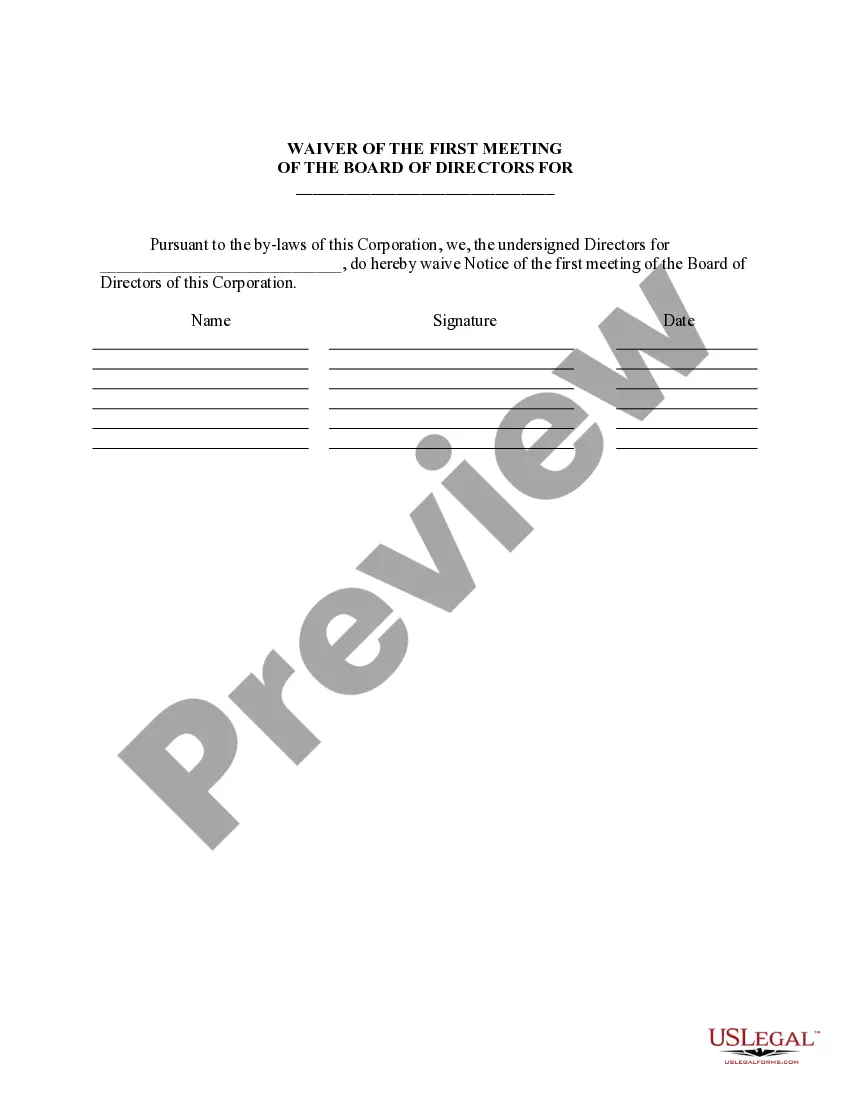
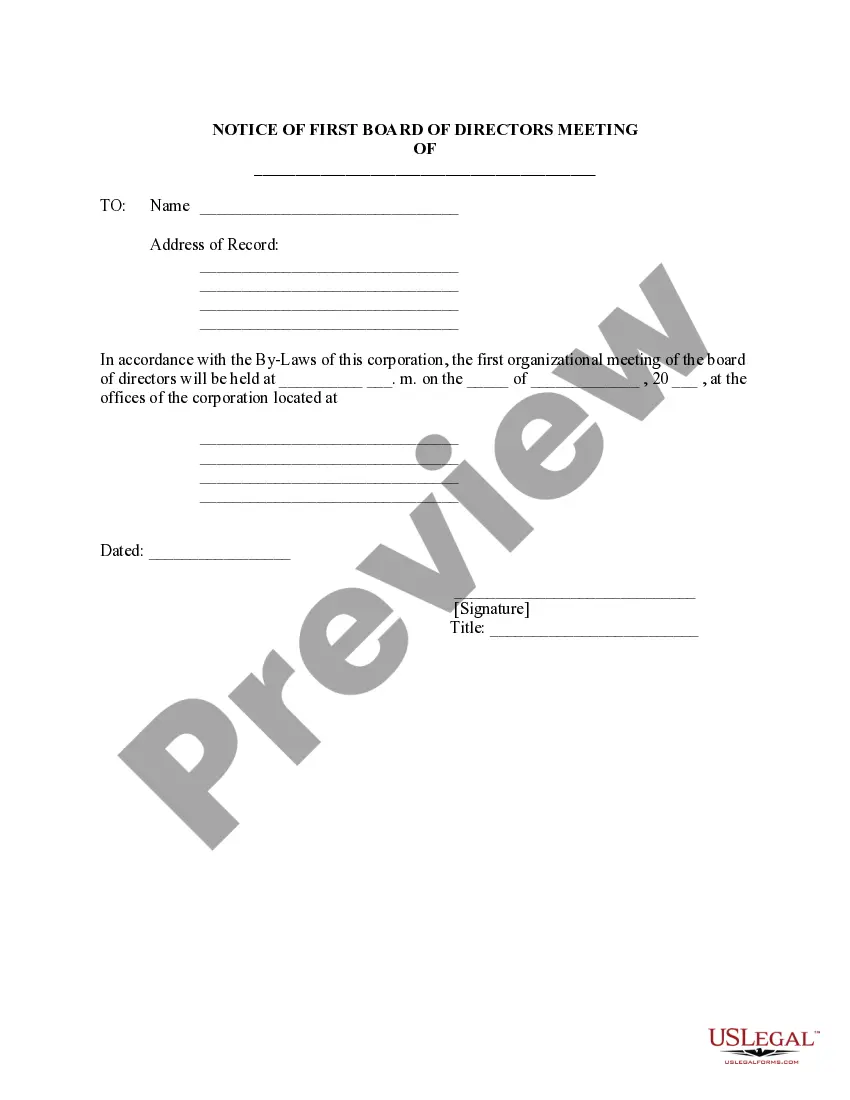
Board Directors Corporate Without In Florida
Description


Get your form ready online
Our built-in tools help you complete, sign, share, and store your documents in one place.
Make edits, fill in missing information, and update formatting in US Legal Forms—just like you would in MS Word.
Download a copy, print it, send it by email, or mail it via USPS—whatever works best for your next step.
Sign and collect signatures with our SignNow integration. Send to multiple recipients, set reminders, and more. Go Premium to unlock E-Sign.
If this form requires notarization, complete it online through a secure video call—no need to meet a notary in person or wait for an appointment.
We protect your documents and personal data by following strict security and privacy standards.

Make edits, fill in missing information, and update formatting in US Legal Forms—just like you would in MS Word.

Download a copy, print it, send it by email, or mail it via USPS—whatever works best for your next step.

Sign and collect signatures with our SignNow integration. Send to multiple recipients, set reminders, and more. Go Premium to unlock E-Sign.

If this form requires notarization, complete it online through a secure video call—no need to meet a notary in person or wait for an appointment.

We protect your documents and personal data by following strict security and privacy standards.
Looking for another form?









Form popularity
FAQ
All corporations, regardless of the state, must have a shareholder-elected Board of Directors. An LLC is not required to have a Board of Directors, but can adopt this form of management if the members (the owners of the LLC) choose to do so.
You might think that a board of directors is something that only big companies have, but all S corporations and C corporations—even small businesses—are legally required to have boards of directors.
If your business is a corporation, then you are required by law to have a board of directors. Depending on your particular corporate structure and your state, one or two directors may be all that's legally required.
' So, the statute allows persons who are not owners to serve on the board, provided they are eligible to be candidates.
A company that has no directors can be struck off. This would have serious implications for the building, as there would be no management, and it could be hard to sell any flats in the building. The process for striking off does not occur immediately.
Under Florida law, a corporation must have at least one director. Directors must be at least eighteen years old. Directors need not be residents of Florida or shareholders of the corporation, unless the articles of incorporation so require.
Corporations must have one or more directors. Residence requirements. Florida does not have a provision specifying where directors must reside.
A corporation must have a board of directors if it is required to do so by its state of incorporation or by its governing documents. For example, a publicly traded company will almost always have a board of directors.
Corporate bylaws are legally required in Florida. Florida law requires corporations to adopt bylaws.