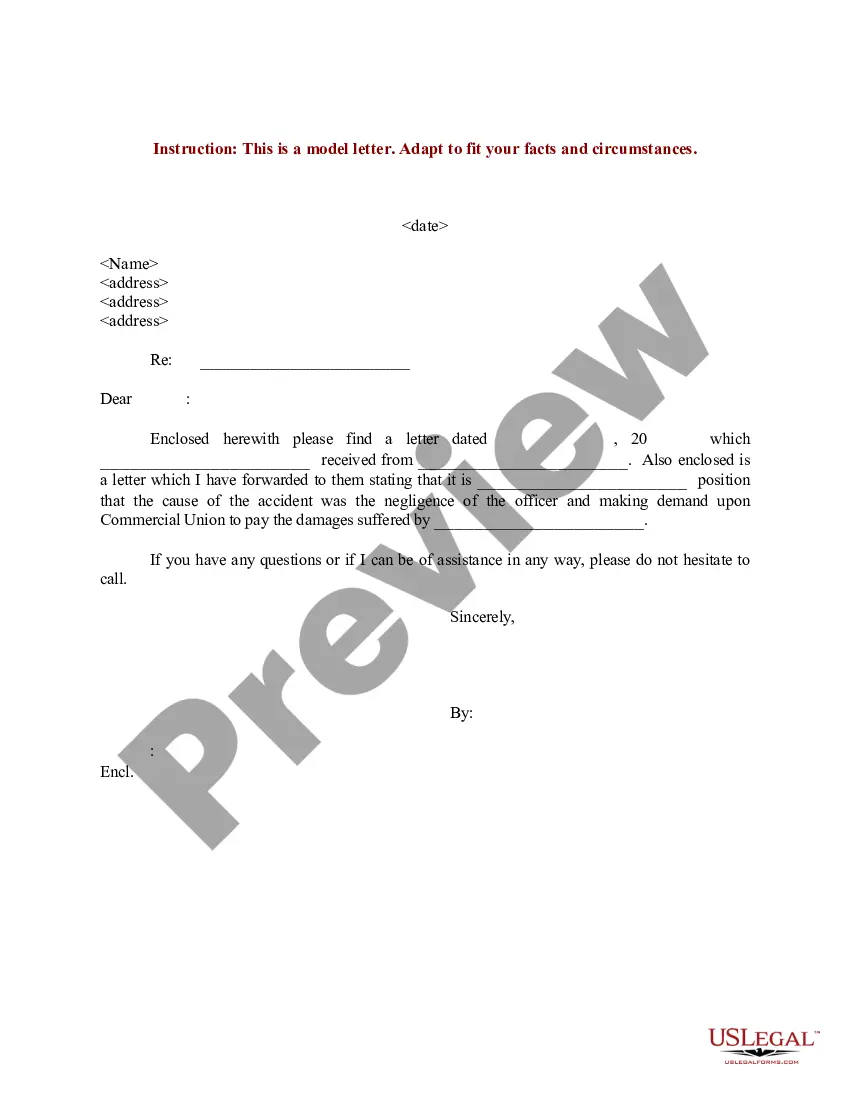
Letter Insurance Form For Claim In Pennsylvania
Description
Get your form ready online
Our built-in tools help you complete, sign, share, and store your documents in one place.
Make edits, fill in missing information, and update formatting in US Legal Forms—just like you would in MS Word.
Download a copy, print it, send it by email, or mail it via USPS—whatever works best for your next step.
Sign and collect signatures with our SignNow integration. Send to multiple recipients, set reminders, and more. Go Premium to unlock E-Sign.
If this form requires notarization, complete it online through a secure video call—no need to meet a notary in person or wait for an appointment.
We protect your documents and personal data by following strict security and privacy standards.

Make edits, fill in missing information, and update formatting in US Legal Forms—just like you would in MS Word.

Download a copy, print it, send it by email, or mail it via USPS—whatever works best for your next step.

Sign and collect signatures with our SignNow integration. Send to multiple recipients, set reminders, and more. Go Premium to unlock E-Sign.

If this form requires notarization, complete it online through a secure video call—no need to meet a notary in person or wait for an appointment.

We protect your documents and personal data by following strict security and privacy standards.
Looking for another form?

Form popularity
FAQ
Contact your insurance company Whether you file your car insurance claim over the phone, online, through a mobile app, or with an agent, your insurer will likely request the following details: Location, date, and time of accident. Name, address, phone number, and insurance policy number for all involved in the accident.
A health insurance claim form has two sections, i.e., Part A and Part B. While Part A is to be filled out by the policyholder, Part B is for the hospital. 2. In Part A of the form, you must fill out your name, residential address, policy number, email ID, phone number, medical history, details of hospitalisation, etc.
How to Write a Letter to a Health Insurance Company for a Claim? Identify Your Basic Information. Compose a Formal Greeting. Express the Purpose of Your Letter. Brief Description of Medical Treatment. Provide Details of the Costs Involvement. Attach Required Documents. Prompt Processing Request. Closing Statement.
To file a claim against the state of Pennsylvania or one of its agencies, a plaintiff must deliver written notice to the relevant government office within six months of the injury occurrence. All claims directed at the state should go to the current attorney general.
The default deadline for people to file their car accident claims in Pennsylvania is two years from the date of the accident. But there are exceptions. For example, if the victim is a minor or the at-fault party can't be found, the victim has more time to file a lawsuit.
Generally, you will need to provide personal details and policy information, as well as details about the incident. Your insurer will give instructions on how to fill out the form correctly. In case of any doubts, you can contact their insurer's customer services team to seek assistance.
Typical sections of a claim form: Personal information like your name, address and date of birth. Insurance information such as a policy and group number. Reason for your visit including background information about your condition. Provider information including the doctor's name and address.
Step-by-Step Guide to Writing an Insurance Claim Letter Gather Information and Documentation: Start with Personal and Insurance Company Details: Introduce Your Claim: Describe the Incident: Detail Your Claim: Conclude with a Call to Action:
7 Top Tips to Give a Recorded Statement to an Insurance Company Proving Accident Details. Before you give a recorded statement, take some time to prepare. Avoid Speculation in Your Recorded Statement. Always Be Truthful. The Issue of Fault is Paramount. Be Polite. Don't Agree to Anything. Get a Copy of Your Statement.