360 Degree Feedback With Example In San Antonio
Description

Get your form ready online
Our built-in tools help you complete, sign, share, and store your documents in one place.
Make edits, fill in missing information, and update formatting in US Legal Forms—just like you would in MS Word.
Download a copy, print it, send it by email, or mail it via USPS—whatever works best for your next step.
Sign and collect signatures with our SignNow integration. Send to multiple recipients, set reminders, and more. Go Premium to unlock E-Sign.
If this form requires notarization, complete it online through a secure video call—no need to meet a notary in person or wait for an appointment.
We protect your documents and personal data by following strict security and privacy standards.

Make edits, fill in missing information, and update formatting in US Legal Forms—just like you would in MS Word.

Download a copy, print it, send it by email, or mail it via USPS—whatever works best for your next step.

Sign and collect signatures with our SignNow integration. Send to multiple recipients, set reminders, and more. Go Premium to unlock E-Sign.

If this form requires notarization, complete it online through a secure video call—no need to meet a notary in person or wait for an appointment.

We protect your documents and personal data by following strict security and privacy standards.
Looking for another form?









Form popularity
FAQ
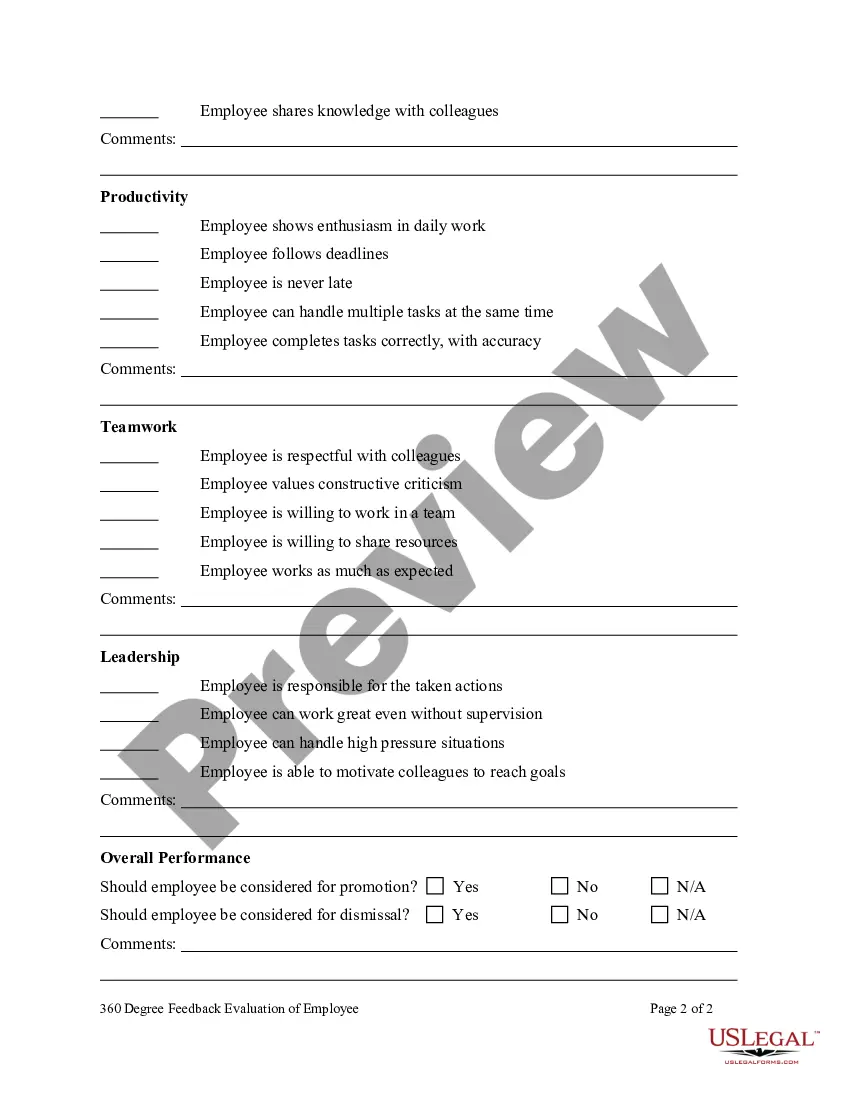
360-degree feedback is a process that allows an employee to understand their strengths and weaknesses. In this feedback system, the employer and other staff members, like co-workers, peers, subordinates, and people that share the same work environment, provide feedback to an employee.
“Thanks so much for helping me set clear, actionable goals for myself this year. Your guidance really kept me on the right track.” 2. “I can't thank you enough for your encouragement and support.”
360 Degree Feedback Examples for Decision-Making “Emily is skilled at weighing the pros and cons of different options, making informed decisions that benefit the organization.” “Michael could improve his decision-making by considering alternative perspectives and solutions.”
A 360-degree appraisal uses performance information collected from people on two sides of a manager, above and below. The Establishment stage is the first stage of a typical career.
"This person is very confident in their role as group leader. They can get the most out of everyone on the team." "This person is highly effective at leading work groups and able to resolve conflicts among participants." "This person is fair and treats every employee in the team equally and respectfully."
How to conduct 360 reviews Establish criteria for rating each employee. Invest time into developing useful, relevant questions that provide valuable insight. Choose who will assess each employee. Send surveys. Send the survey to the employee. Schedule the 360 evaluation. Review ratings with employee. Follow up on progress.
Pros and Cons of 360-Degree Appraisals The 360-degree appraisal has been around for more than three decades and is used for performance management by large multinational companies such as Google, which uses the system in its India units.
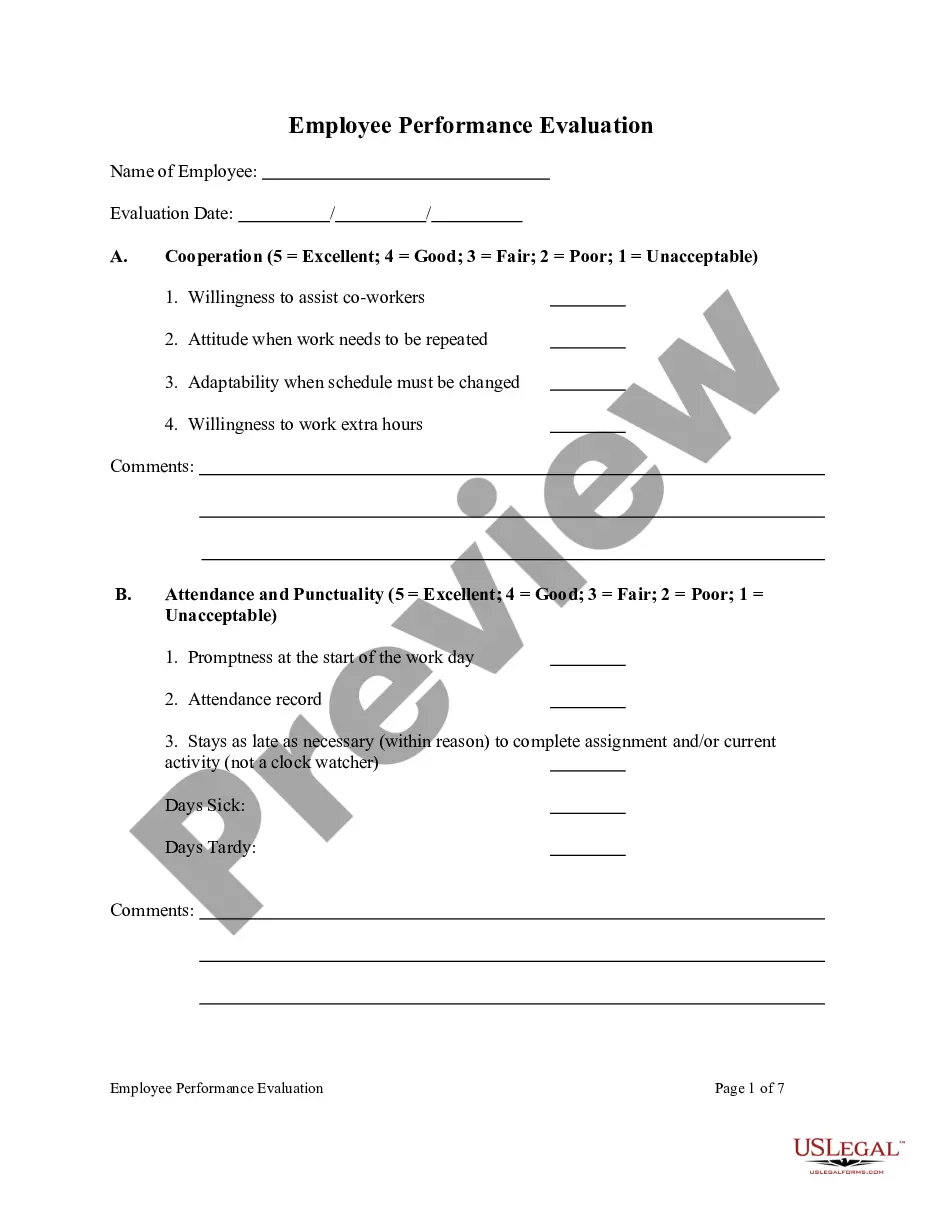
A 360 performance review measures employee performance typically using feedback from six to 12 people. It also includes an employee self-evaluation to provide a comprehensive look at an employee's efficiency, productivity, contributions and work behavior.
How to conduct 360 reviews Establish criteria for rating each employee. Invest time into developing useful, relevant questions that provide valuable insight. Choose who will assess each employee. Send surveys. Send the survey to the employee. Schedule the 360 evaluation. Review ratings with employee. Follow up on progress.
360 degree feedback, also known as multi-rater feedback, is a system in which anonymous feedback is gathered about a member of staff from various people they have working relationships with. This is usually their managers, peers, direct reports, subordinates – hence the name “360 degree”.
