360 Evaluation Method
Description

Get your form ready online
Our built-in tools help you complete, sign, share, and store your documents in one place.
Make edits, fill in missing information, and update formatting in US Legal Forms—just like you would in MS Word.
Download a copy, print it, send it by email, or mail it via USPS—whatever works best for your next step.
Sign and collect signatures with our SignNow integration. Send to multiple recipients, set reminders, and more. Go Premium to unlock E-Sign.
If this form requires notarization, complete it online through a secure video call—no need to meet a notary in person or wait for an appointment.
We protect your documents and personal data by following strict security and privacy standards.

Make edits, fill in missing information, and update formatting in US Legal Forms—just like you would in MS Word.

Download a copy, print it, send it by email, or mail it via USPS—whatever works best for your next step.

Sign and collect signatures with our SignNow integration. Send to multiple recipients, set reminders, and more. Go Premium to unlock E-Sign.

If this form requires notarization, complete it online through a secure video call—no need to meet a notary in person or wait for an appointment.

We protect your documents and personal data by following strict security and privacy standards.
Looking for another form?



How to fill out 360 Degree Feedback Evaluation Of Employee?
It’s well-known that you cannot transform into a legal authority instantly, nor can you swiftly learn how to craft 360 Evaluation Method without a specific skill set.
Producing legal documents is a lengthy process that necessitates particular training and expertise.
So why not entrust the creation of the 360 Evaluation Method to the professionals.
View it (if this option is available) and review the accompanying description to determine if the 360 Evaluation Method is what you seek.
If you need any other template, begin your search again. Create a free account and choose a subscription plan to purchase the form. Select Buy now. Once the transaction is completed, you can obtain the 360 Evaluation Method, complete it, print it, and send it or mail it to the specified individuals or entities.
- With US Legal Forms, one of the most extensive libraries of legal templates, you can find everything from court documents to templates for internal corporate communication.
- We understand how crucial compliance and adherence to federal and state regulations are.
- That’s why, on our site, all templates are location-specific and current.
- Here’s how you can begin with our platform and acquire the document you need in just minutes.
- Locate the form you require by utilizing the search bar at the top of the page.
Form popularity
FAQ
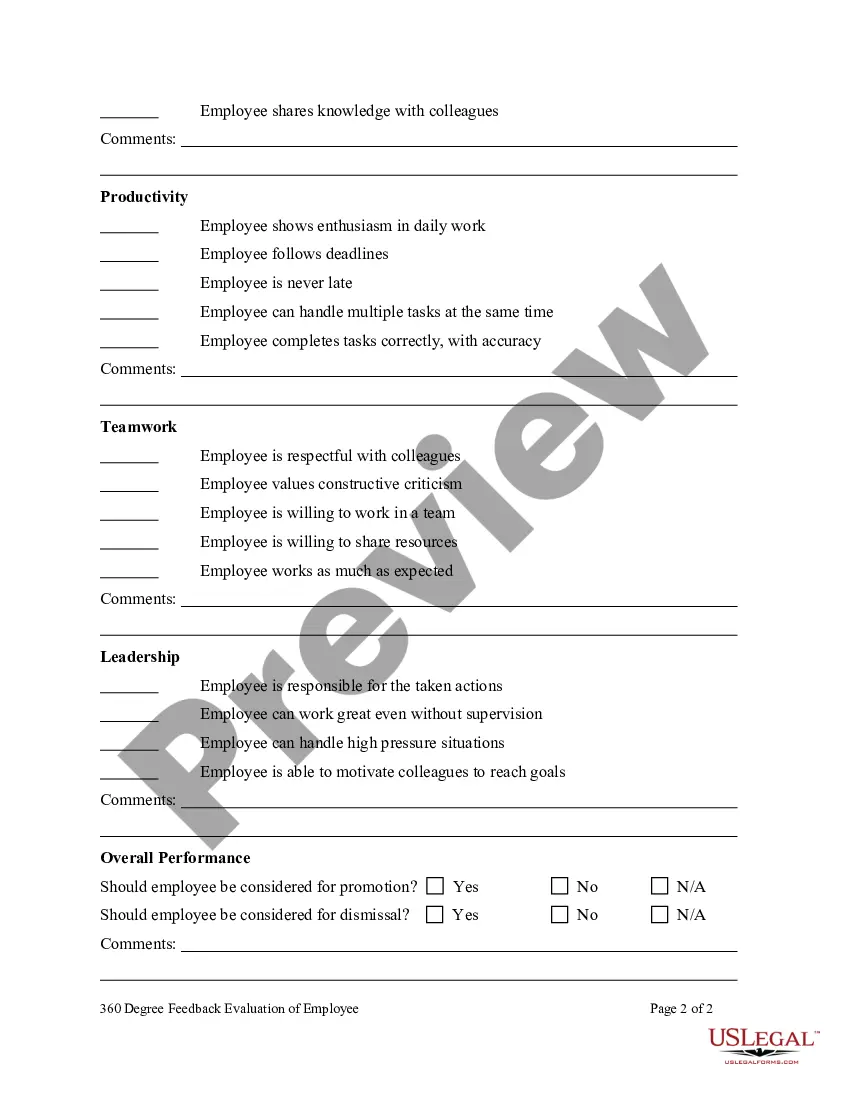
The 360 degree evaluation technique is a feedback method that collects input from various people, including managers, peers, and team members. This technique offers a holistic view of an individual's performance, using the 360 evaluation method to uncover insights that might not emerge from traditional evaluations. Implementing this technique can drive personal growth and improve team dynamics.
The 360 degree evaluation process starts with defining the objectives of the assessment. Next, you select the evaluators, distribute surveys, and gather feedback. Afterward, the data collected through the 360 evaluation method is analyzed to create a report that highlights strengths and areas for improvement, fostering a culture of continuous development.
The four components of a 360-degree appraisal include self-assessment, peer feedback, supervisory input, and subordinate evaluations. Each component provides a different perspective, contributing to a well-rounded view of an individual's performance. By using the 360 evaluation method, organizations can ensure that feedback is comprehensive and actionable.
An example of a 360 evaluation could involve a manager receiving feedback from their team, peers, and upper management. Each person provides input on specific competencies such as leadership style and decision-making. Utilizing the 360 evaluation method in this way allows the manager to see how their behavior impacts others and where they can enhance their effectiveness.
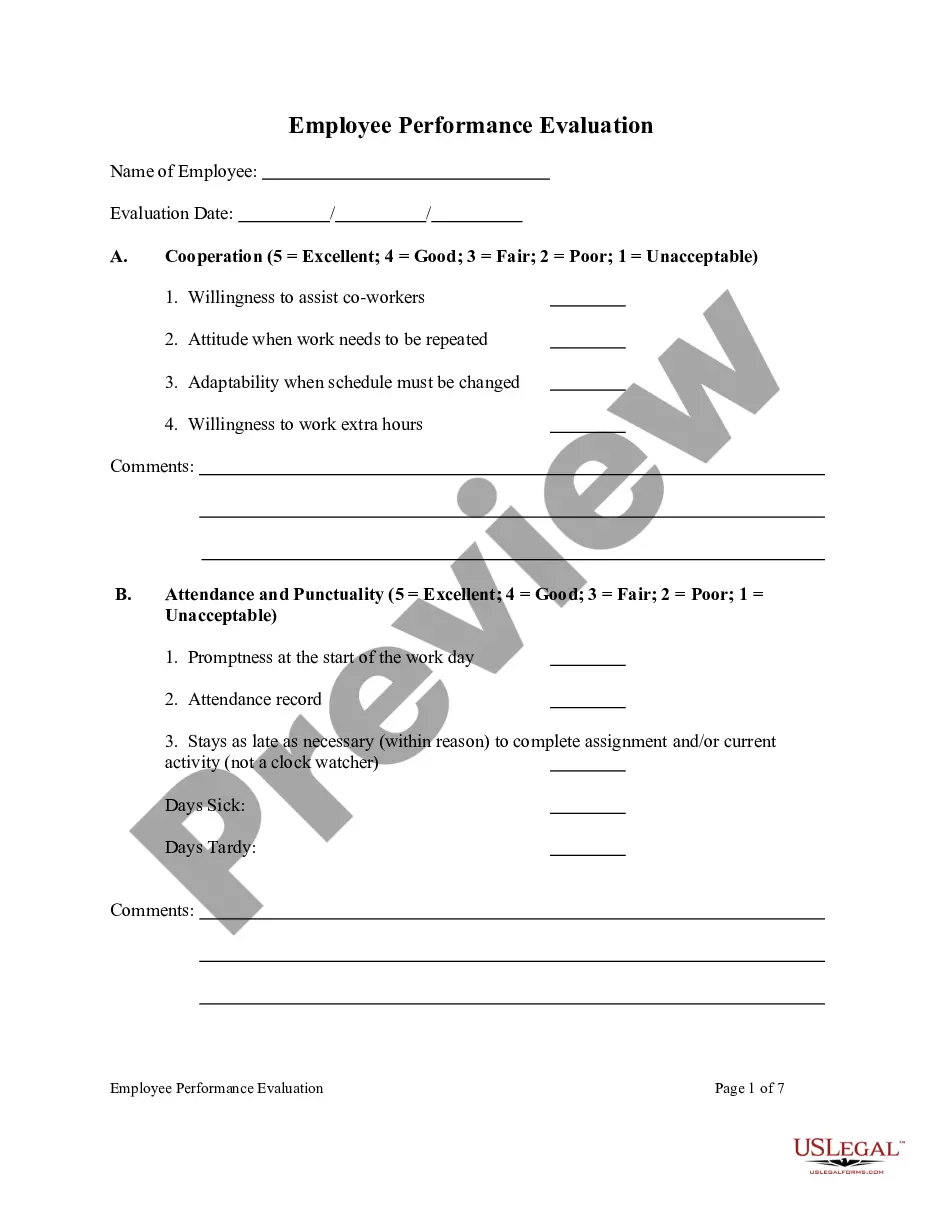
The process of a 360 degree appraisal involves several steps. First, you gather feedback from multiple sources, including self-assessments and evaluations from colleagues and supervisors. After collecting this data through the 360 evaluation method, you compile and review the results to provide a comprehensive view of performance, which supports personal and professional growth.
To conduct a 360 degree evaluation, start by selecting the right participants who can provide balanced feedback. Next, design a survey using the 360 evaluation method to capture insights from various perspectives, including peers, supervisors, and direct reports. Finally, analyze the collected data to identify strengths and areas needing development, making sure to share the results constructively.
Good 360 feedback questions focus on key areas such as communication, teamwork, and leadership. For example, you might ask about how well someone collaborates with others, how effectively they share information, or how they handle conflict. The purpose of these questions is to gather comprehensive insights using the 360 evaluation method, enabling clear areas for improvement.