Special Meeting Sample For School In Virginia
Description



Get your form ready online
Our built-in tools help you complete, sign, share, and store your documents in one place.
Make edits, fill in missing information, and update formatting in US Legal Forms—just like you would in MS Word.
Download a copy, print it, send it by email, or mail it via USPS—whatever works best for your next step.
Sign and collect signatures with our SignNow integration. Send to multiple recipients, set reminders, and more. Go Premium to unlock E-Sign.
If this form requires notarization, complete it online through a secure video call—no need to meet a notary in person or wait for an appointment.
We protect your documents and personal data by following strict security and privacy standards.

Make edits, fill in missing information, and update formatting in US Legal Forms—just like you would in MS Word.

Download a copy, print it, send it by email, or mail it via USPS—whatever works best for your next step.

Sign and collect signatures with our SignNow integration. Send to multiple recipients, set reminders, and more. Go Premium to unlock E-Sign.

If this form requires notarization, complete it online through a secure video call—no need to meet a notary in person or wait for an appointment.

We protect your documents and personal data by following strict security and privacy standards.
Looking for another form?







Form popularity
FAQ
When called, stand and face/speak to the Board members. Do not turn and speak to the audience. State your name and keep your comments as concise as possible (generally three minutes). Speakers are expected to treat others with respect, confining their remarks to School District issues.
Occasionally, special meetings need to be called because of an urgent or special matter. ing to Robert's Rules of Order, special meetings always require previous notice. Here are a few valid reasons for calling a special meeting: An urgent matter needs to be dealt with before the next regular meeting.
4 Steps to Running an Effective Open Meeting Set Up the Room. Seat all your board members at a head table. Follow the Agenda. Keep your agenda limited to the business at hand, small items that are easily accomplished first, and controversial or complex issues next. Provide Any Necessary Handouts. Conduct the Meeting.
Brown Act is a “public access law” that ensures the public's right to attend the meetings of public agencies, facilitates public participation in all phases of local government decision-making, and curbs misuse of the democratic process by secret legislation.
Here are 8 steps that will help you have effective school meetings, from start to finish: Create teams. Set team norms. Develop a meeting agenda. Take notes! Develop a goal. Create and assign tasks to accomplish your goal. Track tasks and follow up. Acknowledge accomplishments.
Under Virginia FOIA, a "meeting" is any gathering of three or more members of a public body (or a quorum, if a quorum is less than three) to discuss or transact business of the public body. The law applies to all discussions, deliberations, and formal action.
Meetings must: Be noticed in advance; Include only business described in the agenda; Take place within agency boundaries; Be completely accessible by the public. Notice and agenda for regular meeting must be: Posted 72 hours in advance; Posted in an accessible location; Mailed to persons who request notice.
Virginia FOIA gives the public the right to attend the meetings of public bodies, with exceptions for closed sessions discussed below. Virginia law does not limit access to meetings to a specific category of people or a profession, such as "the traditional press." Anyone may attend.
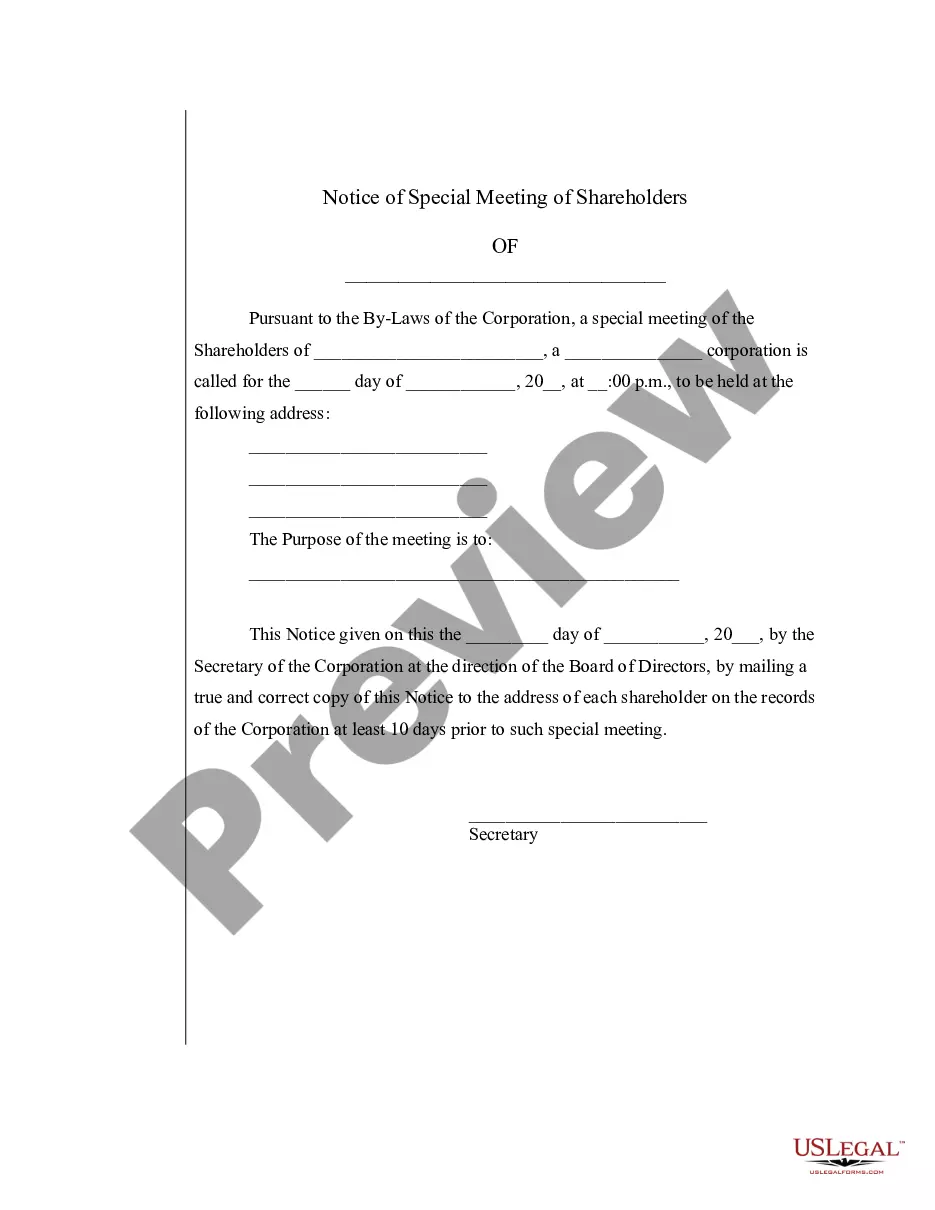
It is different from a regular meeting, which is held on a regular schedule. For example, a company may call a special meeting to discuss a major decision, such as a merger or acquisition. A school board may call a special meeting to address a specific issue, such as a budget shortfall.
If the time and place of a directors' meeting is fixed by the bylaws or the board of directors, the meeting is a regular meeting. All other meetings are special meetings.
