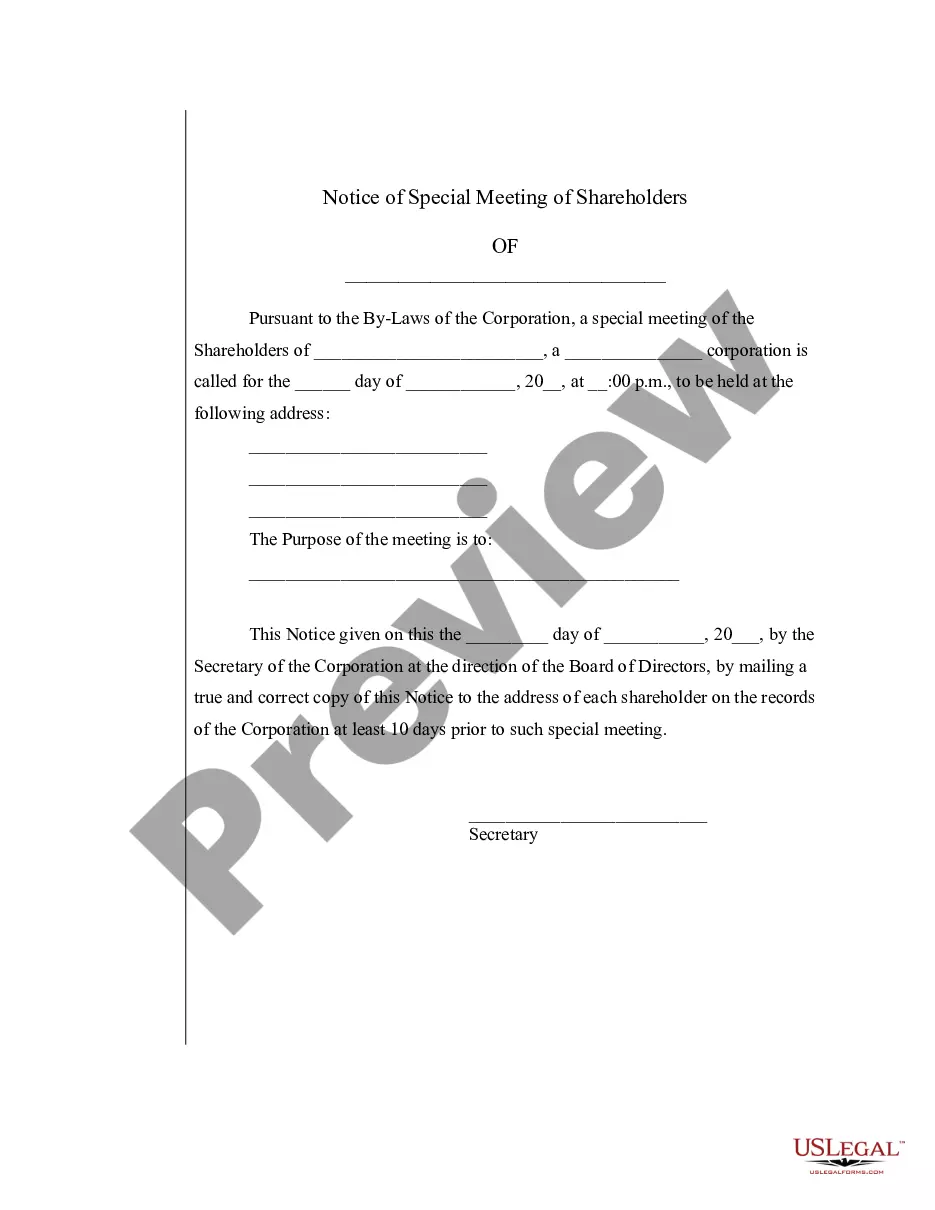
Special Meeting Sample For Board In Utah
Description



Get your form ready online
Our built-in tools help you complete, sign, share, and store your documents in one place.
Make edits, fill in missing information, and update formatting in US Legal Forms—just like you would in MS Word.
Download a copy, print it, send it by email, or mail it via USPS—whatever works best for your next step.
Sign and collect signatures with our SignNow integration. Send to multiple recipients, set reminders, and more. Go Premium to unlock E-Sign.
If this form requires notarization, complete it online through a secure video call—no need to meet a notary in person or wait for an appointment.
We protect your documents and personal data by following strict security and privacy standards.

Make edits, fill in missing information, and update formatting in US Legal Forms—just like you would in MS Word.

Download a copy, print it, send it by email, or mail it via USPS—whatever works best for your next step.

Sign and collect signatures with our SignNow integration. Send to multiple recipients, set reminders, and more. Go Premium to unlock E-Sign.

If this form requires notarization, complete it online through a secure video call—no need to meet a notary in person or wait for an appointment.

We protect your documents and personal data by following strict security and privacy standards.
Looking for another form?










Form popularity
FAQ
The notice must provide directors with the date, time, and location of the meeting. Although technically, the purpose of the meeting does not have to be provided, it is generally a good idea to include an agenda or similar information so directors know what to expect and why it is important to attend.
Any meeting that is not a regular meeting of the governing body (i.e., that falls outside the time established for regular meetings and is not an adjournment or continuation of a regular meeting) is considered a “special meeting.” See RCW 42.30.
Extraordinary meeting. a special meeting that happens between regular meetings: He presided over an extraordinary meeting of the country's leading clergy. He said he would have to call an extraordinary meeting of the Council of the European Union.
Occasionally, special meetings need to be called because of an urgent or special matter. ing to Robert's Rules of Order, special meetings always require previous notice. Here are a few valid reasons for calling a special meeting: An urgent matter needs to be dealt with before the next regular meeting.
The types of board meetings include (a) open board meetings, (b) executive session meetings, and (c) emergency meetings. The type of meeting being held impacts: The notice and agenda requirements the association must satisfy prior to the meeting being held.
Special meetings are typically called for matters of some urgency—topics that can't wait until an annual or other regularly scheduled meeting. For instance, a special meeting might be called if the LLC received an offer to merge with another company or if members disagreed on the interpretation of a key policy.
Your notice must follow state and company guidelines, but it should have your company name , the date and time of the meeting, the location of the meeting, an agenda , and notes . For more information about how to prepare a notice of meeting, read this article.
A proper meeting notice should include: Date, Time, and Venue: Clear details on when and where the meeting will take place. Purpose of the Meeting: A brief description of the meeting's objectives. Agenda: An outline of topics to be discussed; this helps attendees prepare for the meeting.