Special Meeting Sample For Pds In New York
Description



Get your form ready online
Our built-in tools help you complete, sign, share, and store your documents in one place.
Make edits, fill in missing information, and update formatting in US Legal Forms—just like you would in MS Word.
Download a copy, print it, send it by email, or mail it via USPS—whatever works best for your next step.
Sign and collect signatures with our SignNow integration. Send to multiple recipients, set reminders, and more. Go Premium to unlock E-Sign.
If this form requires notarization, complete it online through a secure video call—no need to meet a notary in person or wait for an appointment.
We protect your documents and personal data by following strict security and privacy standards.

Make edits, fill in missing information, and update formatting in US Legal Forms—just like you would in MS Word.

Download a copy, print it, send it by email, or mail it via USPS—whatever works best for your next step.

Sign and collect signatures with our SignNow integration. Send to multiple recipients, set reminders, and more. Go Premium to unlock E-Sign.

If this form requires notarization, complete it online through a secure video call—no need to meet a notary in person or wait for an appointment.

We protect your documents and personal data by following strict security and privacy standards.
Looking for another form?








Form popularity
FAQ
After a summons with notice is served, the defendant will demand that the plaintiff serve a complaint. The plaintiff must then have the complaint served within 20 days after being served with the demand, or the case may be dismissed.
Article 78 proceedings are lawsuits mainly used to challenge an action (or inaction) by agencies of New York State and local governments. Article 78 proceedings are also sometimes filed against judges, tribunals, boards, and even private companies whose existence is based on statutory authority.
What is an Article 78 Proceeding? In an Article 78 proceeding, you ask a state court to review a decision or action of a New York State official or administrative agency, such as a prison official or the Board of Parole, which you believe was unlawful.
A special proceeding is a variety of lawsuit. It is bought on with the simplicity and speed of a motion. The special proceeding may be used only when authorized by law. One kind of special proceeding is the Article 78 proceeding, which seeks to challenge actions of administrative agencies and other government bodies.
What is an Article 78 Proceeding? In an Article 78 proceeding, you ask a state court to review a decision or action of a New York State official or administrative agency, such as a prison official or the Board of Parole, which you believe was unlawful.
Is there a time deadline for filing an Article 78 proceeding? Yes. Article 78 Proceedings must be filed within four months of the date you receive the decision you want to appeal.
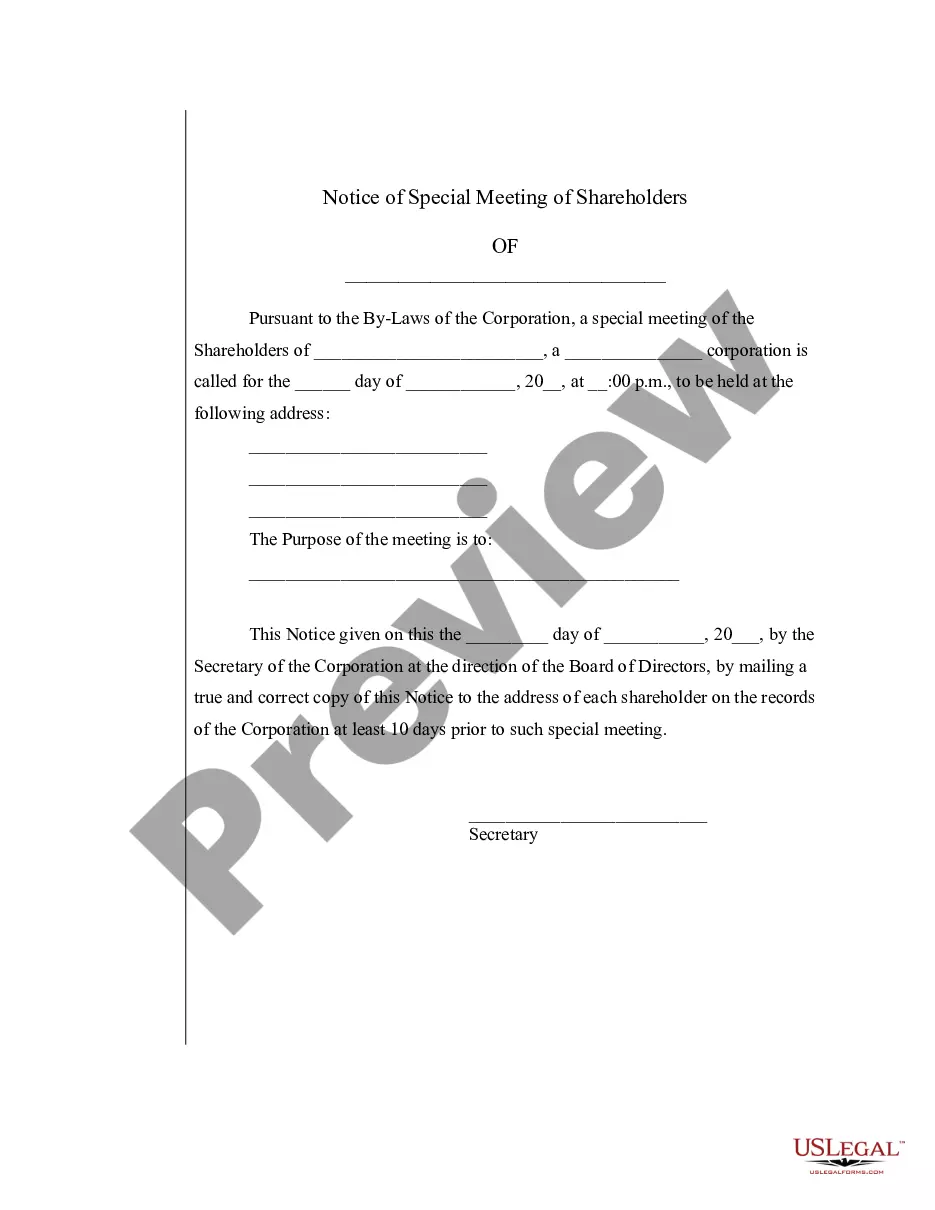
A meeting notice should include the following key details: Name and contact information of the meeting chair. Name and role of the sender of the meeting notice. Names and roles of all the invitees. Type of meeting — regular, annual, or special. Date, time and location of the meeting (the notice should also be dated)
The notice must provide directors with the date, time, and location of the meeting. Although technically, the purpose of the meeting does not have to be provided, it is generally a good idea to include an agenda or similar information so directors know what to expect and why it is important to attend.
It is different from a regular meeting, which is held on a regular schedule. For example, a company may call a special meeting to discuss a major decision, such as a merger or acquisition. A school board may call a special meeting to address a specific issue, such as a budget shortfall.
Content of Notice A proper meeting notice should include: Date, Time, and Venue: Clear details on when and where the meeting will take place. Purpose of the Meeting: A brief description of the meeting's objectives. Agenda: An outline of topics to be discussed; this helps attendees prepare for the meeting.

