Special Meeting Sample For School In Nassau
Description



Get your form ready online
Our built-in tools help you complete, sign, share, and store your documents in one place.
Make edits, fill in missing information, and update formatting in US Legal Forms—just like you would in MS Word.
Download a copy, print it, send it by email, or mail it via USPS—whatever works best for your next step.
Sign and collect signatures with our SignNow integration. Send to multiple recipients, set reminders, and more. Go Premium to unlock E-Sign.
If this form requires notarization, complete it online through a secure video call—no need to meet a notary in person or wait for an appointment.
We protect your documents and personal data by following strict security and privacy standards.

Make edits, fill in missing information, and update formatting in US Legal Forms—just like you would in MS Word.

Download a copy, print it, send it by email, or mail it via USPS—whatever works best for your next step.

Sign and collect signatures with our SignNow integration. Send to multiple recipients, set reminders, and more. Go Premium to unlock E-Sign.

If this form requires notarization, complete it online through a secure video call—no need to meet a notary in person or wait for an appointment.

We protect your documents and personal data by following strict security and privacy standards.
Looking for another form?








Form popularity
FAQ
Public meetings are any assemblies or gathering, (such as conferences, informational sessions, seminars, workshops, or other activities) which the responsible agency intends to be open to anyone wishing to attend.
Meetings must: Be noticed in advance; Include only business described in the agenda; Take place within agency boundaries; Be completely accessible by the public. Notice and agenda for regular meeting must be: Posted 72 hours in advance; Posted in an accessible location; Mailed to persons who request notice.
PREPARING A PUBLIC NOTICE The Open Meetings Law requires that notice of the time and place of all meetings of a public body be given prior to every meeting. The notice must include reference to the date, time and location of the meeting.
The IEP meeting is one of the most important parts of the special education process. In this meeting, school staff and parents come together to discuss, develop, and review a student's IEP. They make sure the IEP meets the student's needs. There are rules for IEP meetings. They cover who must attend and what happens.
§106. Minutes shall be taken at all open meetings of a public body which shall consist of a record or summary of all motions, proposals, resolutions and any other matter formally voted upon and the vote thereon.
The purpose of an IEP meeting is for the IEP team to work collaboratively to identify the special education services and supports that will be delivered to the student, based on her unique needs. This process produces a written record, the IEP itself, which formalizes these services and supports.
Here are 8 steps that will help you have effective school meetings, from start to finish: Create teams. Set team norms. Develop a meeting agenda. Take notes! Develop a goal. Create and assign tasks to accomplish your goal. Track tasks and follow up. Acknowledge accomplishments.
The Open Meetings Law does provide for the holding of executive or closed sessions, called on a majority vote of the total membership of the public body, to discuss or act on the following enumerated subjects: 1) matters which may imperil public safety if disclosed; 2) matters which may disclose the identity of a law ...
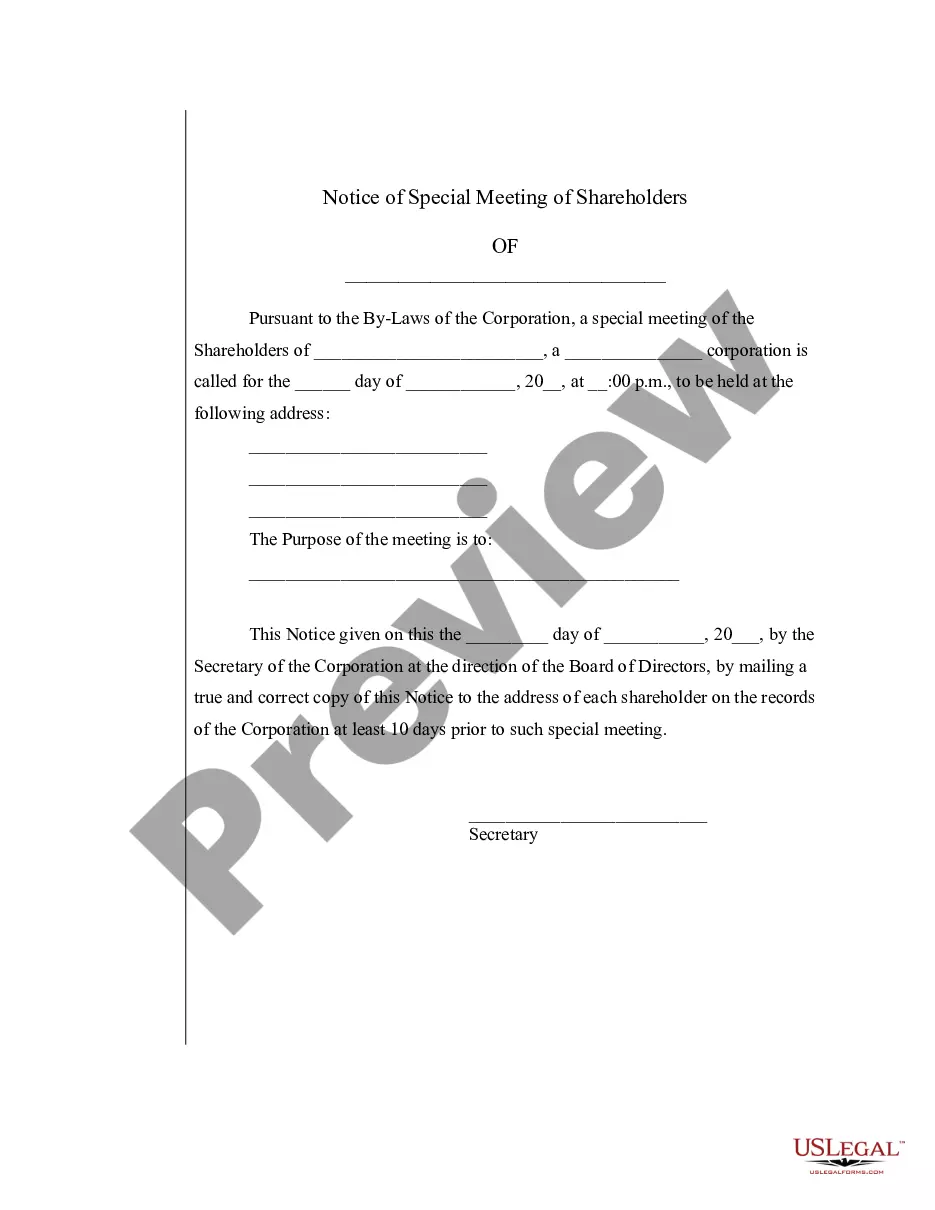
Occasionally, special meetings need to be called because of an urgent or special matter. ing to Robert's Rules of Order, special meetings always require previous notice. Here are a few valid reasons for calling a special meeting: An urgent matter needs to be dealt with before the next regular meeting.
Any meeting that is not a regular meeting of the governing body (i.e., that falls outside the time established for regular meetings and is not an adjournment or continuation of a regular meeting) is considered a “special meeting.” See RCW 42.30.
