Corporation First Meeting With Mentor In Wake
Description
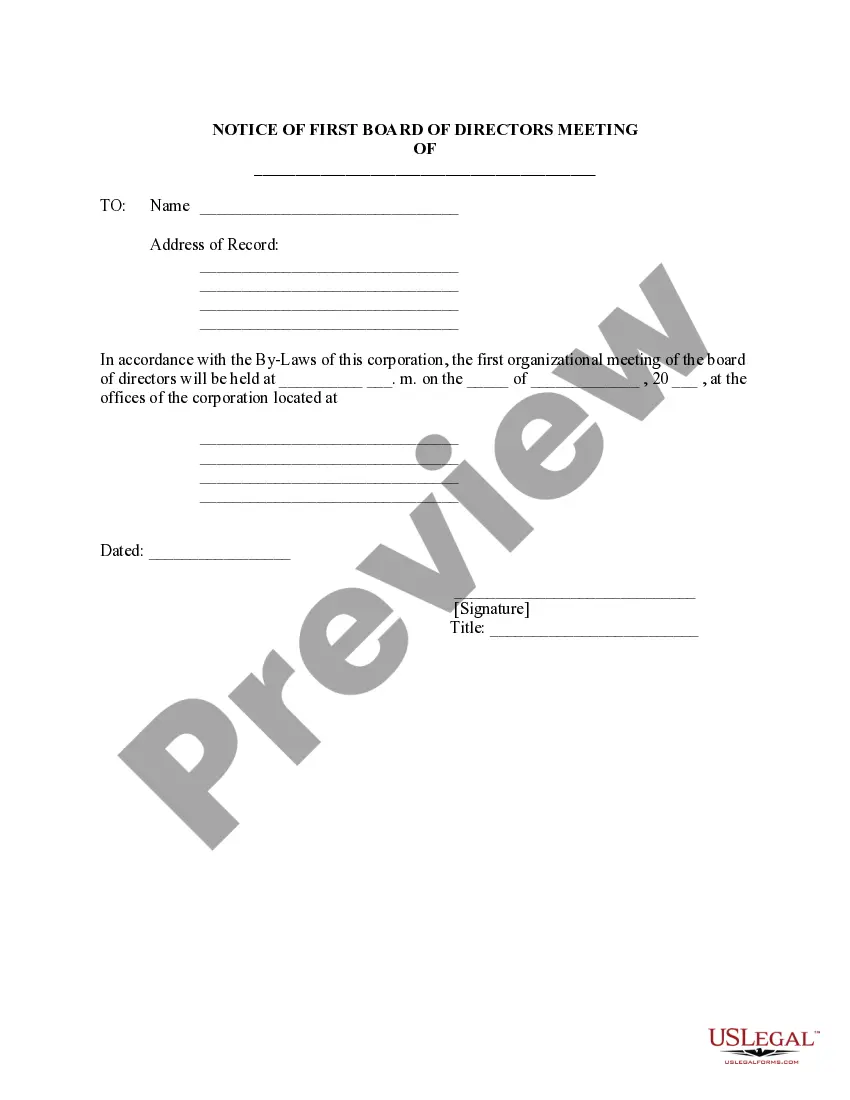


Get your form ready online
Our built-in tools help you complete, sign, share, and store your documents in one place.
Make edits, fill in missing information, and update formatting in US Legal Forms—just like you would in MS Word.
Download a copy, print it, send it by email, or mail it via USPS—whatever works best for your next step.
Sign and collect signatures with our SignNow integration. Send to multiple recipients, set reminders, and more. Go Premium to unlock E-Sign.
If this form requires notarization, complete it online through a secure video call—no need to meet a notary in person or wait for an appointment.
We protect your documents and personal data by following strict security and privacy standards.

Make edits, fill in missing information, and update formatting in US Legal Forms—just like you would in MS Word.

Download a copy, print it, send it by email, or mail it via USPS—whatever works best for your next step.

Sign and collect signatures with our SignNow integration. Send to multiple recipients, set reminders, and more. Go Premium to unlock E-Sign.

If this form requires notarization, complete it online through a secure video call—no need to meet a notary in person or wait for an appointment.

We protect your documents and personal data by following strict security and privacy standards.
Looking for another form?






Form popularity
FAQ
Clarity, Communication, Commitment – the key to successful mentoring programmes. Mentoring has long been recognised as a highly effective development tool.
David Clutterbuck, author and thought leader on the subject of coaching and mentoring, suggests that developmental relationships transition through five phases: rapport building, direction setting, progress making, winding down, and moving on.
1. Check-in on what has transpired since your last meeting. 2. Share any successes you have had in applying what you have learned from your mentor (important!). 3. Introduce a topic or question for the current meeting. 4. Continue the conversation with additional questions you have prepared ahead of time.
How to structure a productive mentor meeting Establish the meeting's purpose and set expectations. Create a flexible meeting agenda for discussion topics. Set up a comfortable and respectful environment during the meeting. Utilize strategies for effective communication and active listening.
Document Information. The document describes the Five Cs Model of Mentoring, which provides a structured approach to mentoring sessions. The model involves discussing Challenges, Choices, Consequences, Creative Solutions, and Conclusions.
Main elements of a mentor meeting agenda Welcome and introduction. Review of previous goals and action items. Current challenges and opportunities. Skill development and learning. Goal setting for the future. Organizational alignment. Feedback and reflection. Action plan for next steps.
Build rapport by starting with a warm greeting and small talk. Share your career aspirations and what you hope to achieve from the mentorship. Ask thoughtful questions and actively listen to your mentor's responses. Take notes to record important advice, insights, and action items.
Introductions: - Share your background, education, and current role or situation. - Ask your mentor about their career path and experiences. Goals and Expectations: - Discuss what you hope to achieve through the mentorship. Mentor's Expertise: - Inquire about your mentor's areas of expertise and interests.
Provide context to help your mentor understand you. Share your professional goals and, as relevant, your life situation. Although your mentor doesn't need to know everything about you, openly share your hopes and fears. Ask direct questions to learn more about your mentor's experiences.
4 Tips to help you prepare for a mentor meeting Do your research. Establish your goals. Check your ego. Hold yourself accountable. Ask clear, specific questions. Don't force a conversation, and avoid asking rhetorical questions. Ask questions about key areas you want to grow. Be prepared.

