Corporation First Meeting For Boy In King
Description


Get your form ready online
Our built-in tools help you complete, sign, share, and store your documents in one place.
Make edits, fill in missing information, and update formatting in US Legal Forms—just like you would in MS Word.
Download a copy, print it, send it by email, or mail it via USPS—whatever works best for your next step.
Sign and collect signatures with our SignNow integration. Send to multiple recipients, set reminders, and more. Go Premium to unlock E-Sign.
If this form requires notarization, complete it online through a secure video call—no need to meet a notary in person or wait for an appointment.
We protect your documents and personal data by following strict security and privacy standards.

Make edits, fill in missing information, and update formatting in US Legal Forms—just like you would in MS Word.

Download a copy, print it, send it by email, or mail it via USPS—whatever works best for your next step.

Sign and collect signatures with our SignNow integration. Send to multiple recipients, set reminders, and more. Go Premium to unlock E-Sign.

If this form requires notarization, complete it online through a secure video call—no need to meet a notary in person or wait for an appointment.

We protect your documents and personal data by following strict security and privacy standards.
Looking for another form?





Form popularity
FAQ
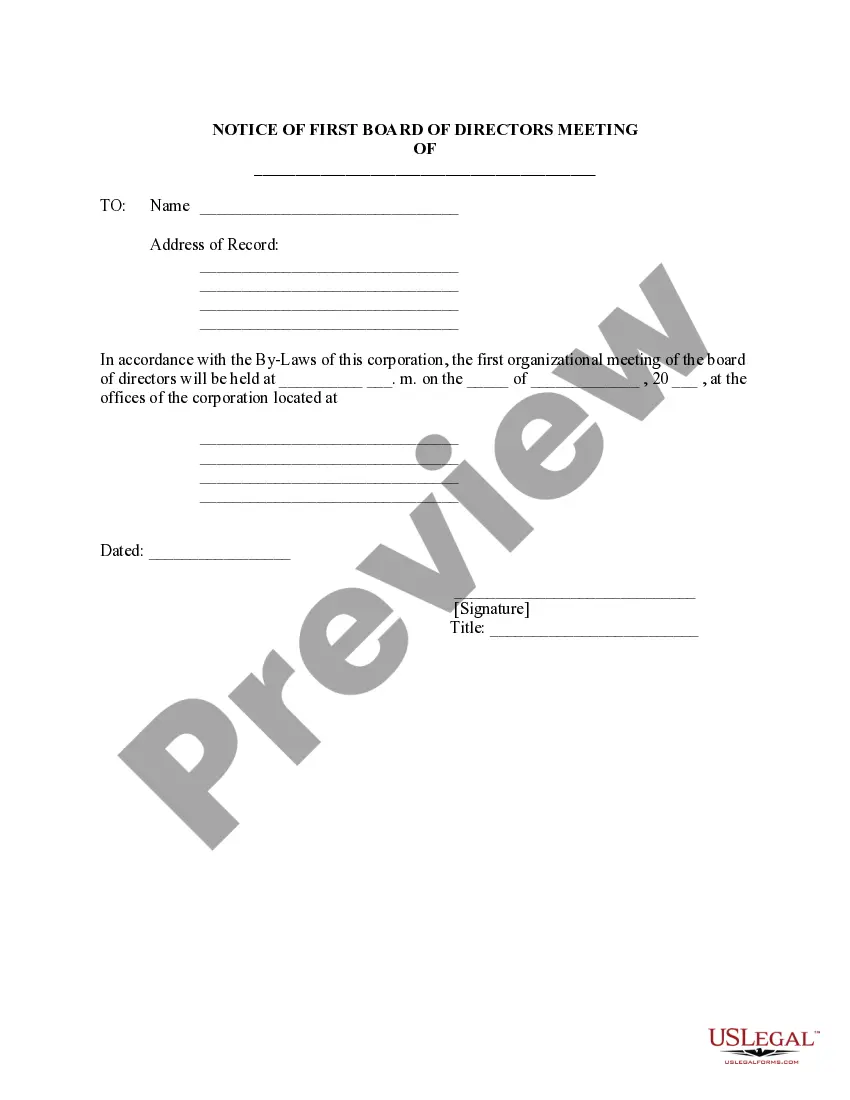
The first board meeting addresses crucial decisions such as appointing the chairman, confirming incorporation documents, approving key officeholders, adopting the common seal, appointing auditors, and authorizing banking arrangements. These decisions lay the groundwork for the company's operations.
What to Include in the Minutes of Board Meetings Name of all directors present and absent. Time, date, and venue of the meeting. Name of other personalities present. Name of the Chairman of the meeting. Agenda of the meetings. Matters discussed and each director's suggestions.
What should board of directors first meeting minutes include? Your corporation's first directors meeting typically focuses on initial organizational tasks, including electing officers, setting their salaries, resolving to open a bank account, and ratifying bylaws and actions of the incorporators.
The first board meeting of your company normally deals with a number of very important matters, including: Reporting the incorporation of the company. Appointment of the new directors and secretary. Establishment of the new registered address.
As the lone attendee you must document the date, time and location of the meeting. You must also list the discussion items, summarize the key points and document the decisions made. You must note all the positions in attendance, even if you occupy all of them.
At the beginning of the meeting, the host should inform attendees of the purpose of the meeting and the objective the group is striving to achieve. Let participants know why they're there and what the group will have once the meeting is done to keep everyone on track.
You've just incorporated your business – congratulations! The first thing that that you must do as a director of a new corporation is holding your first directors' meeting. The purpose of this meeting is for the initial directors to organize the corporation to allow it to conduct its activities.
The first committee meeting is like the first day of class. Setting the goals, rules, timetable and expectations is critical. Make sure committee members understand that their input, participation and attendance at meetings is important to the success of the search.
Steps to forming a corporation Select a state of incorporation. Choose a business name. File incorporation paperwork. Appoint a registered agent. Prepare corporate bylaws. Draft a shareholders' agreement. Hold the first board meeting. Get an EIN.

