Annual General Meeting Resolution Format In Florida
Description


Get your form ready online
Our built-in tools help you complete, sign, share, and store your documents in one place.
Make edits, fill in missing information, and update formatting in US Legal Forms—just like you would in MS Word.
Download a copy, print it, send it by email, or mail it via USPS—whatever works best for your next step.
Sign and collect signatures with our SignNow integration. Send to multiple recipients, set reminders, and more. Go Premium to unlock E-Sign.
If this form requires notarization, complete it online through a secure video call—no need to meet a notary in person or wait for an appointment.
We protect your documents and personal data by following strict security and privacy standards.

Make edits, fill in missing information, and update formatting in US Legal Forms—just like you would in MS Word.

Download a copy, print it, send it by email, or mail it via USPS—whatever works best for your next step.

Sign and collect signatures with our SignNow integration. Send to multiple recipients, set reminders, and more. Go Premium to unlock E-Sign.

If this form requires notarization, complete it online through a secure video call—no need to meet a notary in person or wait for an appointment.

We protect your documents and personal data by following strict security and privacy standards.
Looking for another form?







Form popularity
FAQ
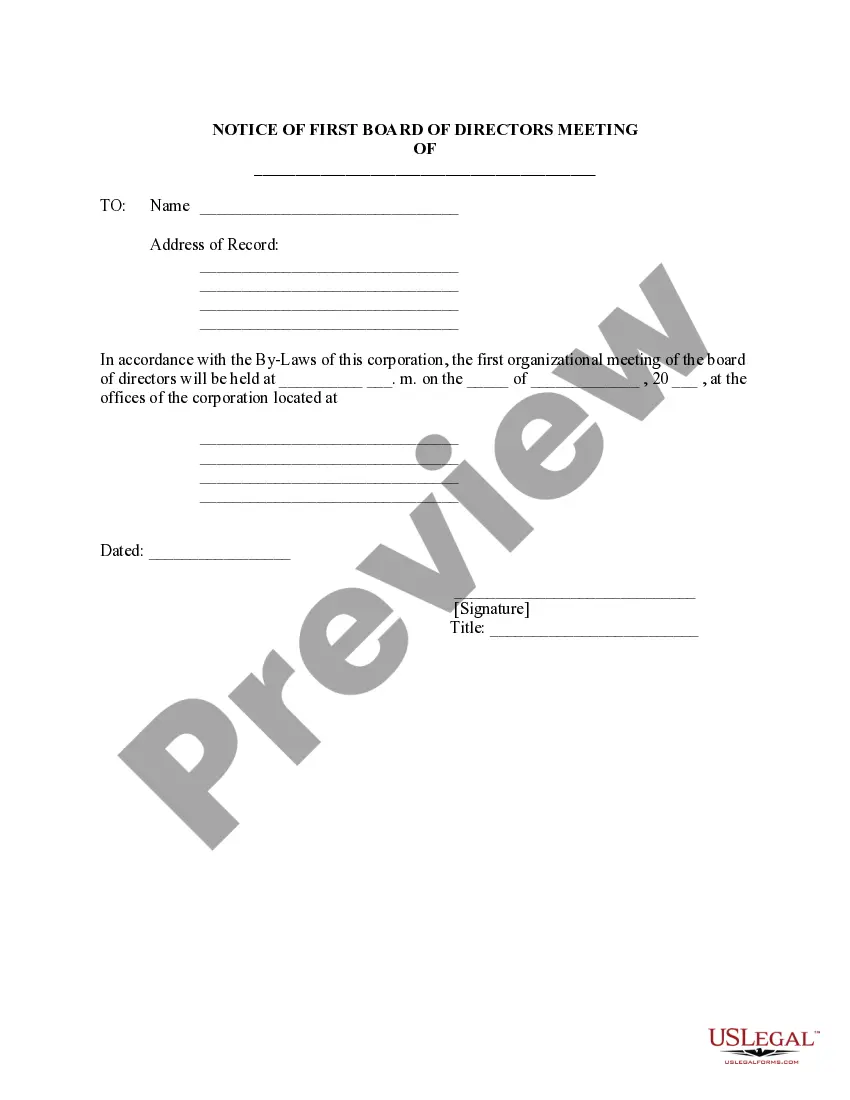
The purpose of a corporate resolution form in Florida is to document important decisions made by the corporation's board of directors. This form is used to record corporate actions such as the appointment of officers, adoption of bylaws, changes in corporate structure, and the authorization of major transactions.
Written notice of an annual meeting must include an agenda; be mailed, hand delivered, or electronically transmitted to each unit owner at least 14 days before the annual meeting; and be posted in a conspicuous place on the condominium property or association property at least 14 continuous days before the annual ...
An ordinary resolution is the most common resolution at a general meeting and serves as the backbone for decisions in a scheme. An ordinary resolution is carried by a majority vote – if there are more yes votes than there are no votes, then the motion is carried.
Notices of all board meetings must specifically identify agenda items for the meetings and must be posted in a conspicuous place in the community at least 48 hours in advance of a meeting, except in an emergency.
Many body corporate decisions have to be made at a general meeting. A decision is made at a general meeting if a motion is included on the agenda, and owners vote to pass the motion. This is called a resolution.
Notice when the annual meeting is happening must be given at least 14 days before the meeting by mail delivery or electronic transmission.
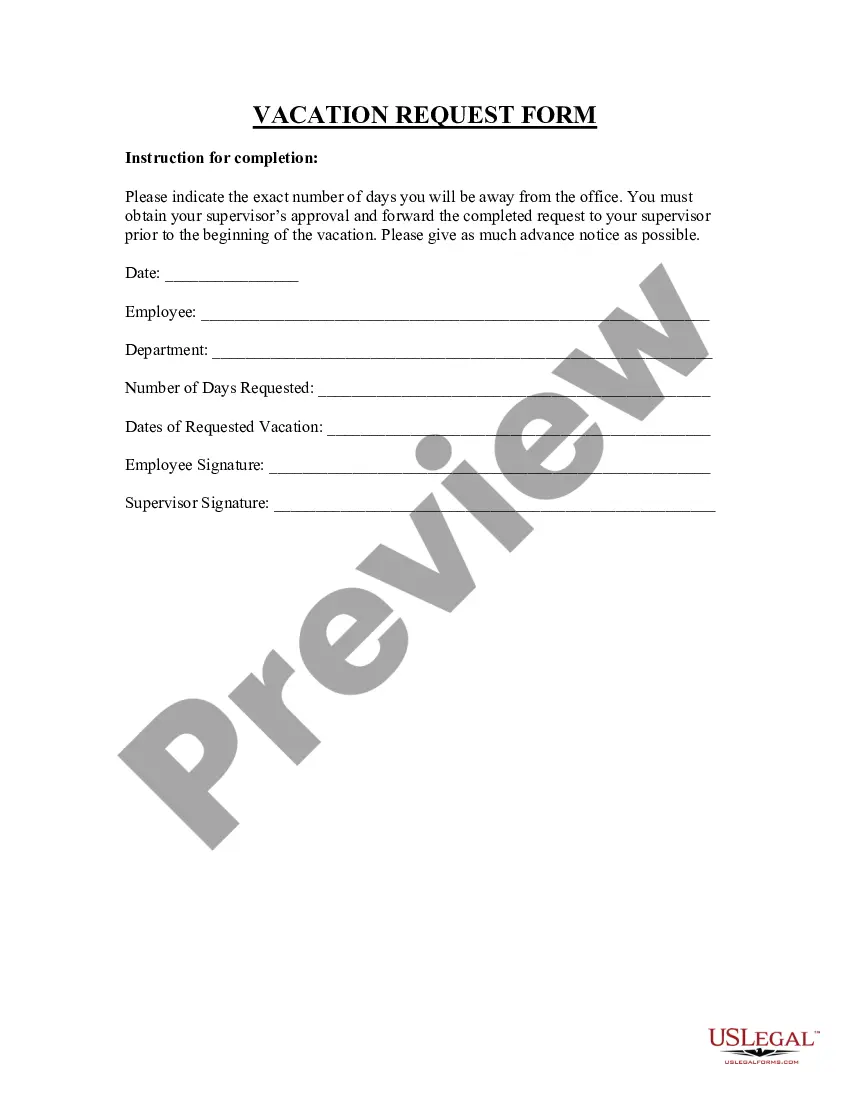
Florida law requires HOAs and condo associations to provide notice of board meetings at least 48 hours in advance, with some meetings requiring 14 days' notice. Notices must include the meeting's date, time, location, and agenda and must be posted in a conspicuous place within the community.
Filing an S Corp in Florida Step 1: Choose a Name. Use the Florida Department of State to find a business name that's not being used by another entity. Step 2: File your Articles of Incorporation. Step 3: Apply for a Business License. Step 4: Get Your EIN. Step 5: Submit the Form.
While both the Florida LLC and Florida S-Corporation protect the owners' individual assets from business liabilities, only the LLC shields business ownership from creditors of the shareholders. An S-Corp offers similar liability protection but requires specific ownership and tax structure considerations.
Yes, you can establish an S corp for yourself in California, but you must first either form a corporation or an LLC within the state.

