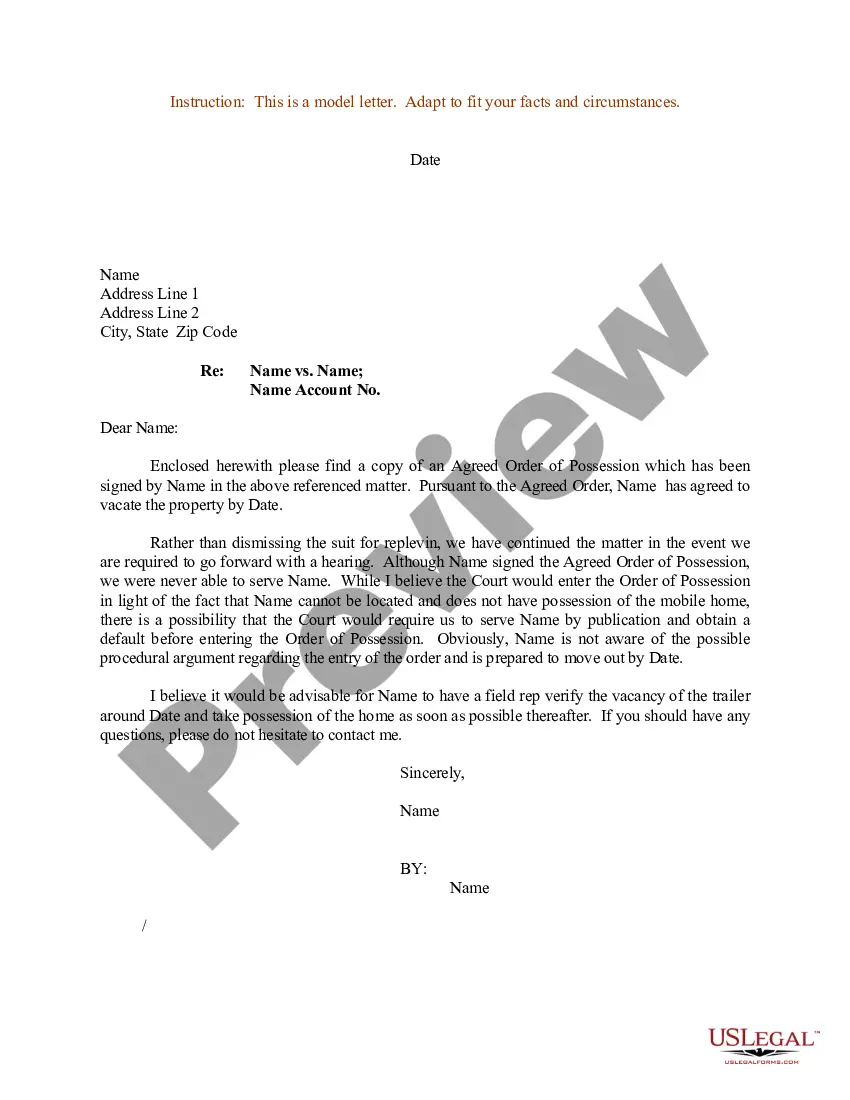
Court Letter Template With Reference In San Diego
Description



Get your form ready online
Our built-in tools help you complete, sign, share, and store your documents in one place.
Make edits, fill in missing information, and update formatting in US Legal Forms—just like you would in MS Word.
Download a copy, print it, send it by email, or mail it via USPS—whatever works best for your next step.
Sign and collect signatures with our SignNow integration. Send to multiple recipients, set reminders, and more. Go Premium to unlock E-Sign.
If this form requires notarization, complete it online through a secure video call—no need to meet a notary in person or wait for an appointment.
We protect your documents and personal data by following strict security and privacy standards.

Make edits, fill in missing information, and update formatting in US Legal Forms—just like you would in MS Word.

Download a copy, print it, send it by email, or mail it via USPS—whatever works best for your next step.

Sign and collect signatures with our SignNow integration. Send to multiple recipients, set reminders, and more. Go Premium to unlock E-Sign.

If this form requires notarization, complete it online through a secure video call—no need to meet a notary in person or wait for an appointment.

We protect your documents and personal data by following strict security and privacy standards.
Looking for another form?




Form popularity
FAQ
A general civil lawsuit starts when the plaintiff files 3 forms. A Summons is a notice that says there is a lawsuit. A Complaint is a form that says how the person was hurt, who hurt them and how much the damages are. A Civil Coversheet tells the court about the type of case you are filing.
If you want to file a motion, the process is generally something like this: You write your motion. You file your motion with the court clerk. The court clerk inserts the date and time your motion will be heard by the judge. You “serve” (mail) your motion to the other side.
Fill out the forms Fill out the Summons (form SUM-100) and a Complaint. Also, fill out a Civil Case Cover Sheet (form CM-010). Since you are the one filing a lawsuit, you're called the plaintiff. The person or company you're suing is the defendant.
Timeline of How to File a Lawsuit Step 1: File a Complaint. Plaintiff files a complaint and summons with the local county court. Step 2: Answer Complaint. Step 3: Discovery. Step 4: Failing to Respond to Discovery. Step 5: Conclusion of Lawsuit.
Pleading Paper Your name must start on line 1. The Court name and location must start on line 8. The caption of the case must start on line 11. You must have a footer with the title of the document. After the caption (the box with the name of the Plaintiff/Respondent) you can use the space as needed, using double spacing.
Format of electronic documents. (1) Text-searchable portable document format: Electronic documents must be in text-searchable portable document format (PDF) while maintaining the original document formatting.
Fill out the Summons (form SUM-100) and a Complaint. Also, fill out a Civil Case Cover Sheet (form CM-010). Since you are the one filing a lawsuit, you're called the plaintiff. The person or company you're suing is the defendant.
A civil action is commenced by filing a complaint with the court.
You can also ask your court's Self-Help Center or public law library for a sample or blank pleading paper.
A demand letter can be used as evidence that you sent written notice before filing your lawsuit. This is especially important if your claim is based on a federal act or state statute that requires you to provide notice before filing a lawsuit.

