Court Letter Sample With Conforme In Sacramento
Description



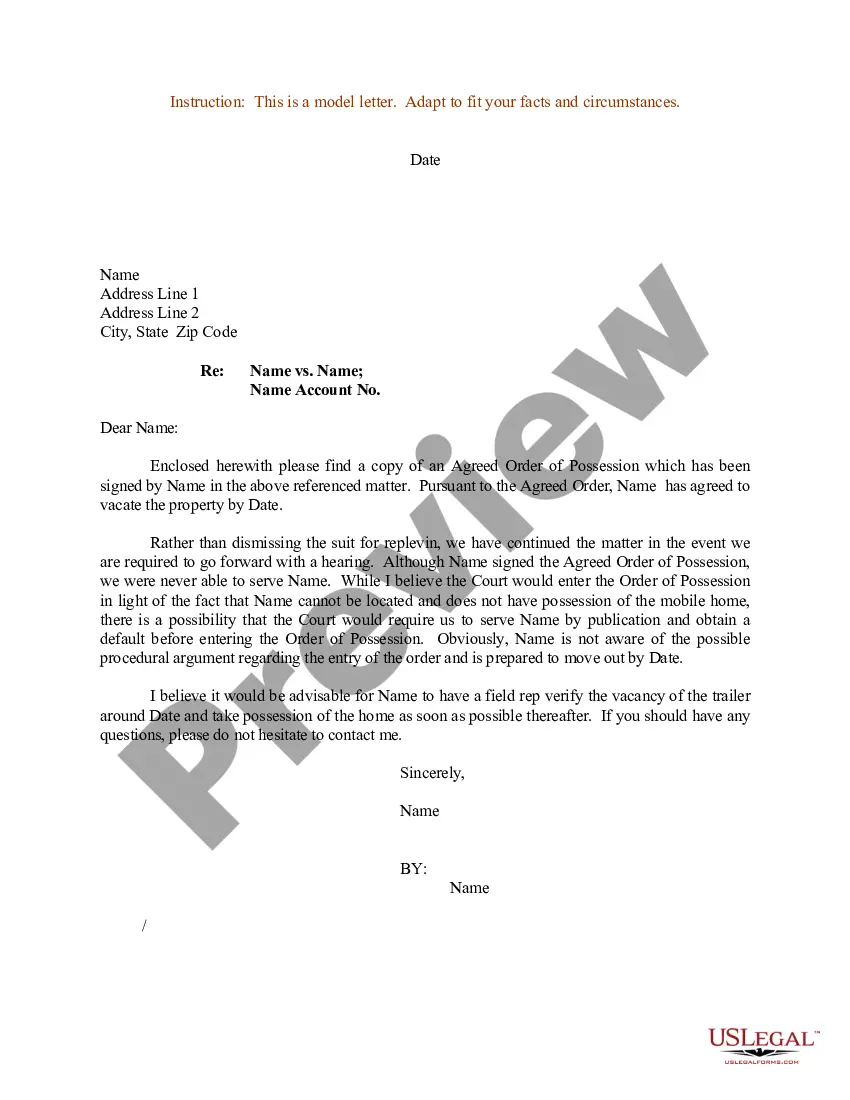
Get your form ready online
Our built-in tools help you complete, sign, share, and store your documents in one place.
Make edits, fill in missing information, and update formatting in US Legal Forms—just like you would in MS Word.
Download a copy, print it, send it by email, or mail it via USPS—whatever works best for your next step.
Sign and collect signatures with our SignNow integration. Send to multiple recipients, set reminders, and more. Go Premium to unlock E-Sign.
If this form requires notarization, complete it online through a secure video call—no need to meet a notary in person or wait for an appointment.
We protect your documents and personal data by following strict security and privacy standards.

Make edits, fill in missing information, and update formatting in US Legal Forms—just like you would in MS Word.

Download a copy, print it, send it by email, or mail it via USPS—whatever works best for your next step.

Sign and collect signatures with our SignNow integration. Send to multiple recipients, set reminders, and more. Go Premium to unlock E-Sign.

If this form requires notarization, complete it online through a secure video call—no need to meet a notary in person or wait for an appointment.

We protect your documents and personal data by following strict security and privacy standards.
Looking for another form?



Form popularity
FAQ
The server must: Be at least 18 years old. Not be part of your case. Give your court papers to the other side by the deadline. Fill out a proof of service form. Give the proof of service form back to you so you can file it with the court.
Send a written request directly to the Court Reporter: Complete the Transcript Request Form. Email form to the Court Reporter (see contact list below) Wait for a response from the Court Reporter regarding next steps.
The Public Case Access System provides you with the ability to search for cases by name, case number, or filing date. In Civil and Probate cases, you are able to view information regarding case participants, events, and documents (where applicable).
There are several ways to obtain copies of documents: Visit PACER to access court documents; Visit the Clerk's Office in person (View Court Locator for office locations); To electronically submit the copy request form, you must complete, save, and email the form to paygov_request@cacbcourts (link sends e-mail);
If you want to request one of these files, you may order it. Go to the Civil Records Unit in the Gordon D. Schaber Sacramento County Courthouse Room 102, or call the Civil Records Unit at 916-874-7186. Most civil court files are public records and may be viewed by anyone.
Request in Person at Clerk's Office - If you visit the Clerk's Office to obtain the certified copies, charges and the processing time needed to complete your order will be explained in person.
For general information, please email the Small Claims Division at scefile@saccourt.ca or call (916) 875-7746.
Monetary Limits Usually, the most "a natural person" can ask for is $12,500; however, you are limited to filing no more than two claims anywhere in the State of California for over $2,500 in one calendar year. You may file an unlimited amount of claims for $2,500 or less.
Go to the Civil Records Unit in the Gordon D. Schaber Sacramento County Courthouse Room 102, or call the Civil Records Unit at 916-874-7186. Most civil court files are public records and may be viewed by anyone. To see a court file, you must present valid picture identification, such as a current driver's license.
If you file a case, you are called the Plaintiff. The person you sue is the Defendant. You start your case by filling out an SC-100 Plaintiff's Claim form and filing it with the court clerk. Be sure you name the Defendant correctly or you may not be able to collect your judgment.

