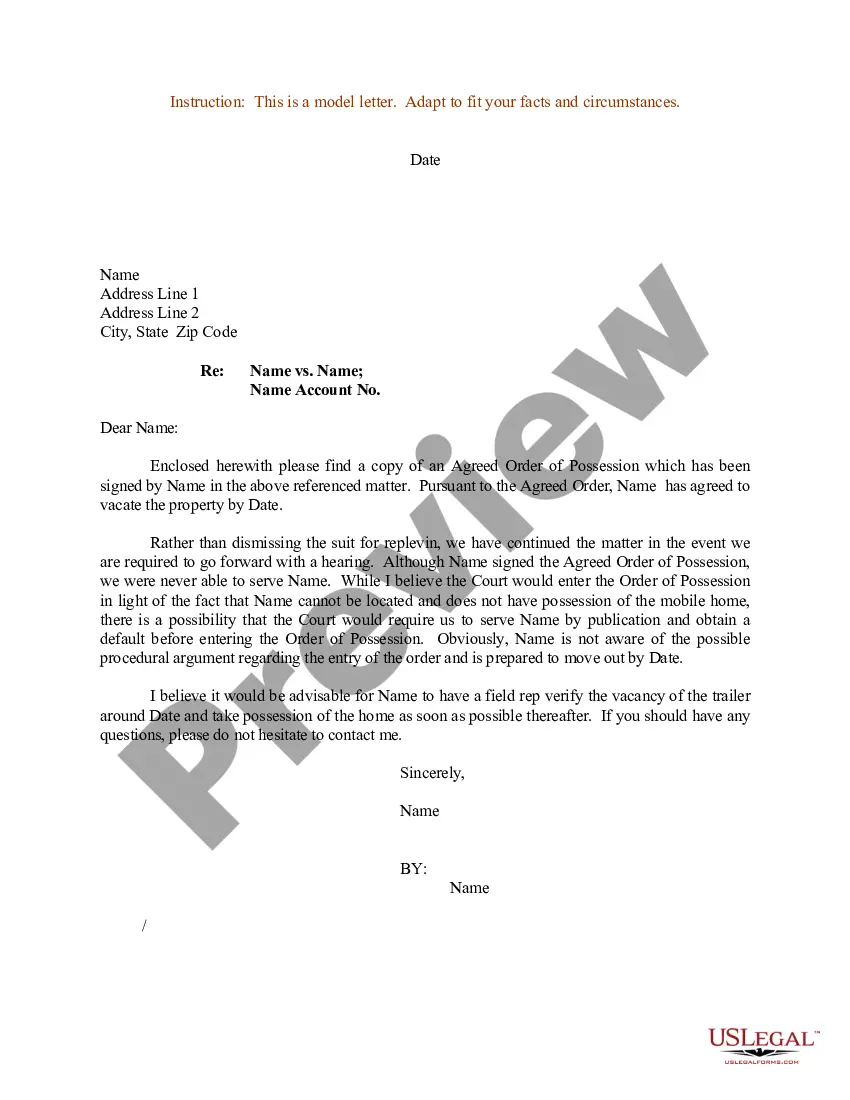
Court Letter Sample Formal In Ohio
Description



Get your form ready online
Our built-in tools help you complete, sign, share, and store your documents in one place.
Make edits, fill in missing information, and update formatting in US Legal Forms—just like you would in MS Word.
Download a copy, print it, send it by email, or mail it via USPS—whatever works best for your next step.
Sign and collect signatures with our SignNow integration. Send to multiple recipients, set reminders, and more. Go Premium to unlock E-Sign.
If this form requires notarization, complete it online through a secure video call—no need to meet a notary in person or wait for an appointment.
We protect your documents and personal data by following strict security and privacy standards.

Make edits, fill in missing information, and update formatting in US Legal Forms—just like you would in MS Word.

Download a copy, print it, send it by email, or mail it via USPS—whatever works best for your next step.

Sign and collect signatures with our SignNow integration. Send to multiple recipients, set reminders, and more. Go Premium to unlock E-Sign.

If this form requires notarization, complete it online through a secure video call—no need to meet a notary in person or wait for an appointment.

We protect your documents and personal data by following strict security and privacy standards.
Looking for another form?






Form popularity
FAQ
A character letter is designed to show support for a defendant in a criminal case. These letters have the potential to influence the court, and may even impact the ultimate sentence in a criminal case. For this reason, character letters should be carefully drafted in order to maximize their utility.
Introduce yourself to the Court. Explain how you know (and how long you have known) the defendant. Make it personal when describing the defendant's characteristics. Can you think of examples of good deeds done by the defendant (hard work, dedication to family/church/community, generosity, etc).
Follow this guide to write a compelling and respectful letter. Start With Proper Salutation. Introduce Yourself and Your Relationship With the Defendant. Discuss the Defendant's Character Positively. Include Specific Examples and Anecdotes. Conclude With a Summary of Your Recommendations.
Most formal letters will start with 'Dear' before the name of the person that you are writing to. You can choose to use first name and surname, or title. and surname. However, if you don't know the name of the person you are writing to, you must use 'Dear Sir or Madam,'.
To obtain your Ohio Certificate of Authority, you will submit an Application for Certificate of Authority, along with required certificates or certified copies from your home state. You will need to appoint a registered agent in order for your filing to be approved.
Your letter can be typed or neatly handwritten. You should date and sign your letter. You don't need to write formal words to the Court, just make sure everything in your letter is genuine. It is usually a good idea to keep your letter to a page in length, and no more than two pages.
Requests for copies of case transcripts and/or depositions should be directed to the court reporter rather than to the court–unless you can furnish satisfactory proof that you are not a Party to the related action. Or, you may inspect a case Transcript or deposition during regular business hours at our office.
Follow this guide to write a compelling and respectful letter. Start With Proper Salutation. Introduce Yourself and Your Relationship With the Defendant. Discuss the Defendant's Character Positively. Include Specific Examples and Anecdotes. Conclude With a Summary of Your Recommendations.
