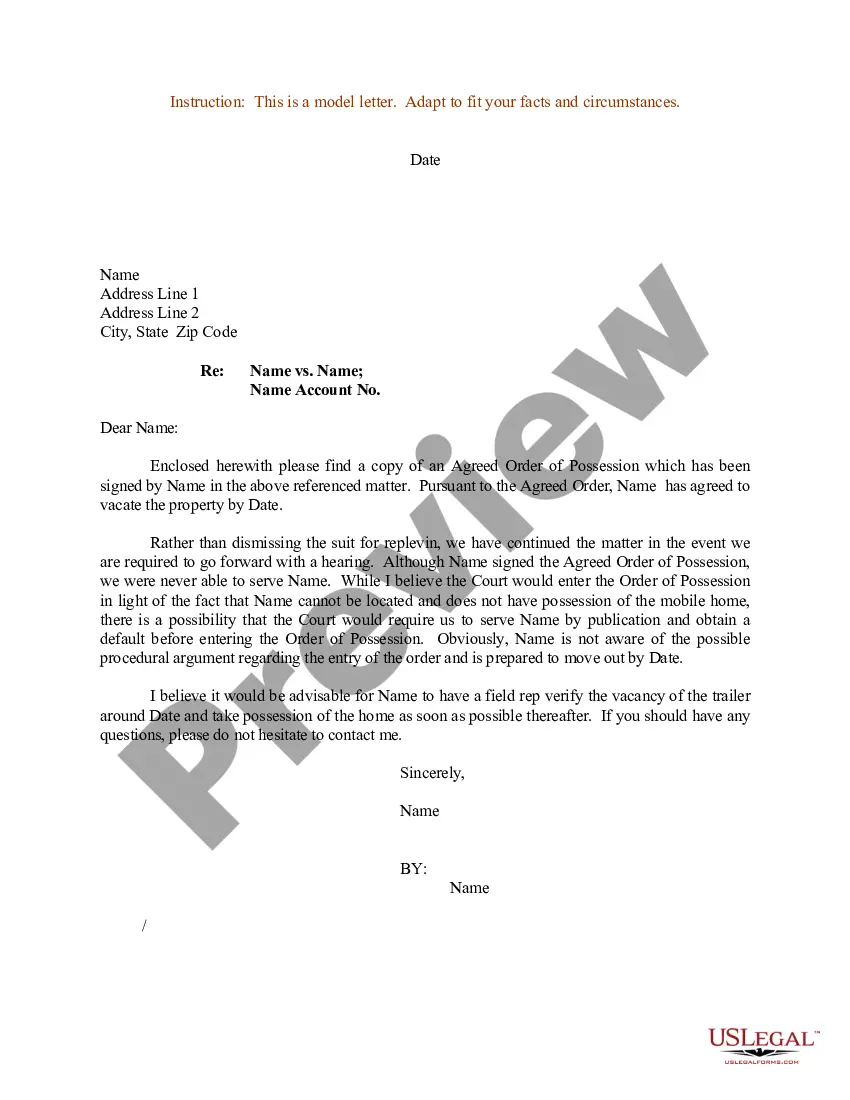
Court Letter Sample With Name In Houston
Description



Get your form ready online
Our built-in tools help you complete, sign, share, and store your documents in one place.
Make edits, fill in missing information, and update formatting in US Legal Forms—just like you would in MS Word.
Download a copy, print it, send it by email, or mail it via USPS—whatever works best for your next step.
Sign and collect signatures with our SignNow integration. Send to multiple recipients, set reminders, and more. Go Premium to unlock E-Sign.
If this form requires notarization, complete it online through a secure video call—no need to meet a notary in person or wait for an appointment.
We protect your documents and personal data by following strict security and privacy standards.

Make edits, fill in missing information, and update formatting in US Legal Forms—just like you would in MS Word.

Download a copy, print it, send it by email, or mail it via USPS—whatever works best for your next step.

Sign and collect signatures with our SignNow integration. Send to multiple recipients, set reminders, and more. Go Premium to unlock E-Sign.

If this form requires notarization, complete it online through a secure video call—no need to meet a notary in person or wait for an appointment.

We protect your documents and personal data by following strict security and privacy standards.
Looking for another form?







Form popularity
FAQ
To file online, go to E-File Texas ( ) 11 and follow the instructions. To file in person, take your answer (and copies) to the district clerk's office in the county where the plaintiff filed the case. At the clerk's office: Turn in your answer form (and copies).
How can the respondent be served? Personal Service. (This method is best.) Service by Registered or Certified Mail, Return Receipt Requested. Substituted Service by Court Order. Service by Social Media. Service by Posting (no kids). Service by Publication (with kids).
Be clear and concise when presenting your case; don't go off on tangents, don't insult the other party, don't bring up information or events that aren't directly related to the matter at hand. Rehearse presenting your case before you get into court. Listen to everything the judge says and answer clearly.
This is done by putting your request in writing and sending it to the court and to the plaintiff. Once you have been served with the citation, you have 14 days to file an answer, which is your response to your lawsuit. You must give your answer to the court and also send it to the plaintiff.
This is done by putting your request in writing and sending it to the court and to the plaintiff. Once you have been served with the citation, you have 14 days to file an answer, which is your response to your lawsuit. You must give your answer to the court and also send it to the plaintiff.
To file online, go to E-File Texas ( ) 11 and follow the instructions. To file in person, take your answer (and copies) to the district clerk's office in the county where the plaintiff filed the case. At the clerk's office: Turn in your answer form (and copies).
In civil cases, the first stage is the filing of a petition by a plaintiff, which states the legal basis for the lawsuit. A petition sets out the petitioner's version of the facts. The defendant then receives a copy of it and a notice to appear in court. In legal terms, petitions are similar to complaints.
Rule 106 - Method of Service (a) Unless the citation or court order otherwise directs, the citation must be served by: (1) delivering to the defendant, in person, a copy of the citation, showing the delivery date, and of the petition; or (2) mailing to the defendant by registered or certified mail, return receipt ...
In some circumstances, you file a petition or a motion. The court has several complaint forms that you may use in drafting your complaint. The forms are available online and at the Pro Se Intake Unit. You may also write your own complaint without using a court form.

