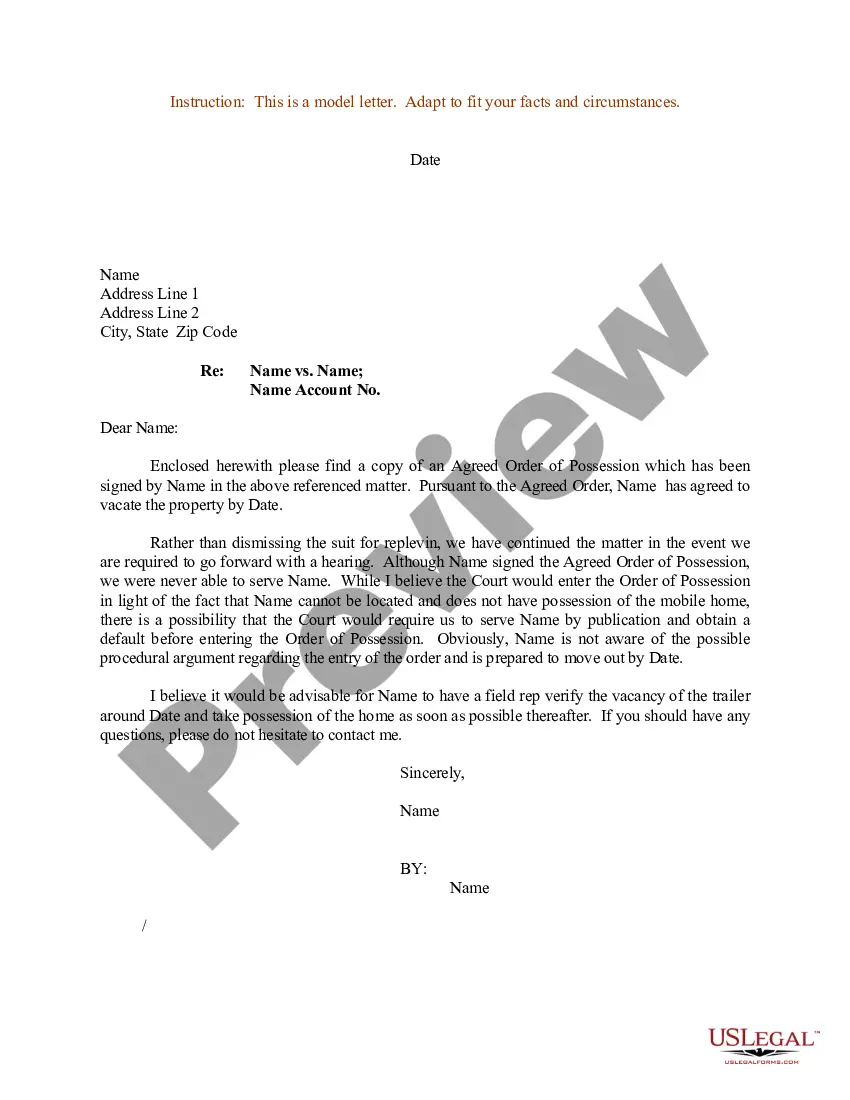
Court Letter Sample Formal In Contra Costa
Description



Get your form ready online
Our built-in tools help you complete, sign, share, and store your documents in one place.
Make edits, fill in missing information, and update formatting in US Legal Forms—just like you would in MS Word.
Download a copy, print it, send it by email, or mail it via USPS—whatever works best for your next step.
Sign and collect signatures with our SignNow integration. Send to multiple recipients, set reminders, and more. Go Premium to unlock E-Sign.
If this form requires notarization, complete it online through a secure video call—no need to meet a notary in person or wait for an appointment.
We protect your documents and personal data by following strict security and privacy standards.

Make edits, fill in missing information, and update formatting in US Legal Forms—just like you would in MS Word.

Download a copy, print it, send it by email, or mail it via USPS—whatever works best for your next step.

Sign and collect signatures with our SignNow integration. Send to multiple recipients, set reminders, and more. Go Premium to unlock E-Sign.

If this form requires notarization, complete it online through a secure video call—no need to meet a notary in person or wait for an appointment.

We protect your documents and personal data by following strict security and privacy standards.
Looking for another form?








Form popularity
FAQ
How can I find out if I have a warrant for my arrest? We do not provide warrant information to the public. Contact the court of jurisdiction, or your local law enforcement agency.
To find out if you have an active warrant in California, you can either: Search your name on the appropriate County Sheriff's website or Superior Court website. For example, in Orange County, you can search the Orange County Sheriff's Department website. Run a search on the private CaliforniaArrests website.
Typically, the best first step is to look for information on the court's website. Go to the court's website where the case is filed. Most courts have a section on their website called "online services" or something similar.
If you are: a person (this includes sole-proprietors) you may claim up to $12,500; if you are a Corporation, limited liability company or partnership, you may claim up to $6,250.
For criminal histories, arrest records, copies of citations, dispositions, court dates and records, warrant checks and Information, and restraining order information, please contact the Superior Court, 725 Court St., Martinez or Call (925) 608-1000.
Demand Letter Components Facts of the case. An outline of what happened. Statement of the issue. A brief description of the problem. Demand. The dollar amount or action necessary to resolve the case. Response deadline. The date by which the recipient must respond. Noncompliance consequences.
When drafting an answer, one must: (1) follow the local, state, and federal court rules; (2) research the legal claims in the adversary's complaint; (3) respond to the adversary's factual allegations; and (4) assert affirmative defenses, counterclaims, cross-claims, or third-party claims, if applicable.
Draft an Answer. Pull the header information from the plaintiff's petition. Title your Answer “Answer to Plaintiff's Petition/Complaint.” Center this title and make it bold. Introduce yourself. Admit, deny, or claim that you lack sufficient knowledge to admit or deny each of the plaintiff's numbered allegations.
Sample Format for a Character Letter First Paragraph: Explain who you are. Second Paragraph: Explain why you are writing the letter. Third Paragraph: Thank the court, and make your “ask.” State that you are available to confirm the facts in this letter as necessary.
An answer is a reply to a question or a solution to a problem. In law, an answer refers to a defendant's first formal written statement to a plaintiff's initial petition or complaint. This opening written statement will admit or deny the allegations, or demand more information about the claims of wrongdoing.
