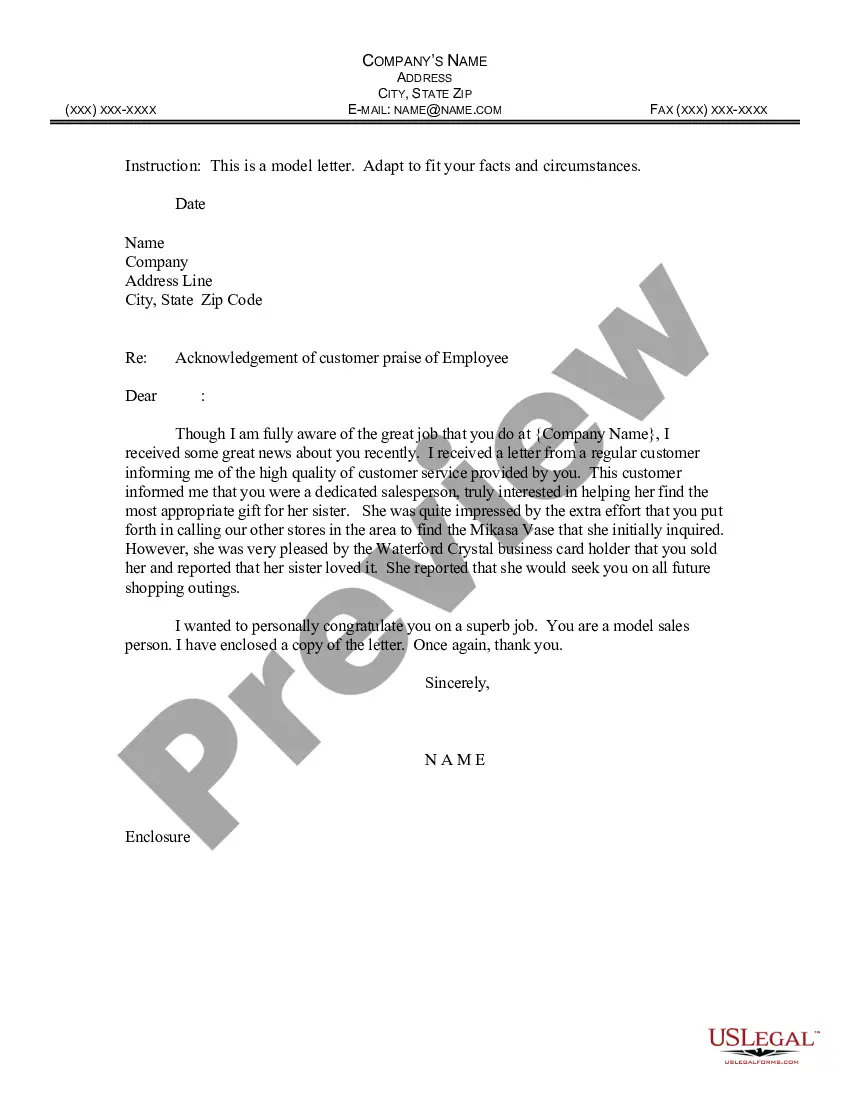
Employee Praise Letter Without Name In Utah
Description

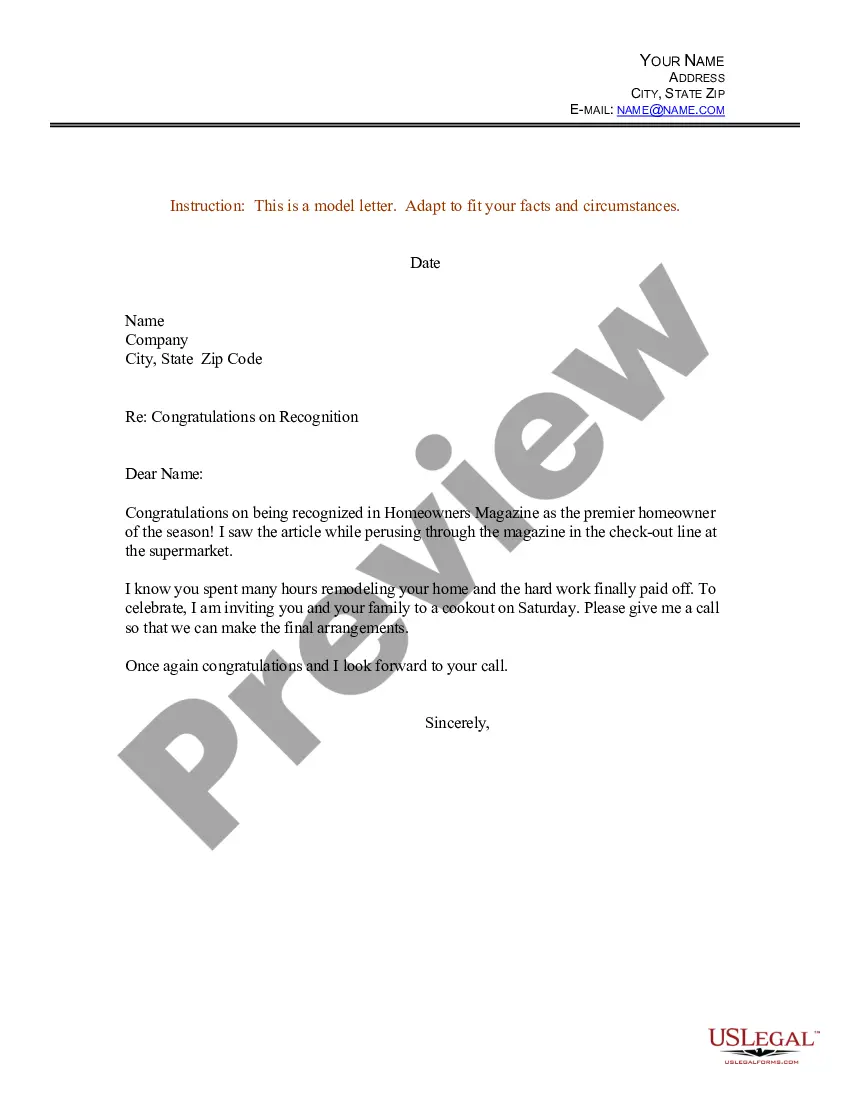
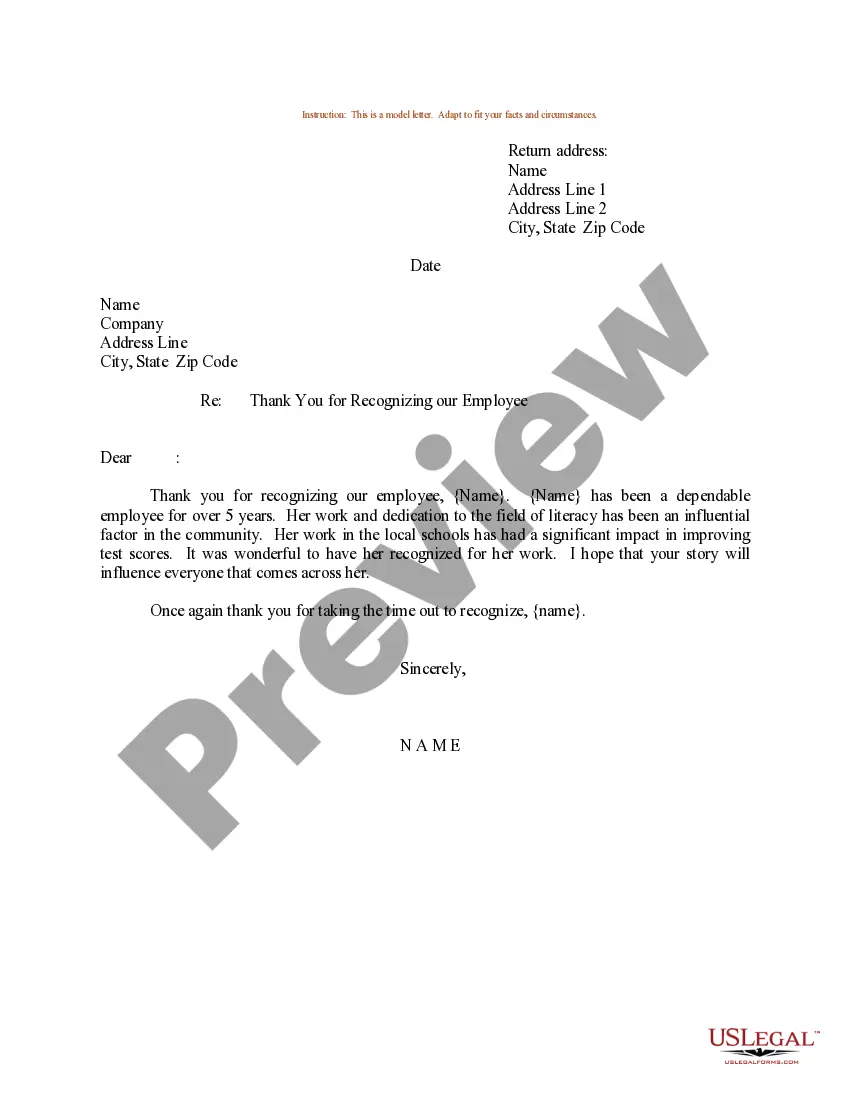
Get your form ready online
Our built-in tools help you complete, sign, share, and store your documents in one place.
Make edits, fill in missing information, and update formatting in US Legal Forms—just like you would in MS Word.
Download a copy, print it, send it by email, or mail it via USPS—whatever works best for your next step.
Sign and collect signatures with our SignNow integration. Send to multiple recipients, set reminders, and more. Go Premium to unlock E-Sign.
If this form requires notarization, complete it online through a secure video call—no need to meet a notary in person or wait for an appointment.
We protect your documents and personal data by following strict security and privacy standards.

Make edits, fill in missing information, and update formatting in US Legal Forms—just like you would in MS Word.

Download a copy, print it, send it by email, or mail it via USPS—whatever works best for your next step.

Sign and collect signatures with our SignNow integration. Send to multiple recipients, set reminders, and more. Go Premium to unlock E-Sign.

If this form requires notarization, complete it online through a secure video call—no need to meet a notary in person or wait for an appointment.

We protect your documents and personal data by following strict security and privacy standards.
Looking for another form?










Form popularity
FAQ
Dear Recipient's Name, I am writing to express my sincere thanks for the exceptional service provided by your team in the recent repairs. Your attention to detail and the timely completion of the task were truly commendable. Your expertise and dedication to delivering outstanding service have greatly impressed me.
I wanted to take a moment to recognize all of you for everything you've contributed to our account over the last year. Thank you for your hard work, creativity, commitment to our customers, and for being a joy to work with every day. I'm so grateful for you. Thank you for truly being a team player.
I wanted to take a moment to express my sincere appreciation for the outstanding work you consistently deliver. Your dedication, attention to detail, and commitment to excellence do not go unnoticed. Your contributions have played a pivotal role in our success, and we are grateful to have you on our team. Thank you!
I am writing to you to sincerely express my gratitude for your exceptional effort during insert information about the project or action. You are a valued member of the team. I truly appreciate all that you have accomplished. Your insert the employee's admirable qualities, skills or behaviours are remarkable.
Here are nine key tips for writing an employee recognition letter: Choose the appropriate format. Personalize the message. Determine why you're writing the letter. Recognize specific achievements. Use active voice and positive vocabulary. Express your sincere appreciation. Share others' recognition.
I am writing to you to sincerely express my gratitude for your exceptional effort during insert information about the project or action. You are a valued member of the team. I truly appreciate all that you have accomplished. Your insert the employee's admirable qualities, skills or behaviours are remarkable.
5 Employee appreciation letter best practices 1) Be timely. Appreciation is more impactful when it's immediate and in the moment. 2) Be specific. A generic “great job” might be easy to write, but it's just as easy to forget. 3) Make it genuine. 4) Give appreciation often. 5) Cultivate culture.
Instead, use "Dear Hiring Manager", "Dear Recruiter", or "Dear Job Title Team". These salutations show that you are addressing the person or the group of people who are responsible for hiring, and that you have some knowledge of the role and the company.
To Whom It May Concern is a formal greeting that can be used to start an email or letter addressed to someone whose name you don't know or to no one in particular. It's still used, but it's considered somewhat old-fashioned and impersonal. There are better options in most contexts.
A generic salutation is a general way of addressing a person or a group of people, such as "Dear Sir or Madam", "To Whom It May Concern", or "Dear Hiring Manager". A generic salutation should be followed by a colon, not a comma. A generic salutation should also match the purpose and audience of your letter.