Annual Meeting Shareholders With Employee In Allegheny
Description



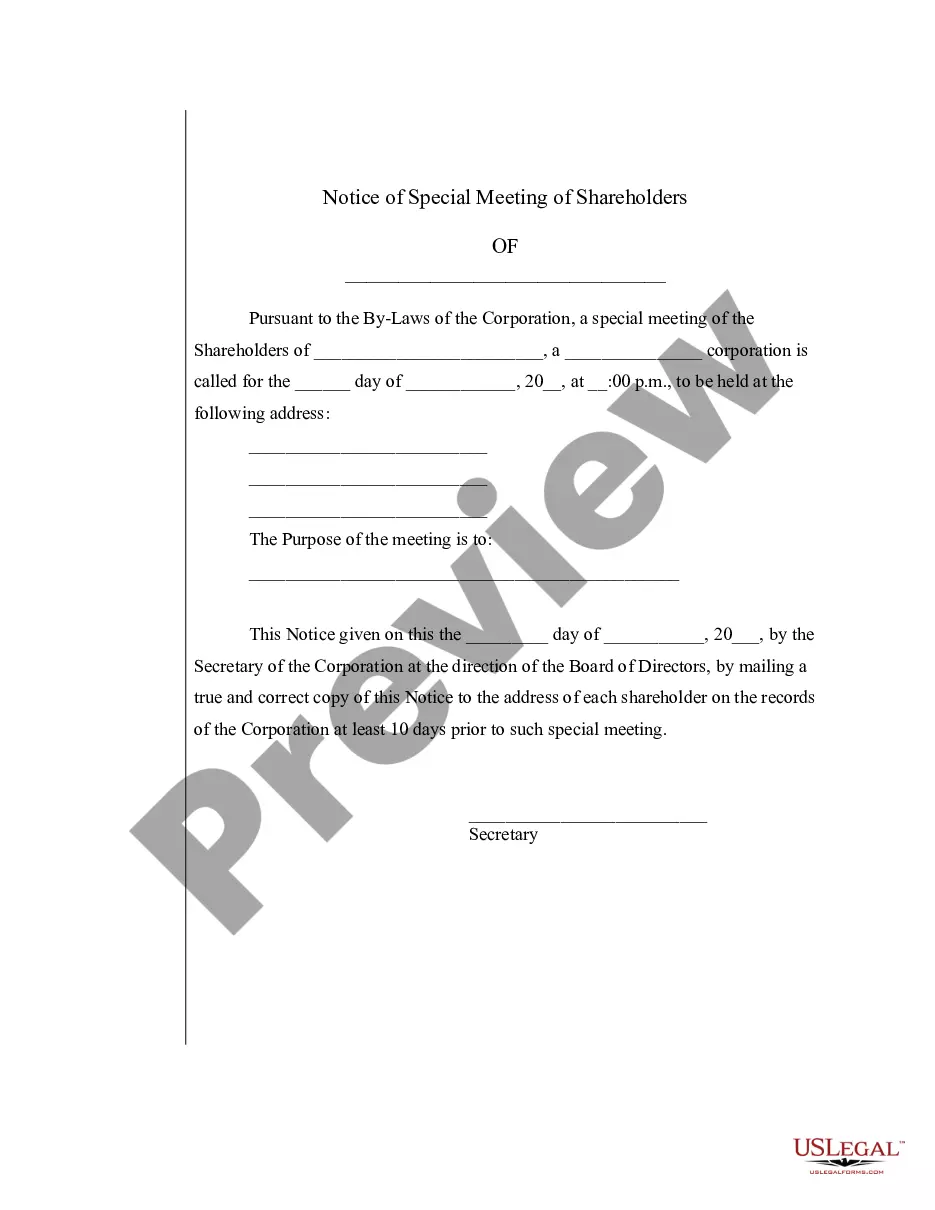
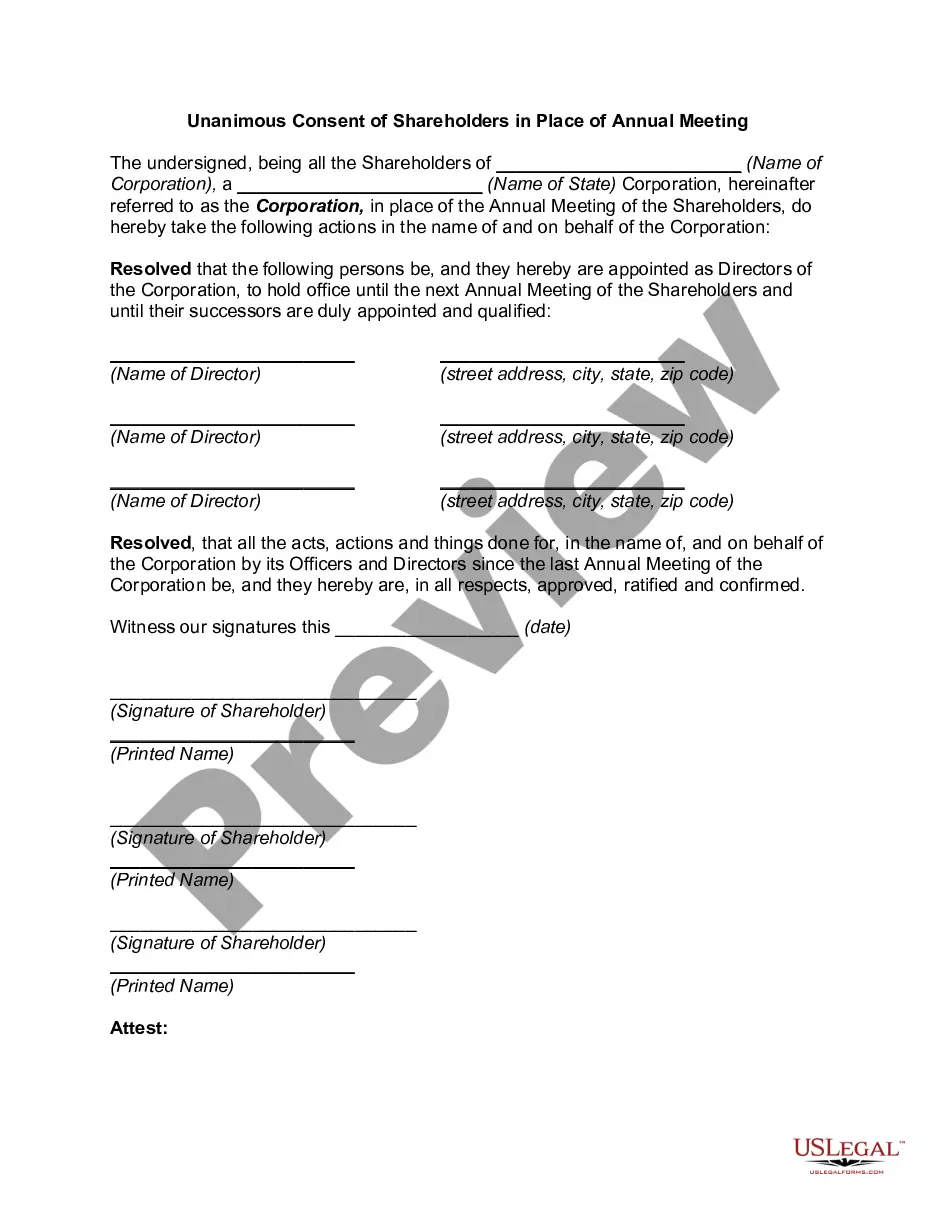
Get your form ready online
Our built-in tools help you complete, sign, share, and store your documents in one place.
Make edits, fill in missing information, and update formatting in US Legal Forms—just like you would in MS Word.
Download a copy, print it, send it by email, or mail it via USPS—whatever works best for your next step.
Sign and collect signatures with our SignNow integration. Send to multiple recipients, set reminders, and more. Go Premium to unlock E-Sign.
If this form requires notarization, complete it online through a secure video call—no need to meet a notary in person or wait for an appointment.
We protect your documents and personal data by following strict security and privacy standards.

Make edits, fill in missing information, and update formatting in US Legal Forms—just like you would in MS Word.

Download a copy, print it, send it by email, or mail it via USPS—whatever works best for your next step.

Sign and collect signatures with our SignNow integration. Send to multiple recipients, set reminders, and more. Go Premium to unlock E-Sign.

If this form requires notarization, complete it online through a secure video call—no need to meet a notary in person or wait for an appointment.

We protect your documents and personal data by following strict security and privacy standards.
Looking for another form?



Form popularity
FAQ
Not complying with regulations regarding annual shareholder meetings can put your company, and its owners, at personal risk for liability.
The formalities for calling (or convening) shareholders' meetings are much stricter than those for board meetings. At least fourteen clear days' written notice must be given to all shareholders, directors and any auditor. This is regardless of whether resolutions are to be passed as ordinary or special resolutions.
Scheduled meetings – Your business should hold at least one annual shareholders' meeting. You can have more than one per year, but one per year is often the required minimum. An annual board of directors meeting is often also held in conjunction with the shareholders' meeting as well.
AGMs are mandatory for both public and private companies. All shareholders are legally obligated to receive an invitation to these meetings. The board of directors should also be represented. An auditor may also be present if the organization is subject to an audit requirement.
If your business is set up and registered as a Corporation, you're required by law to hold an annual shareholder meeting and to document the meeting with minutes.
When should I hold a shareholder meeting? An annual shareholder meeting is typically scheduled just after the end of the fiscal year. This allows for the previous year's financial performance to be fully assessed and discussed.
A General Meeting is simply a meeting of shareholders and 21 days' notice must be given to shareholders, but this can be reduced to 14 days, or increased to 28 days, in certain situations.
A company other than OPC must conduct at least one Annual General Meeting (AGM) in a financial year. The first AGM of the company, i.e. a newly incorporated company, should be held within nine months from the closing of the first financial year.
An AGM meeting, also known as an 'Annual General Meeting', or simply 'AGM', is an instrumental meeting in which all of the shareholders of an organisation meet and discuss aspects of the company. Several key activities take place, and this is the primary event through which companies engage in the democratic process.

