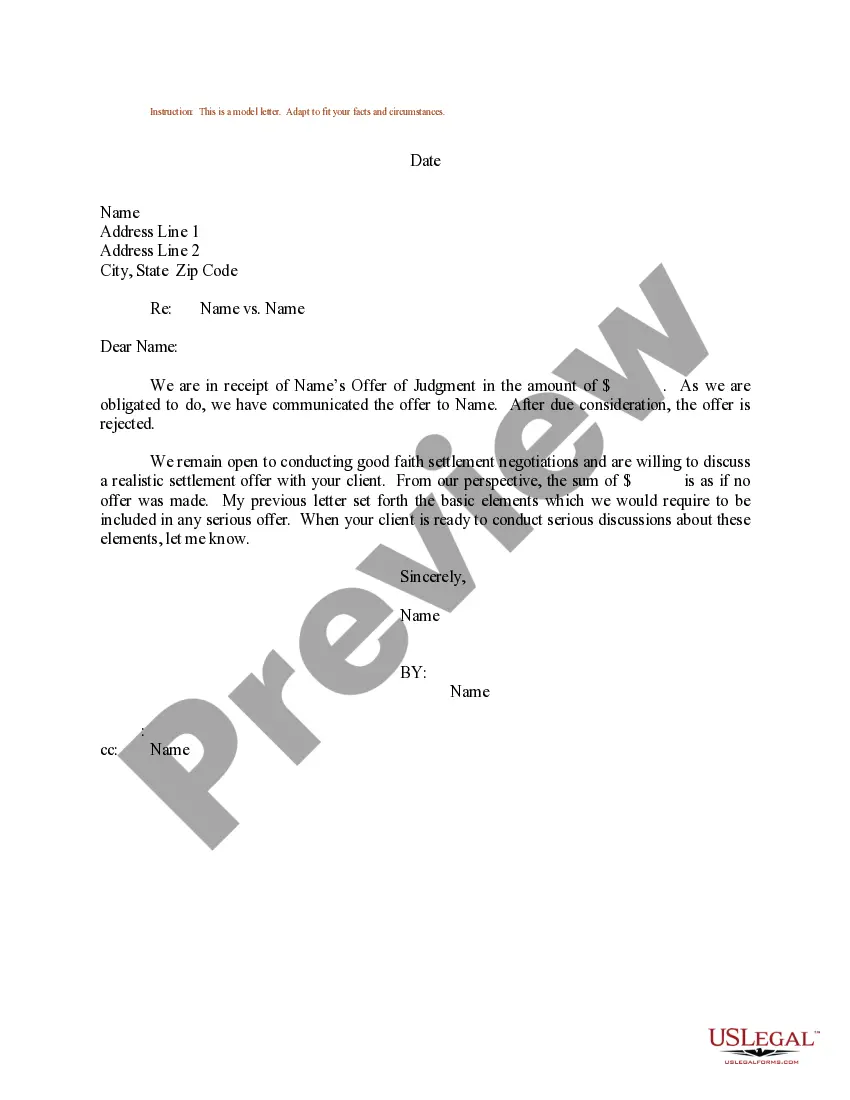
Sample Letter Rejecting Settlement Offer For Collection Agency In Washington
Description


Get your form ready online
Our built-in tools help you complete, sign, share, and store your documents in one place.
Make edits, fill in missing information, and update formatting in US Legal Forms—just like you would in MS Word.
Download a copy, print it, send it by email, or mail it via USPS—whatever works best for your next step.
Sign and collect signatures with our SignNow integration. Send to multiple recipients, set reminders, and more. Go Premium to unlock E-Sign.
If this form requires notarization, complete it online through a secure video call—no need to meet a notary in person or wait for an appointment.
We protect your documents and personal data by following strict security and privacy standards.

Make edits, fill in missing information, and update formatting in US Legal Forms—just like you would in MS Word.

Download a copy, print it, send it by email, or mail it via USPS—whatever works best for your next step.

Sign and collect signatures with our SignNow integration. Send to multiple recipients, set reminders, and more. Go Premium to unlock E-Sign.

If this form requires notarization, complete it online through a secure video call—no need to meet a notary in person or wait for an appointment.

We protect your documents and personal data by following strict security and privacy standards.
Looking for another form?










Form popularity
FAQ
Here are six steps that should help you successfully negotiate your debt. Learn About the Debt. Understand What You Can Afford To Offer. Speak to the Debt Collector. Make Sure All Agreements Are in Writing. Make Your Payments. Negotiate Improvement to Your Credit Reports.
Clearly define objectives before drafting the settlement offer. If monetary compensation is involved, the offer should specify the amount, payment schedule, and contingencies for non-payment. Non-monetary terms, such as confidentiality clauses, mutual releases, or other protective measures, should also be considered.
What to Do When a Debt Collector Calls Decide If You Want to Talk to the Collector. If You Decide to Talk to the Collector, Keep a Record. Write to the Collector to Request it Stop Contacting You (If That's What You Want) ... Tell the Collector If You Think You Don't Owe the Debt.
This letter should clearly state the reasons for rejecting the offer, such as it not providing maximum compensation for the damages incurred. Provide specific reasons for your rejection, highlighting the damages and losses not covered by the proposed settlement.
If you write a letter, instead of using the tear-off form, the debt dispute letter should include your personal identifying information; verification of the amount of debt owed; the name of the creditor for the debt; and a request the debt not be reported to credit reporting agencies until the matter is resolved or ...
To respond to the lawsuit, fill out an answer and appearance form. Next, complete the certificate of service form. Then, file your forms with the court within 20 days of receiving the summons. Finally, deliver your completed paperwork to the plaintiff (the person suing you).
If you do not respond, you will lose certain rights, but it is not a legal admission, usable in court, that you owe the debt. If there is no response, or if the letter goes back to the collection agency undelivered or marked moved, deceased, in jail, etc., the collection agency can still due you.
Here are key cases when not to accept: The Offer Doesn't Cover Long-Term Medical Expenses: If you'll need ongoing medical treatments, surgeries, or therapy, an early offer may not account for these future costs. Accepting it could leave you paying out-of-pocket for necessary care.
Filing a Lawsuit If you and the insurance company ultimately can't agree on a settlement amount, your next option for seeking compensation is to file a personal injury lawsuit. This is a significant escalation of your claim and shouldn't be done lightly.
Refusing a settlement offer is normal. Serious cases, such as a car accident or wrongful death claim, will involve negotiation to see that both parties get to an outcome that feels fair. The defendant may initially disagree they were at fault for your injury, or with the number of damages you are asking for.

