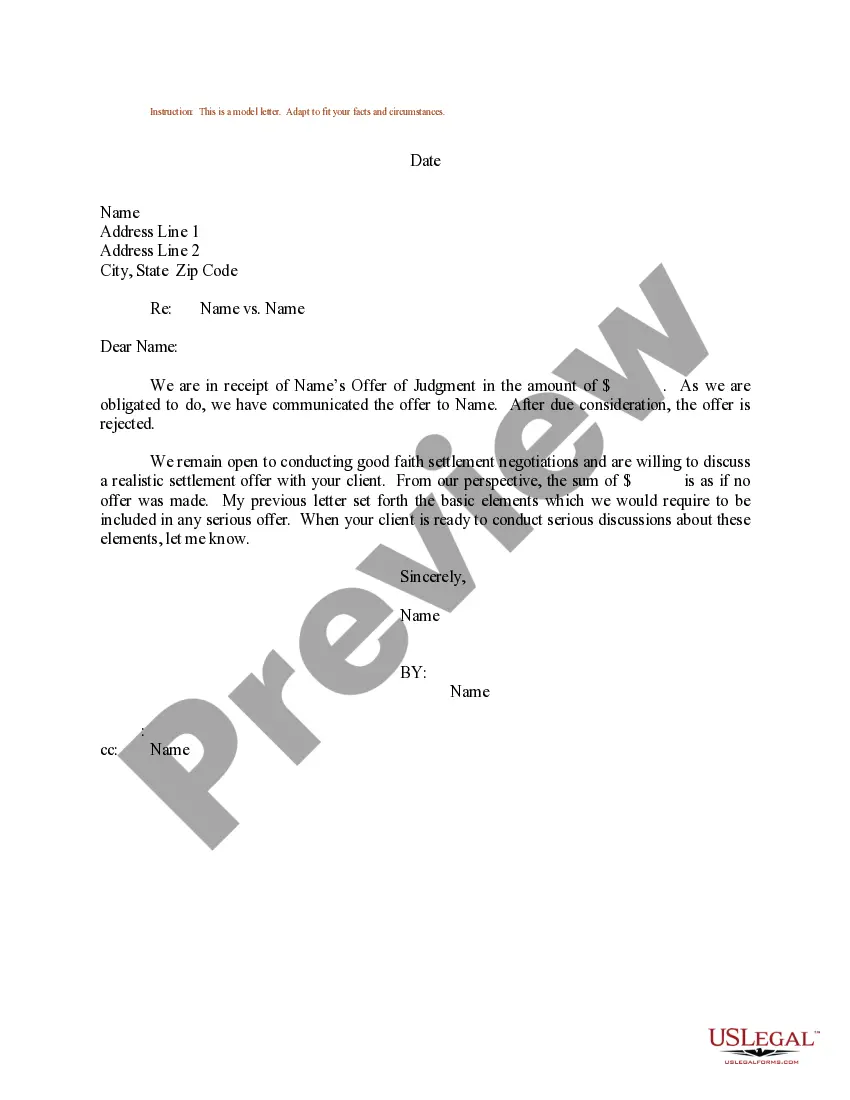
Sample Settlement Letter Without Prejudice In Sacramento
Description


Get your form ready online
Our built-in tools help you complete, sign, share, and store your documents in one place.
Make edits, fill in missing information, and update formatting in US Legal Forms—just like you would in MS Word.
Download a copy, print it, send it by email, or mail it via USPS—whatever works best for your next step.
Sign and collect signatures with our SignNow integration. Send to multiple recipients, set reminders, and more. Go Premium to unlock E-Sign.
If this form requires notarization, complete it online through a secure video call—no need to meet a notary in person or wait for an appointment.
We protect your documents and personal data by following strict security and privacy standards.

Make edits, fill in missing information, and update formatting in US Legal Forms—just like you would in MS Word.

Download a copy, print it, send it by email, or mail it via USPS—whatever works best for your next step.

Sign and collect signatures with our SignNow integration. Send to multiple recipients, set reminders, and more. Go Premium to unlock E-Sign.

If this form requires notarization, complete it online through a secure video call—no need to meet a notary in person or wait for an appointment.

We protect your documents and personal data by following strict security and privacy standards.
Looking for another form?



Form popularity
FAQ
The purpose and intended effect of the words “without prejudice” is to prohibit a party from using the doctrine of res judicata (from the Latin, “a thing decided”) in any later actions on the subject matter.
In order for settlement discussions and agreements to be protected under the 'without prejudice' principle, there must be: an 'existing dispute' between the parties and a genuine attempt to settle that dispute, and • no 'unambiguous impropriety' in the conduct of the parties during the settlement discussions.
Whereas a case that is dismissed “with prejudice” is dismissed permanently, a case that is dismissed “without prejudice” is only dismissed temporarily. This temporary dismissal means that the plaintiff is allowed to re-file charges, alter the claim, or bring the case to another court.
Related Content. The without prejudice (WP) rule will generally prevent statements made in a genuine attempt to settle an existing dispute, whether made in writing or orally, from being put before the court as evidence of admissions against the interests of the party which made them.
1) CLASS MEMBERS' RESPONSE—The motion for final approval should include information about the number of undeliverable class notices and claim packets, the number of class members who submitted valid claims, the number of class members who elected to opt out of the class and the number of class members who objected to ...
The settlement conference statement must include necessary information to concisely support issues of: Liability, Damages, A settlement demand and offer, An itemization of damages, both special and general, and. If there was a previous offer.
The 'without prejudice' privilege means parties to a dispute can make concessions and promises without fear that their words will be used later in court.
A settlement conference is relatively short and less formal than a trial, although a judge often will oversee the conference. They may hold it in the judge's chambers or in a conference room. If either or both parties have an attorney, the attorneys also will attend the conference.
Oftentimes, clients and their counsel will say, “Judge, what do you think is a fair settlement?”; and “Judge, how do you evaluate the case?” Parties can even take a more aggressive approach, urging me to “convince the other side why they're wrong and why they have no case.” I put them off in the initial caucus by ...
How do I fill this out? Review the form to understand the required sections. Fill in the plaintiff and defendant details accurately. Select the reason for dismissal from the listed options. Ensure the motion is signed by the plaintiff or their attorney. Print the completed forms and bring them to court.

