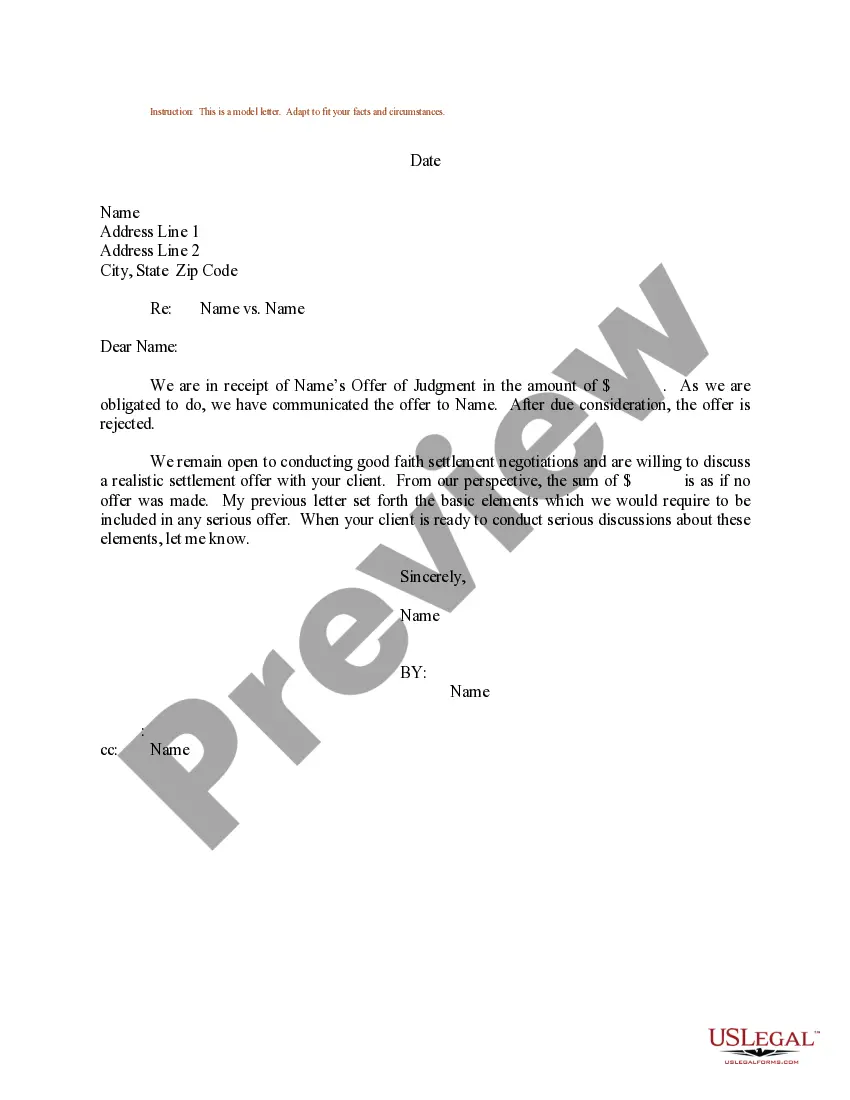
Sample Letter For Settlement In Phoenix
Description


Get your form ready online
Our built-in tools help you complete, sign, share, and store your documents in one place.
Make edits, fill in missing information, and update formatting in US Legal Forms—just like you would in MS Word.
Download a copy, print it, send it by email, or mail it via USPS—whatever works best for your next step.
Sign and collect signatures with our SignNow integration. Send to multiple recipients, set reminders, and more. Go Premium to unlock E-Sign.
If this form requires notarization, complete it online through a secure video call—no need to meet a notary in person or wait for an appointment.
We protect your documents and personal data by following strict security and privacy standards.

Make edits, fill in missing information, and update formatting in US Legal Forms—just like you would in MS Word.

Download a copy, print it, send it by email, or mail it via USPS—whatever works best for your next step.

Sign and collect signatures with our SignNow integration. Send to multiple recipients, set reminders, and more. Go Premium to unlock E-Sign.

If this form requires notarization, complete it online through a secure video call—no need to meet a notary in person or wait for an appointment.

We protect your documents and personal data by following strict security and privacy standards.
Looking for another form?





Form popularity
FAQ
Example of a Claim Settlement Letter We are writing to inform you that we have completed our evaluation of your claim filed under policy number Policy Number regarding Brief Description of the Claim. We are pleased to offer a settlement amount of Settlement Amount.
A reasonable settlement offer is one that includes medical expenses, lost wages, pain and suffering, and property damage. While it varies from case to case, an experienced personal injury lawyers can help you find a reasonable amount for your case.
Treat the following as a set of general guidelines: Gather complete information before you start writing. Describe your injuries and medical treatment. List your medical expenses, lost wages, and non-economic damages. Make a settlement demand. Include a deadline for legal action if you want to, but don't bluff.
Frequently Asked Questions (FAQ) Type your letter. Concisely review the main facts. Be polite. Write with your goal in mind. Ask for exactly what you want. Set a deadline. End the letter by stating you will promptly pursue legal remedies if the other party does not meet your demand. Make and keep copies.
I am writing this letter to state that on _ (Day) i.e. (Date), I got relieved from your _ (Company/ Organization) but my full and final settlement has not been done. I request you to kindly do the full and final settlement and send me all dues (if any).
Frequently Asked Questions (FAQ) Type your letter. Concisely review the main facts. Be polite. Write with your goal in mind. Ask for exactly what you want. Set a deadline. End the letter by stating you will promptly pursue legal remedies if the other party does not meet your demand. Make and keep copies.
After sending a demand letter, the first step is to wait for a response by the deadline you provided. If your demand letter worked, you should expect a settlement within a couple of weeks. However, the time you have to wait for a settlement may vary based on different factors.
The length of putting a settlement agreement together varies on a case-by-case-basis. This could be a small number of days, weeks or months - depending on how negotiations go. As a general rule, you should provide your employees with ten days to review the agreement.
No uniform timeframe exists between sending the demand letter and arriving at a settlement. In addition to the insurance company's review, there will be negotiations between the insurance company and your attorney, and those can take a long time. You can count on the process taking more than two months.
In the demand letter, a claimant often begins the negotiating process with a request for compensation that might be considerably higher than the amount they'd be satisfied to accept in the end. The letter is only the beginning of a settlement negotiation process that is similar to bargaining at a swap meet.

