Settlement Offer Rejection Letter Sample For Job Application In Nevada
Description


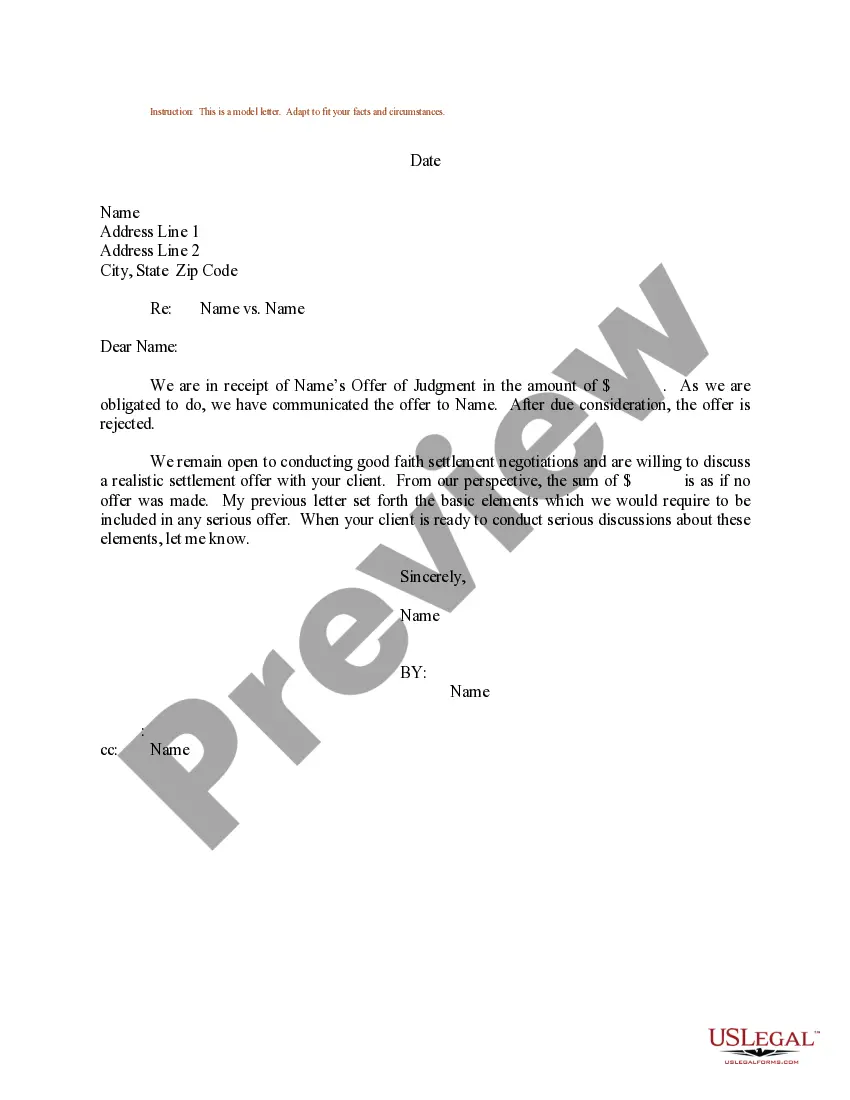
Get your form ready online
Our built-in tools help you complete, sign, share, and store your documents in one place.
Make edits, fill in missing information, and update formatting in US Legal Forms—just like you would in MS Word.
Download a copy, print it, send it by email, or mail it via USPS—whatever works best for your next step.
Sign and collect signatures with our SignNow integration. Send to multiple recipients, set reminders, and more. Go Premium to unlock E-Sign.
If this form requires notarization, complete it online through a secure video call—no need to meet a notary in person or wait for an appointment.
We protect your documents and personal data by following strict security and privacy standards.

Make edits, fill in missing information, and update formatting in US Legal Forms—just like you would in MS Word.

Download a copy, print it, send it by email, or mail it via USPS—whatever works best for your next step.

Sign and collect signatures with our SignNow integration. Send to multiple recipients, set reminders, and more. Go Premium to unlock E-Sign.

If this form requires notarization, complete it online through a secure video call—no need to meet a notary in person or wait for an appointment.

We protect your documents and personal data by following strict security and privacy standards.
Looking for another form?


Form popularity
FAQ
Rather, ask why the adjuster has provided this extremely low figure. You should then write a formal letter of response in which you state that you don't find the initial low settlement offer acceptable, listing the reasons why and concluding with a demand for a higher settlement offer.
I am grateful to have been selected for this position. However, I have decided to accept a role elsewhere that better aligns with my current career goals. Therefore, I will not be able to accept your job offer. I wish you and your team the best of luck in filling this position. Thank you again for your consideration.''
Unfortunately, after careful consideration, I have to decline your offer. My circumstances mean I am currently unable to join you at Name of Company. Offer a brief, honest description of the reasons you are unable to accept the role. I thank you for the opportunity and wish Name of Company continued success.
Some formulations you want to use to be kind & polite: Thank you for thinking of me. Sounds like a great project/event/idea, but this is not for us. I don't have enough time on my plate to offer you quality help. "Sadly" or "unfortunately" (you don't have to apologize!)
Yes, rejecting a settlement offer is often the beginning of negotiations. After you reject, your attorney will likely present a counteroffer based on the full value of your claim, supported by evidence like medical records and financial documentation.
If you find the offer unacceptable, your attorney can draft a formal letter and propose a counteroffer. This letter should clearly state that the initial offer is unacceptable and refute any inaccuracies in the insurance adjuster's statements.
This letter should clearly state the reasons for rejecting the offer, such as it not providing maximum compensation for the damages incurred. Provide specific reasons for your rejection, highlighting the damages and losses not covered by the proposed settlement.
In a claim refusal letter, begin with a statement of appreciation, common ground, or understanding; provide a concise and factual explanation; and end in a friendly and confident way. Remember to use the indirect approach.
Always reject a settlement offer in writing. Type a letter to your contact at the insurance company listing the reasons you think that their offer is too low. Back up these reasons with concrete evidence attached to the letter. Finally, provide a counteroffer of a sum you think is more reasonable.
I'm truly grateful for the opportunity. Unfortunately, I'm declining your offer as it's lower than my minimum salary expectations. I want you to know that if you're willing to negotiate the compensation for the role or if it increases in the future, I may consider the position again.

