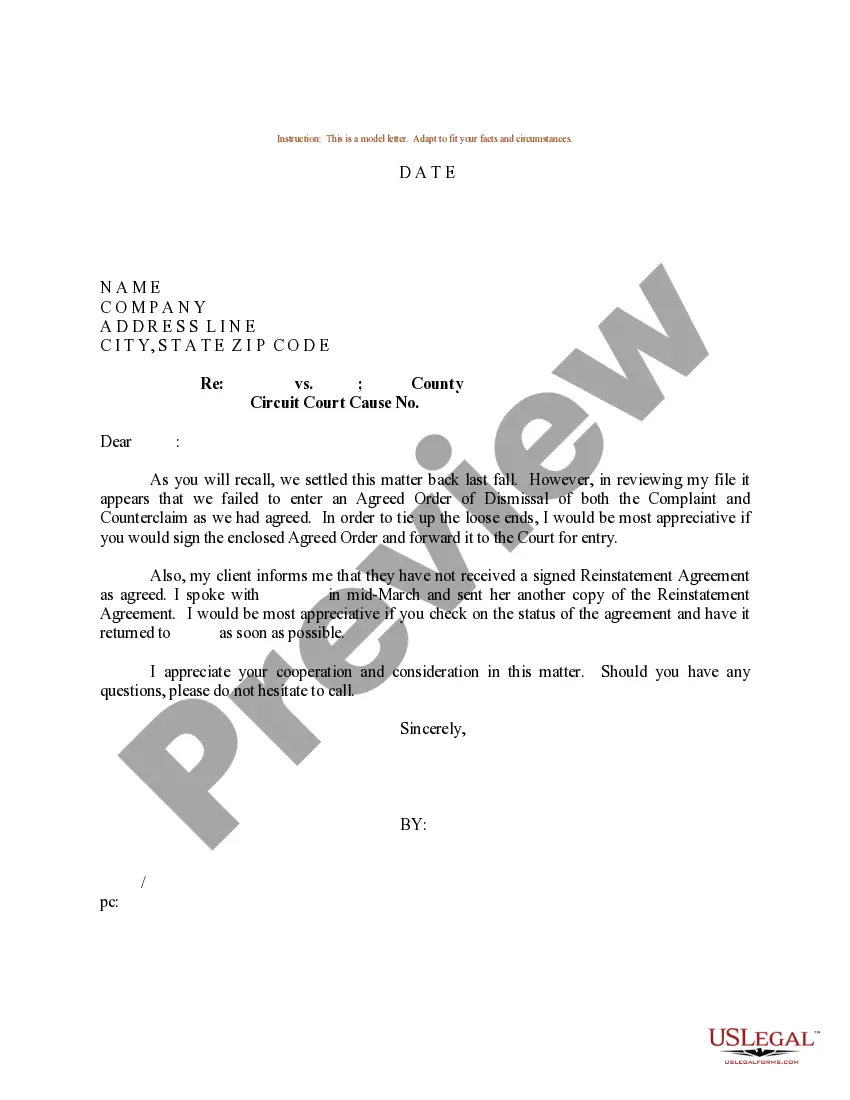
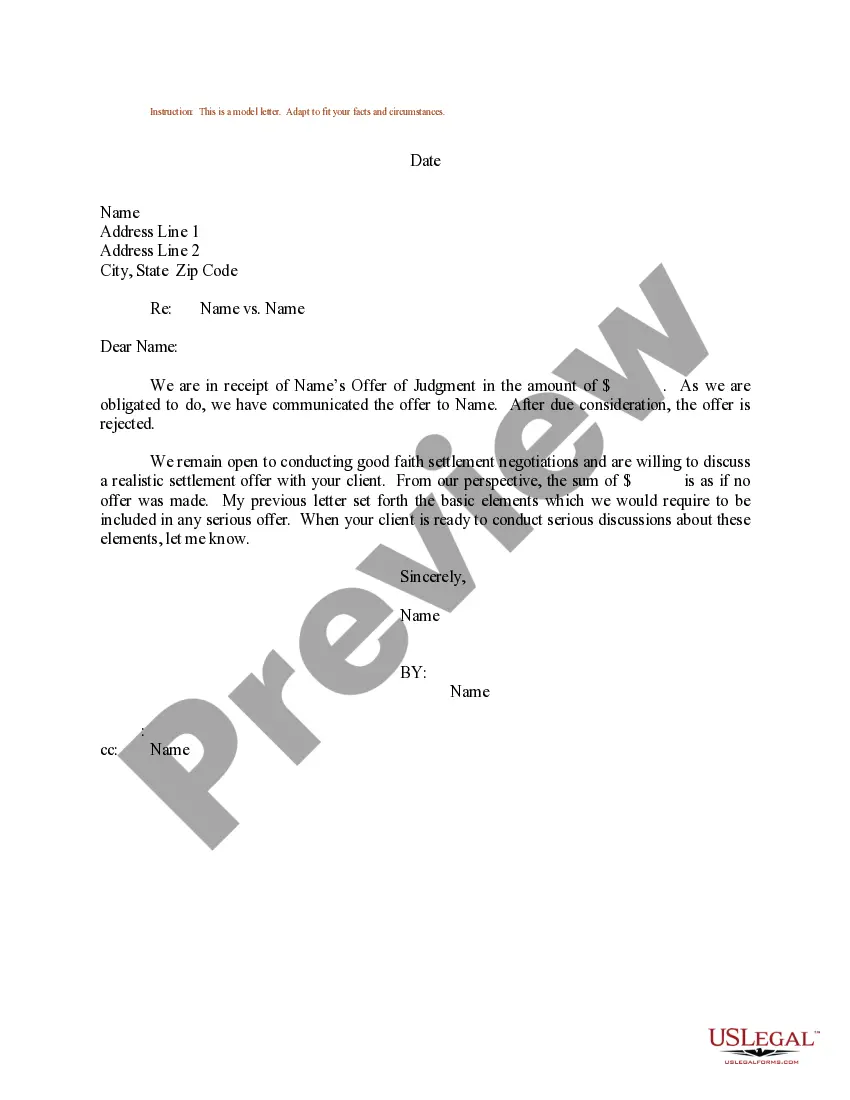
Settlement Offer Rejection Letter Sample For Attorney In Nevada
Description

Get your form ready online
Our built-in tools help you complete, sign, share, and store your documents in one place.
Make edits, fill in missing information, and update formatting in US Legal Forms—just like you would in MS Word.
Download a copy, print it, send it by email, or mail it via USPS—whatever works best for your next step.
Sign and collect signatures with our SignNow integration. Send to multiple recipients, set reminders, and more. Go Premium to unlock E-Sign.
If this form requires notarization, complete it online through a secure video call—no need to meet a notary in person or wait for an appointment.
We protect your documents and personal data by following strict security and privacy standards.

Make edits, fill in missing information, and update formatting in US Legal Forms—just like you would in MS Word.

Download a copy, print it, send it by email, or mail it via USPS—whatever works best for your next step.

Sign and collect signatures with our SignNow integration. Send to multiple recipients, set reminders, and more. Go Premium to unlock E-Sign.

If this form requires notarization, complete it online through a secure video call—no need to meet a notary in person or wait for an appointment.

We protect your documents and personal data by following strict security and privacy standards.
Looking for another form?






Form popularity
FAQ
Rather, ask why the adjuster has provided this extremely low figure. You should then write a formal letter of response in which you state that you don't find the initial low settlement offer acceptable, listing the reasons why and concluding with a demand for a higher settlement offer.
Possible Legal Action: If negotiations don't yield a satisfactory offer, a lawsuit may become necessary, requiring additional time and resources. Risk of Lower Final Settlement: In some cases, litigation may lead to a settlement lower than the initial offer, depending on the court's decision.
Always respond to a low settlement offer in writing rather than over the phone or in person. Submitting a counteroffer in writing gives you a chance to provide more evidence to support your claim. If you haven't already hired a lawyer, do so before you respond to the low offer you received.
If you do not accept a settlement agreement, your case will proceed to the next steps. If you have already filed a lawsuit, this means you might have more hearings and eventually go to trial. When a case goes to trial, that introduces the chance you could lose in court.
Always respond to a low settlement offer in writing rather than over the phone or in person. Submitting a counteroffer in writing gives you a chance to provide more evidence to support your claim. If you haven't already hired a lawyer, do so before you respond to the low offer you received.
Always reject a settlement offer in writing. Type a letter to your contact at the insurance company listing the reasons you think that their offer is too low. Back up these reasons with concrete evidence attached to the letter. Finally, provide a counteroffer of a sum you think is more reasonable.
If you find the offer unacceptable, your attorney can draft a formal letter and propose a counteroffer. This letter should clearly state that the initial offer is unacceptable and refute any inaccuracies in the insurance adjuster's statements.
Always reject a settlement offer in writing. Type a letter to your contact at the insurance company listing the reasons you think that their offer is too low. Back up these reasons with concrete evidence attached to the letter. Finally, provide a counteroffer of a sum you think is more reasonable.

