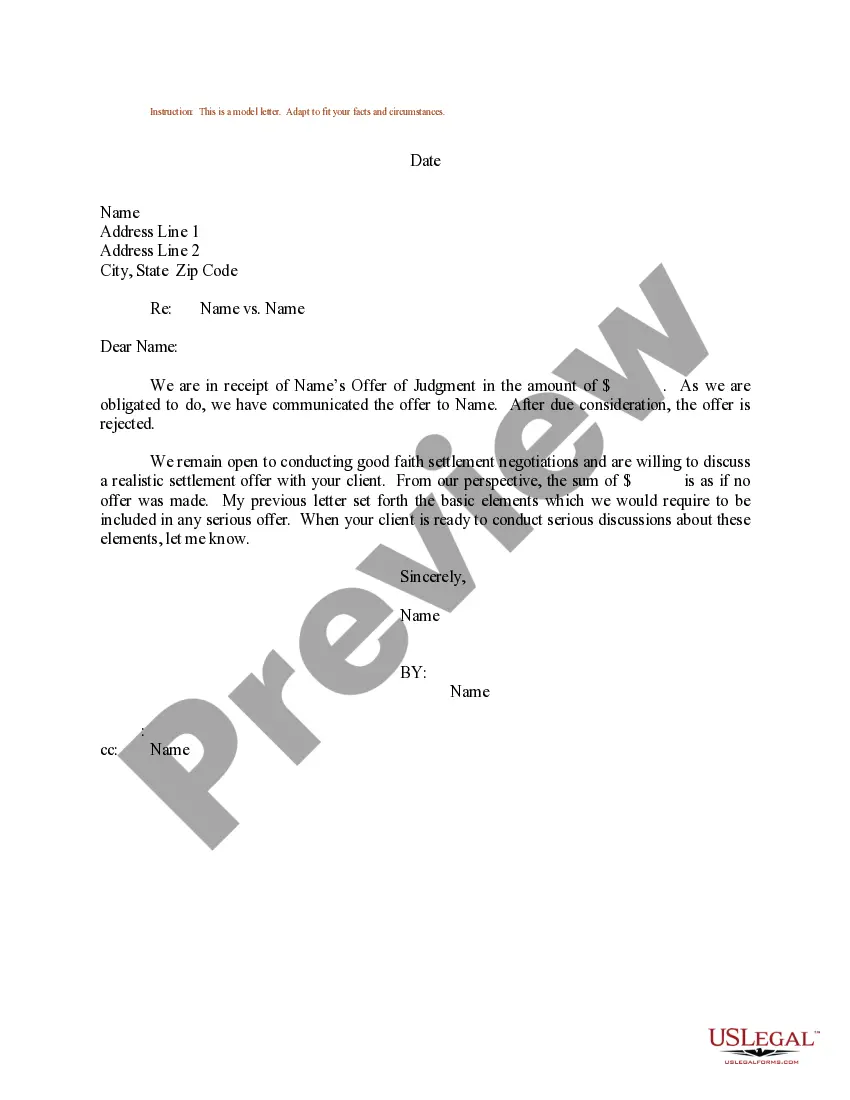
Sample Letter Rejecting Settlement Offer Without Prejudice Template In Nevada
Description


Get your form ready online
Our built-in tools help you complete, sign, share, and store your documents in one place.
Make edits, fill in missing information, and update formatting in US Legal Forms—just like you would in MS Word.
Download a copy, print it, send it by email, or mail it via USPS—whatever works best for your next step.
Sign and collect signatures with our SignNow integration. Send to multiple recipients, set reminders, and more. Go Premium to unlock E-Sign.
If this form requires notarization, complete it online through a secure video call—no need to meet a notary in person or wait for an appointment.
We protect your documents and personal data by following strict security and privacy standards.

Make edits, fill in missing information, and update formatting in US Legal Forms—just like you would in MS Word.

Download a copy, print it, send it by email, or mail it via USPS—whatever works best for your next step.

Sign and collect signatures with our SignNow integration. Send to multiple recipients, set reminders, and more. Go Premium to unlock E-Sign.

If this form requires notarization, complete it online through a secure video call—no need to meet a notary in person or wait for an appointment.

We protect your documents and personal data by following strict security and privacy standards.
Looking for another form?


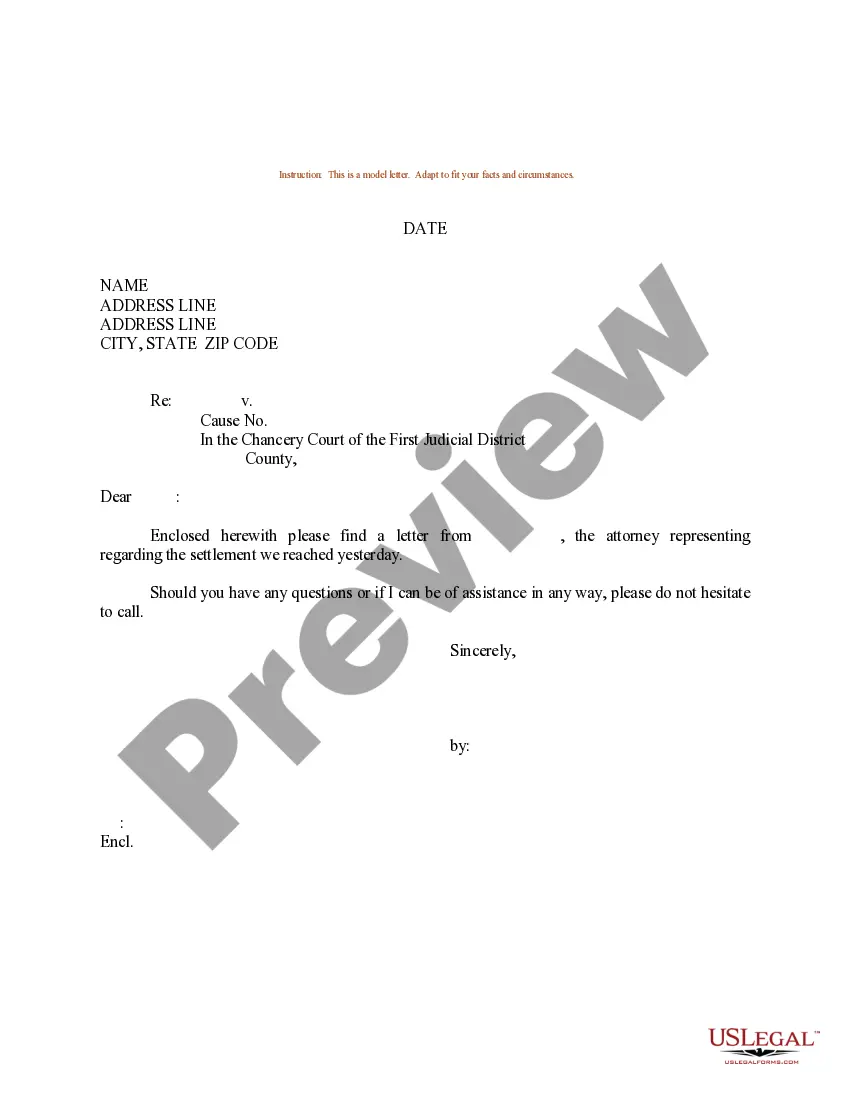
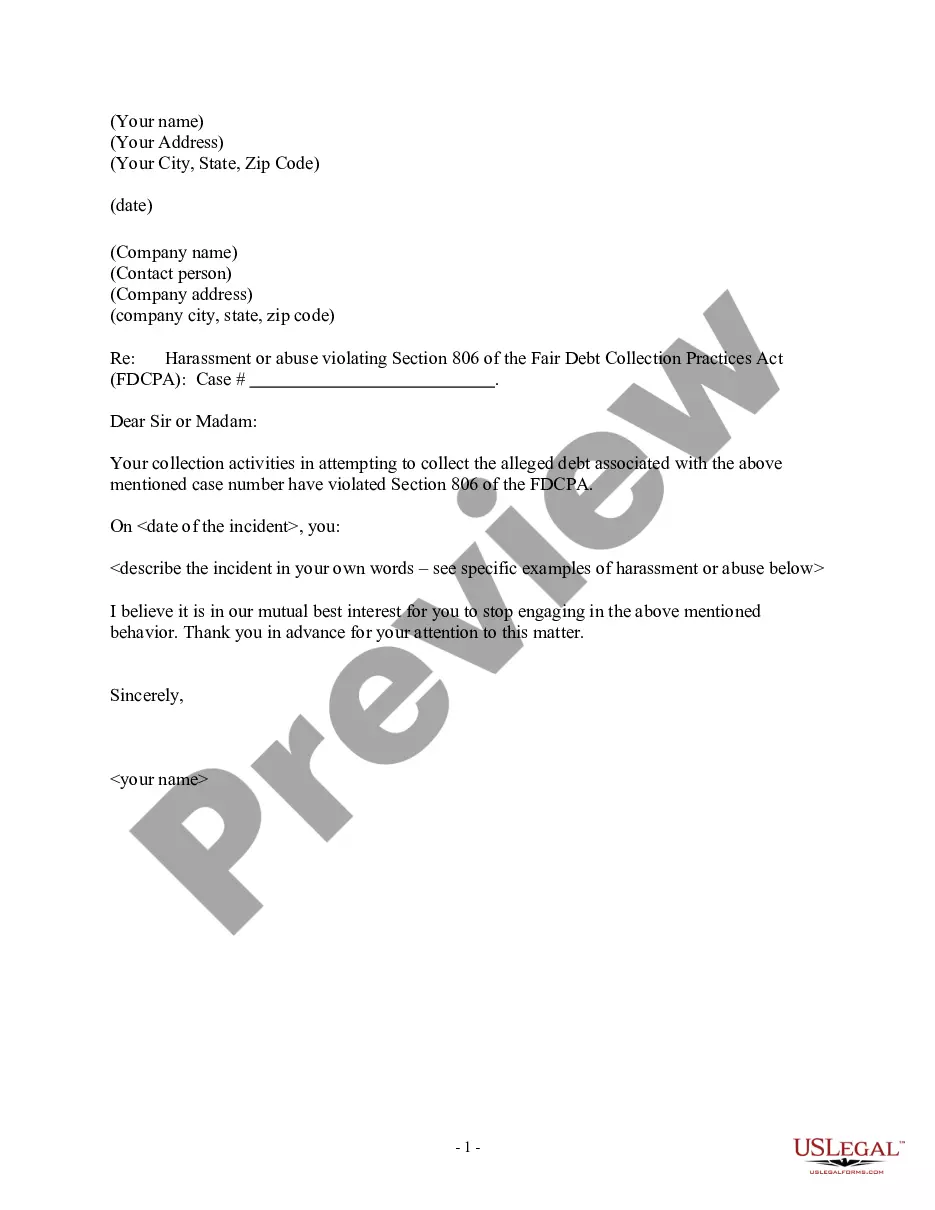
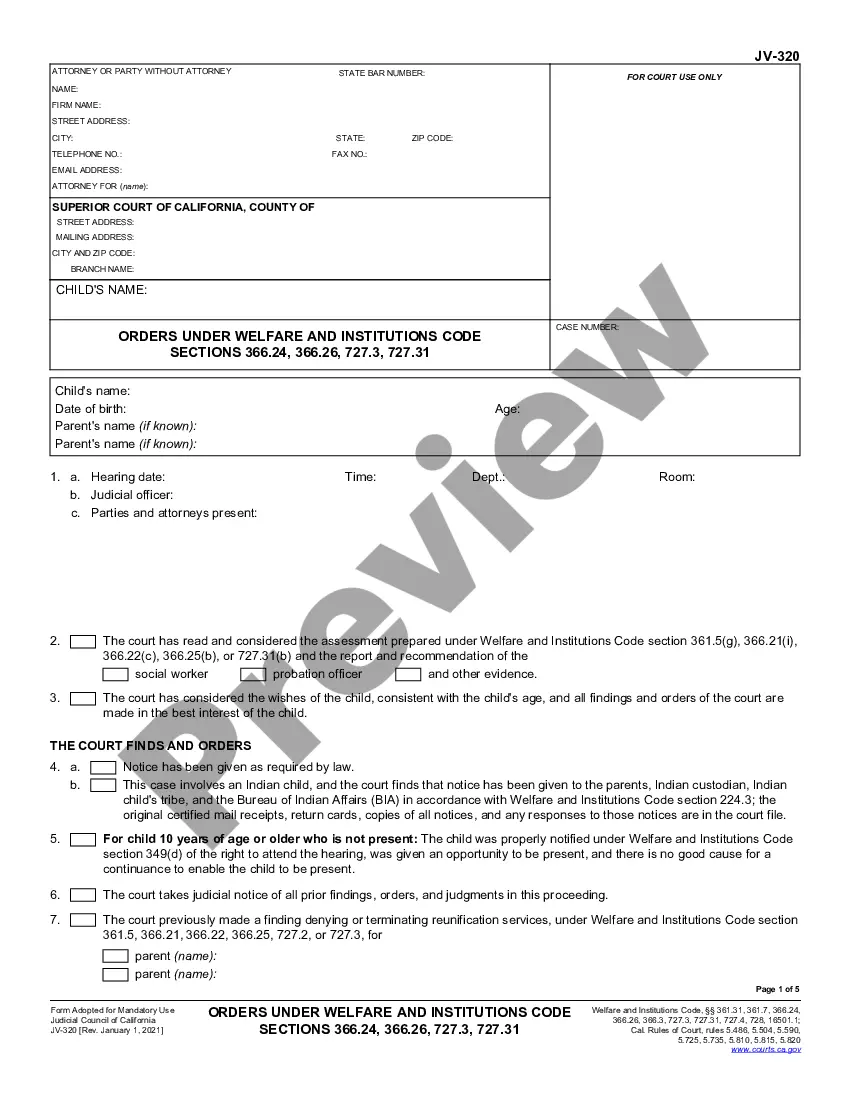
Form popularity
FAQ
Relief from a Judgment or Order. (a) Corrections Based on Clerical Mistakes; Oversights and Omissions. The court may correct a clerical mistake or a mistake arising from oversight or omission whenever one is found in a judgment, order, or other part of the record.
Rule 60. Relief From a Judgment or Order (a) Corrections Based on Clerical Mistakes; Oversights and Omissions. The court may correct a clerical mistake or a mistake arising from oversight or omission whenever one is found in a judgment, order, or other part of the record.
On motion and upon such terms as are just, the court may relieve a party or party's legal representative from a final judgment, order, or proceeding for the following reasons: (1) mistake, inadvertence, surprise, or excusable neglect; (2) newly discovered evidence which by due diligence could not have been discovered ...
Rule 35. (a) Order for Examination. (1) In General. The court where the action is pending may order a party whose mental or physical condition—including blood group—is in controversy to submit to a physical or mental examination by a suitably licensed or certified examiner.
Nevada Rule of Civil Procedure (NRCP) 68, provides that any party may serve an offer of judgment at least 10 days before trial. 1 An offer not accepted within 10 days is deemed rejected and withdrawn.
The court must permit a victim to be reasonably heard at any public proceeding in the district court concerning release, plea, or sentencing involving the crime.
If you find the offer unacceptable, your attorney can draft a formal letter and propose a counteroffer. This letter should clearly state that the initial offer is unacceptable and refute any inaccuracies in the insurance adjuster's statements.
Always reject a settlement offer in writing. Type a letter to your contact at the insurance company listing the reasons you think that their offer is too low. Back up these reasons with concrete evidence attached to the letter. Finally, provide a counteroffer of a sum you think is more reasonable.
Always reject a settlement offer in writing. Type a letter to your contact at the insurance company listing the reasons you think that their offer is too low. Back up these reasons with concrete evidence attached to the letter. Finally, provide a counteroffer of a sum you think is more reasonable.
If you find the offer unacceptable, your attorney can draft a formal letter and propose a counteroffer. This letter should clearly state that the initial offer is unacceptable and refute any inaccuracies in the insurance adjuster's statements.
