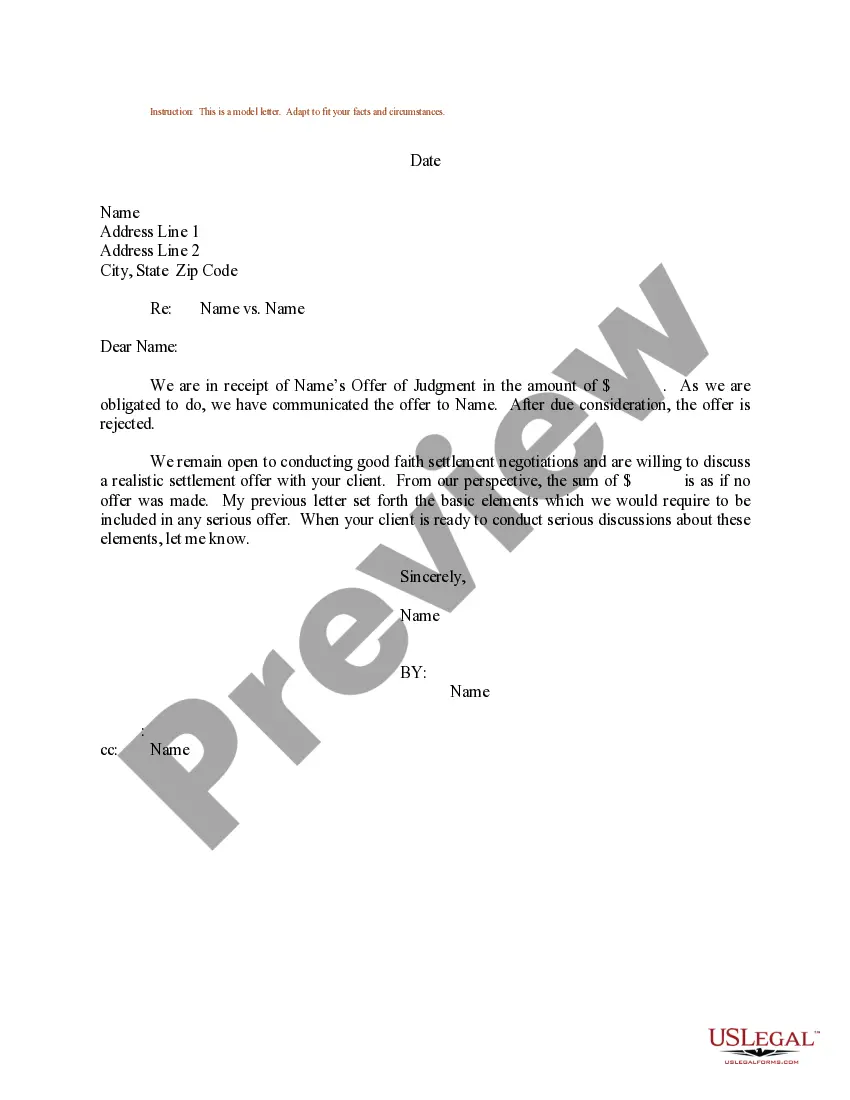
Settlement Offer Rejection Letter Sample Without Prejudice In Michigan
Description


Get your form ready online
Our built-in tools help you complete, sign, share, and store your documents in one place.
Make edits, fill in missing information, and update formatting in US Legal Forms—just like you would in MS Word.
Download a copy, print it, send it by email, or mail it via USPS—whatever works best for your next step.
Sign and collect signatures with our SignNow integration. Send to multiple recipients, set reminders, and more. Go Premium to unlock E-Sign.
If this form requires notarization, complete it online through a secure video call—no need to meet a notary in person or wait for an appointment.
We protect your documents and personal data by following strict security and privacy standards.

Make edits, fill in missing information, and update formatting in US Legal Forms—just like you would in MS Word.

Download a copy, print it, send it by email, or mail it via USPS—whatever works best for your next step.

Sign and collect signatures with our SignNow integration. Send to multiple recipients, set reminders, and more. Go Premium to unlock E-Sign.

If this form requires notarization, complete it online through a secure video call—no need to meet a notary in person or wait for an appointment.

We protect your documents and personal data by following strict security and privacy standards.
Looking for another form?








Form popularity
FAQ
The statute of limitations on a case dismissed without prejudice is the same as it was before the case was filed and dismissed. So, in other words, a dismissal without prejudice doesn't affect the statute of limitations.
(i) Parties filing a complaint, counterclaim, cross-claim, or third-party complaint must serve initial disclosures 14 days after opposing party files an answer.
A party shall not be joined until 10 days after service of either a petition for joinder by a party or a notice of intention to order joinder issued by a workers' compensation judge, unless the party to be joined waives its right to this notice period.
The court may order that a person be joined as a party to the proceeding if the court finds that it would be appropriate to determine the particular issue in the proceeding and that the person to be joined as a party is either indispensable for the court to make an order about that issue or is necessary to the ...
(A) Personal. Personal service of a petition or motion must be made at least 7 days before the date set for hearing, or an adjourned date, unless a different period is provided or permitted by court rule. This subrule applies regardless of conflicting statutory provisions. (B) Mail.
Rule 2.119 Motion Practice (3) A motion or response to a motion that presents an issue of law must be accompanied by a brief citing the authority on which it is based.
The Michigan joinder provision provides for joinder of causes and multiple defendants when the liability is one asserted against all of the defendants or sufficient grounds shall appear for uniting the causes of action ” … in order to promote the convenient administration of justice.” It would be unjust to force a ...
However, refusing a settlement offer does extend the life of your claim and delays when you receive compensation. If you have pressing medical bills or other expenses, this is a factor to consider. You'll also need to invest more time and energy into your case, including providing more documentation of your damages.
If you choose to reject the low settlement offer, you must communicate your decision to the claims adjuster. Your legal representative can help you write a letter that states your intentions. Within the letter, you can indicate that you reject the offer and highlight why you deserve a higher settlement amount.
Countering a Low Insurance Settlement Offer State that the offer you received is unacceptable. Refute any statements in the adjustor's letter that are inaccurate and damaging to your claim. Re-state an acceptable figure. Explain why your counteroffer is appropriate, including the reasons behind your general damage demands.

