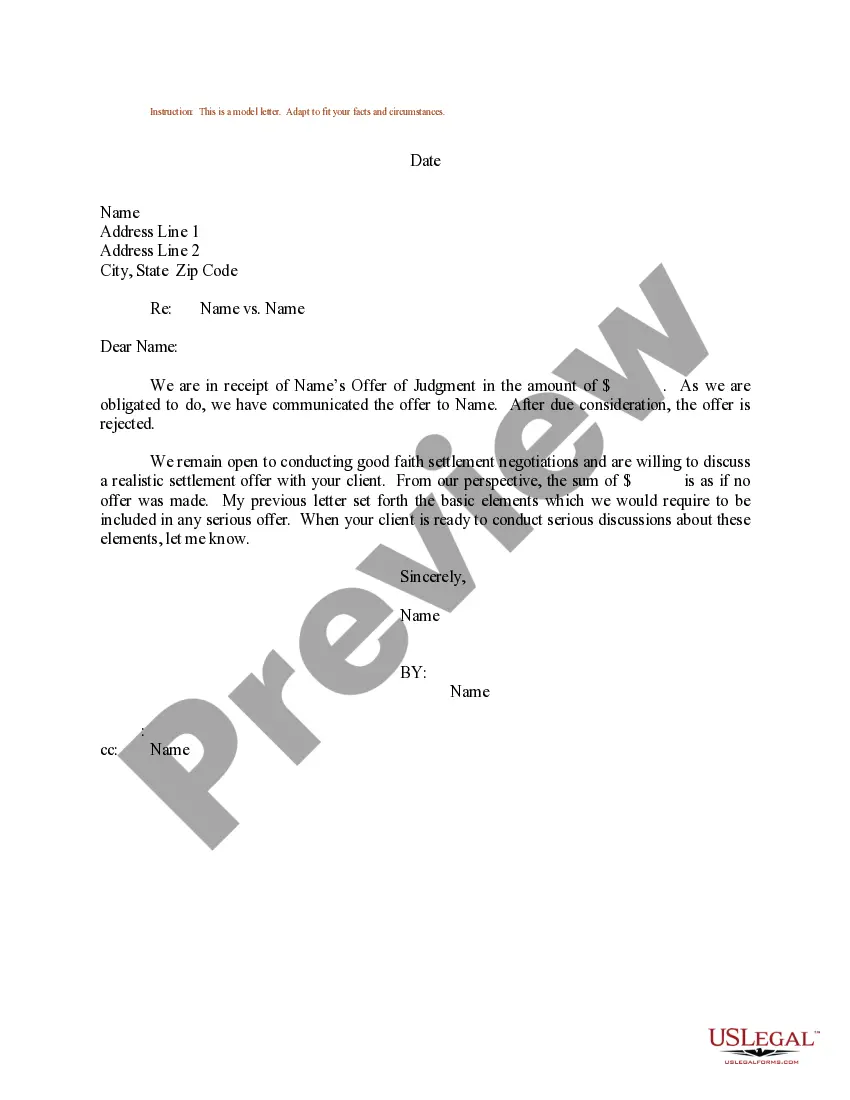
Sample Settlement Letter Without Prejudice In Maricopa
Description


Get your form ready online
Our built-in tools help you complete, sign, share, and store your documents in one place.
Make edits, fill in missing information, and update formatting in US Legal Forms—just like you would in MS Word.
Download a copy, print it, send it by email, or mail it via USPS—whatever works best for your next step.
Sign and collect signatures with our SignNow integration. Send to multiple recipients, set reminders, and more. Go Premium to unlock E-Sign.
If this form requires notarization, complete it online through a secure video call—no need to meet a notary in person or wait for an appointment.
We protect your documents and personal data by following strict security and privacy standards.

Make edits, fill in missing information, and update formatting in US Legal Forms—just like you would in MS Word.

Download a copy, print it, send it by email, or mail it via USPS—whatever works best for your next step.

Sign and collect signatures with our SignNow integration. Send to multiple recipients, set reminders, and more. Go Premium to unlock E-Sign.

If this form requires notarization, complete it online through a secure video call—no need to meet a notary in person or wait for an appointment.

We protect your documents and personal data by following strict security and privacy standards.
Looking for another form?








Form popularity
FAQ
A removal proceeding that has been terminated can be re-opened or refiled, and termination offers only temporary relief from potential deportation. If a removal proceeding is dismissed, that dismissal is generally permanent and cannot be reopened or renewed.
Whereas a case that is dismissed “with prejudice” is dismissed permanently, a case that is dismissed “without prejudice” is only dismissed temporarily. This temporary dismissal means that the plaintiff is allowed to re-file charges, alter the claim, or bring the case to another court.
Termination without prejudice means that the government can restart the removal proceedings after the case is terminated, but the government has to start over with a new Notice to Appear.
Ing to ARCP Rule 16.1 and Maricopa County Local Rule 3.11, the Court has discretion to direct parties in any civil case to a settlement conference to facilitate settlement.
A case is dismissed with prejudice when the defect cannot be remedied because, for example, the claim has no basis in law, and it is permanently dismissed. (That does not mean that you can't bring an appeal to challenge the trial judge's decision.)
Whereas a case that is dismissed “with prejudice” is dismissed permanently, a case that is dismissed “without prejudice” is only dismissed temporarily. This temporary dismissal means that the plaintiff is allowed to re-file charges, alter the claim, or bring the case to another court.
Without prejudice means that the losing party can try again, often in the same case. For example, if the complaint pleads 4 of the 5 elements of fraud, the judge, on motion, should grant a motion to dismiss without prejudice, with leave to re-write it with all 5 elements plainly stated.
For example, before disgraced comedian Bill Cosby's retrial, his defense team filed a motion to dismiss, arguing that the sexual assault alleged in the criminal complaint had happened outside of the statute of limitations.
Writing a Persuasive Motion to Dismiss Be Clear and Concise: Use straightforward language and be diligent with proofreading. Stay Focused on the Legal Issues: Avoid unnecessary details and stick to the relevant legal arguments. Support Every Claim: Use statutes, case law, and rules of procedure to back up your points.

