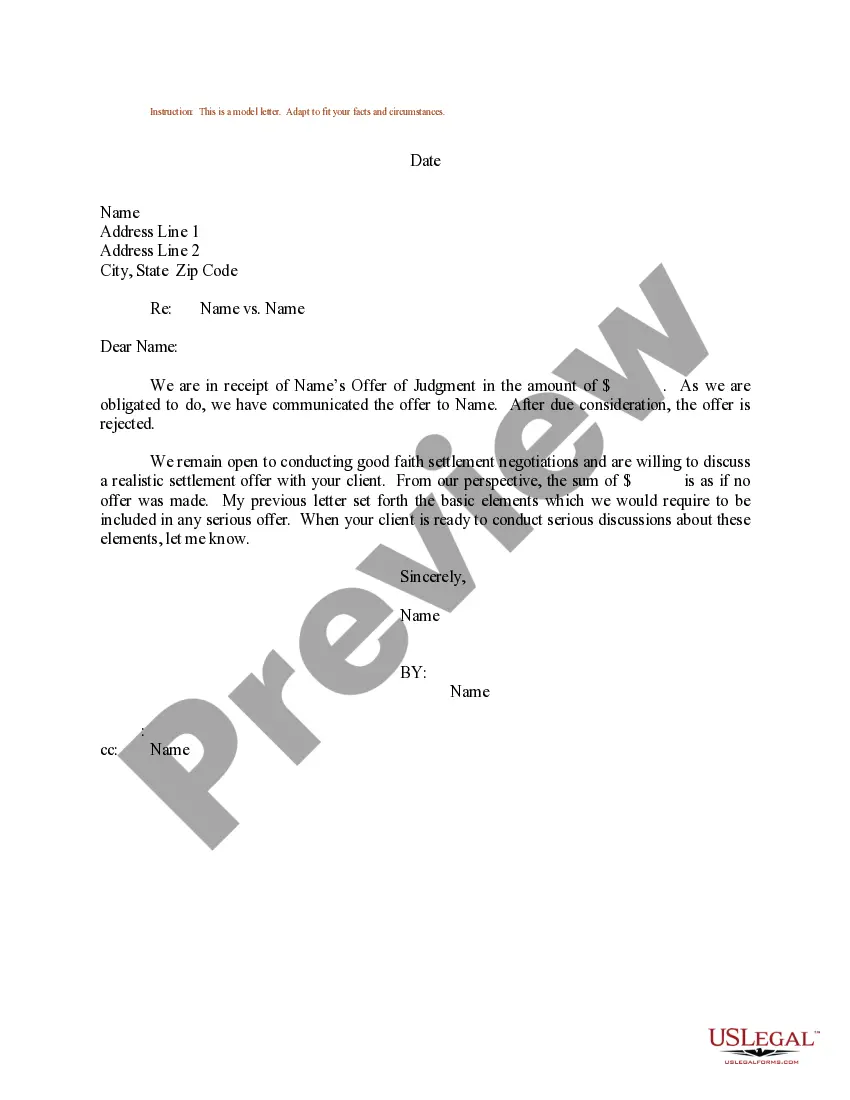
Settlement Offer Rejection Letter Sample Without Prejudice In Hillsborough
Description


Get your form ready online
Our built-in tools help you complete, sign, share, and store your documents in one place.
Make edits, fill in missing information, and update formatting in US Legal Forms—just like you would in MS Word.
Download a copy, print it, send it by email, or mail it via USPS—whatever works best for your next step.
Sign and collect signatures with our SignNow integration. Send to multiple recipients, set reminders, and more. Go Premium to unlock E-Sign.
If this form requires notarization, complete it online through a secure video call—no need to meet a notary in person or wait for an appointment.
We protect your documents and personal data by following strict security and privacy standards.

Make edits, fill in missing information, and update formatting in US Legal Forms—just like you would in MS Word.

Download a copy, print it, send it by email, or mail it via USPS—whatever works best for your next step.

Sign and collect signatures with our SignNow integration. Send to multiple recipients, set reminders, and more. Go Premium to unlock E-Sign.

If this form requires notarization, complete it online through a secure video call—no need to meet a notary in person or wait for an appointment.

We protect your documents and personal data by following strict security and privacy standards.
Looking for another form?









Form popularity
FAQ
“Without Prejudice” is a legal term used to indicate that statements, negotiations, or documents cannot be used as evidence in court if settlement discussions fail. It encourages open communication between parties to resolve disputes without fear of prejudicing their legal position.
A without prejudice offer can be used to resolve a legal dispute by enabling parties to make settlement offers without the risk of those offers being used against them in court. This protection encourages parties to engage in genuine negotiations to reach a settlement.
How to Respond to a Low Settlement Offer Retain a Lawyer. A lowball offer is a red flag that the insurance company is not treating you fairly. Analyze the Offer. Reject the Offer. Wait to Settle Your Claim Until You Recover. Make a Counteroffer. File a Lawsuit.
No; once you have agreed to a settlement, you can't go back and undo it. That's because you signed a release of liability contract when you accepted the settlement. A personal injury attorney can help ensure you get the best settlement possible the first time around.
After rejecting a settlement offer, your next step is to work with your lawyer to prepare a counteroffer. This should include a breakdown of all your damages, such as medical costs, lost wages, and future expenses. Additionally, you may need to gather further evidence to strengthen your case.
If you do not accept a settlement agreement, your case will proceed to the next steps. If you have already filed a lawsuit, this means you might have more hearings and eventually go to trial. When a case goes to trial, that introduces the chance you could lose in court.
To properly reject an insurance settlement offer, you must communicate the rejection in writing through a formal demand letter. This letter should clearly state the reasons for rejecting the offer, such as it not providing maximum compensation for the damages incurred.
Step 1: Contact your insurance agent or company again. Before you contact your insurance agent or home insurance company to dispute a claim, you should review the claim you initially filed. Step 2: Consider an independent appraisal. Step 3: File a complaint and hire an attorney.
I am writing in response to the settlement offer you presented on Settlement Offer Date, related to claim number Claim Number for the incident that occurred on Incident Date. After careful consideration, I must reject this offer as it does not meet my needs based on the severity and ongoing nature of my injuries.
However, refusing a settlement offer does extend the life of your claim and delays when you receive compensation. If you have pressing medical bills or other expenses, this is a factor to consider. You'll also need to invest more time and energy into your case, including providing more documentation of your damages.

