Letter Invitation For Speaker In Santa Clara
Description
Get your form ready online
Our built-in tools help you complete, sign, share, and store your documents in one place.
Make edits, fill in missing information, and update formatting in US Legal Forms—just like you would in MS Word.
Download a copy, print it, send it by email, or mail it via USPS—whatever works best for your next step.
Sign and collect signatures with our SignNow integration. Send to multiple recipients, set reminders, and more. Go Premium to unlock E-Sign.
If this form requires notarization, complete it online through a secure video call—no need to meet a notary in person or wait for an appointment.
We protect your documents and personal data by following strict security and privacy standards.

Make edits, fill in missing information, and update formatting in US Legal Forms—just like you would in MS Word.

Download a copy, print it, send it by email, or mail it via USPS—whatever works best for your next step.

Sign and collect signatures with our SignNow integration. Send to multiple recipients, set reminders, and more. Go Premium to unlock E-Sign.

If this form requires notarization, complete it online through a secure video call—no need to meet a notary in person or wait for an appointment.

We protect your documents and personal data by following strict security and privacy standards.
Looking for another form?








Form popularity
FAQ
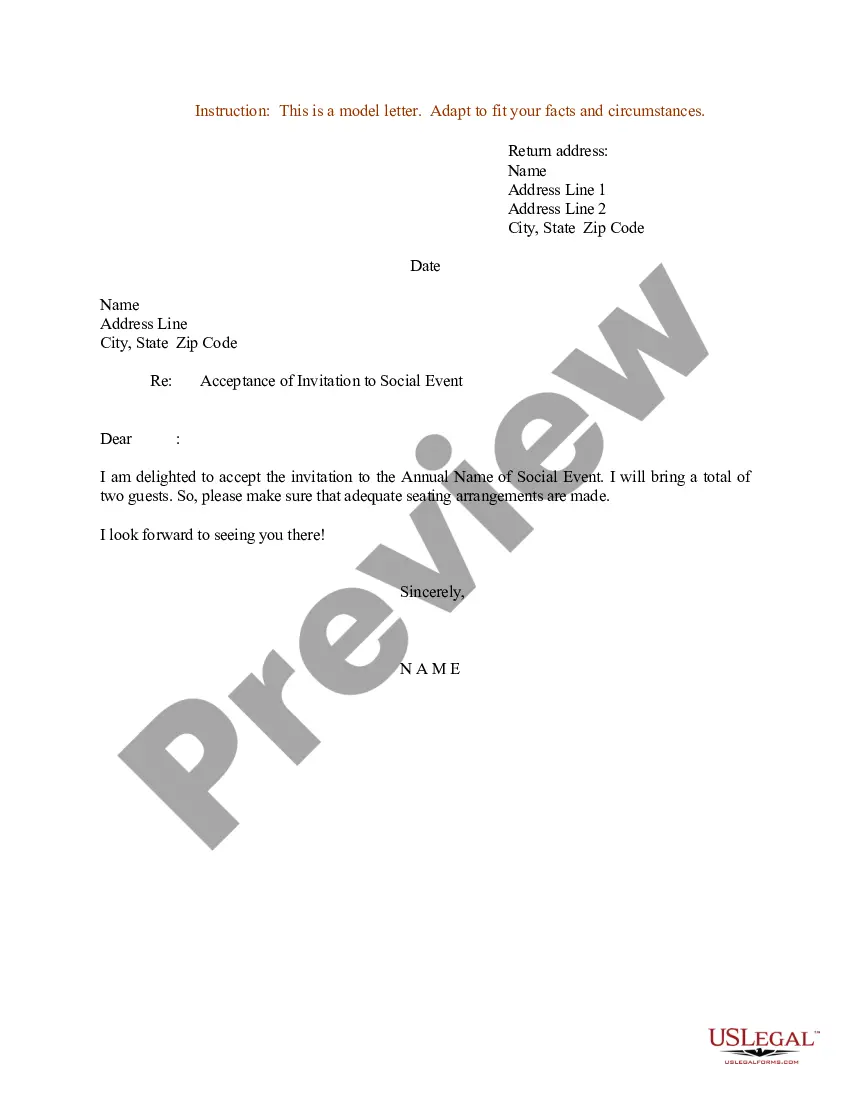
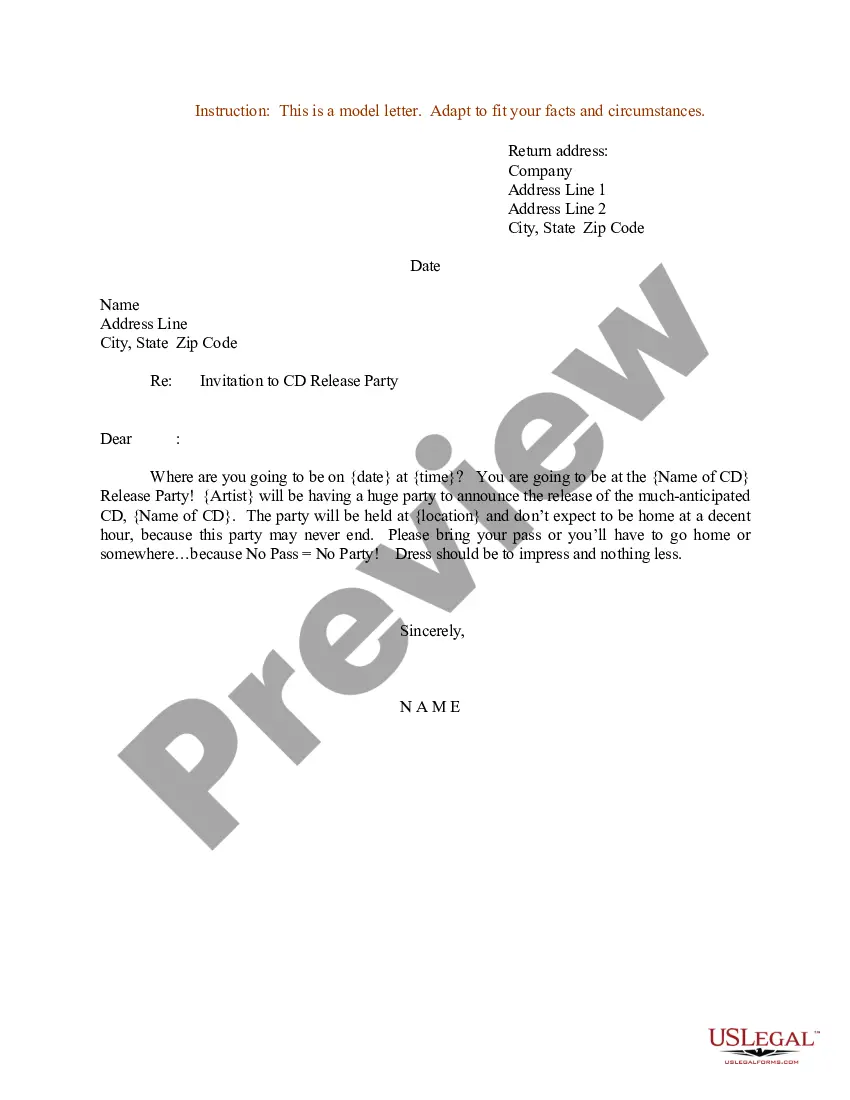
Informal Invitation Letter – Guidelines and Tips It is written in the first person (I/we). The sender's address is written as usual but the receiver's address is not mentioned. The date of writing the invitation is given but there is no need to write the year. The salutation is Dear + name.
Your event logo placed here as header, if you have one Dear Name of speaker, On behalf of the XYZ and the XYZ Organizing Committee, we are honored to invite you to speak at the XYZ event celebrating Cybersecurity Career Week (CCW). The event is scheduled for date, from time- time in location.
Dear (Recipient's Name), I am writing to formally invite you to the (Event Name), which will be held on (Date) at (Time). The event will take place at (Venue), located at (Full Address). Your presence would be greatly appreciated as we celebrate this special occasion.
Example: Dear Recipient's Name, I am pleased to invite you to Event Name, which will take place on Event Date at Event Time at Event Venue. The purpose of this event is to briefly describe the purpose or agenda of the event.
Guidelines for writing invitations: Name of the conference and the sponsoring organization; Date, time, place of the conference and speech; Type of audience; The type of speech, topic, and how long the speech should be; Any accommodations that will be made, including lodging, meals, and transportation;
Writing an invitation card is simple. Address your card to the person you're inviting; name the event you're inviting them to; spell out the date, time and location; and provide contact details so they can RSVP. Be sure to note if your guest should bring anything but themselves.
Template 1: Invitation We are pleased to invite you to attend the upcoming Event Name meeting, scheduled to take place on Date at Time. The meeting will be held at Location/Online Platform, and we would be honored to have your presence and participation. The agenda for the meeting includes: Agenda Point 1
State the purpose: Clearly state the purpose for calling the person on stage. For example, you can say, ``Please join me in welcoming (person's name) to the stage to deliver a speech on (topic)''. Use a direct invitation: Extend a direct invitation to the person, using their name.
Core Components of a Speaker Invitation: The name, date(s), and venue of the event. The topic, theme or focus of the event. Reasons why they would be an ideal speaker for your event. Why it would benefit them. How they can contact you.
Craft a compelling narrative that highlights why your event is worth speaking at. Include specific goals of the event and how the speaker can add value. This preparation is essential for when you reach out to potential speakers, whether via email or a phone call.

