Notice Meeting Format In Chicago
Description


Get your form ready online
Our built-in tools help you complete, sign, share, and store your documents in one place.
Make edits, fill in missing information, and update formatting in US Legal Forms—just like you would in MS Word.
Download a copy, print it, send it by email, or mail it via USPS—whatever works best for your next step.
Sign and collect signatures with our SignNow integration. Send to multiple recipients, set reminders, and more. Go Premium to unlock E-Sign.
If this form requires notarization, complete it online through a secure video call—no need to meet a notary in person or wait for an appointment.
We protect your documents and personal data by following strict security and privacy standards.

Make edits, fill in missing information, and update formatting in US Legal Forms—just like you would in MS Word.

Download a copy, print it, send it by email, or mail it via USPS—whatever works best for your next step.

Sign and collect signatures with our SignNow integration. Send to multiple recipients, set reminders, and more. Go Premium to unlock E-Sign.

If this form requires notarization, complete it online through a secure video call—no need to meet a notary in person or wait for an appointment.

We protect your documents and personal data by following strict security and privacy standards.
Looking for another form?







Form popularity
FAQ
Short papers have a heading which includes your name, instructor's name, course number, and date near the top left of the first page; double-spaced and on separate lines. The heading is above the title. For short papers, center the title. Do not italicize, underline, or bold the title.
In Chicago author-date style, your text must include a reference list. It appears at the end of your paper and gives full details of every source you cited. In notes and bibliography style, you use Chicago style footnotes to cite sources; a bibliography is optional but recommended.
If you're ready to create the front material for your book, you may find yourself wondering, “What is a title page?” and “Why is it necessary?” Though it may seem redundant, a title page is an important part of the overall look when it comes to a novel or a work of nonfiction, and it is essential for taking yours from ...
The Chicago citation style requires the authors of research papers to include a title page. Alternatively, authors can include the title on the first page of the paper's text; however, most instructors using Chicago style will request a full title page.
For papers less than five pages, no separate title page is necessary. Short papers have a heading which includes your name, instructor's name, course number, and date near the top left of the first page; double-spaced and on separate lines. The heading is above the title.
The Chicago citation style requires the authors of research papers to include a title page. Alternatively, authors can include the title on the first page of the paper's text; however, most instructors using Chicago style will request a full title page.
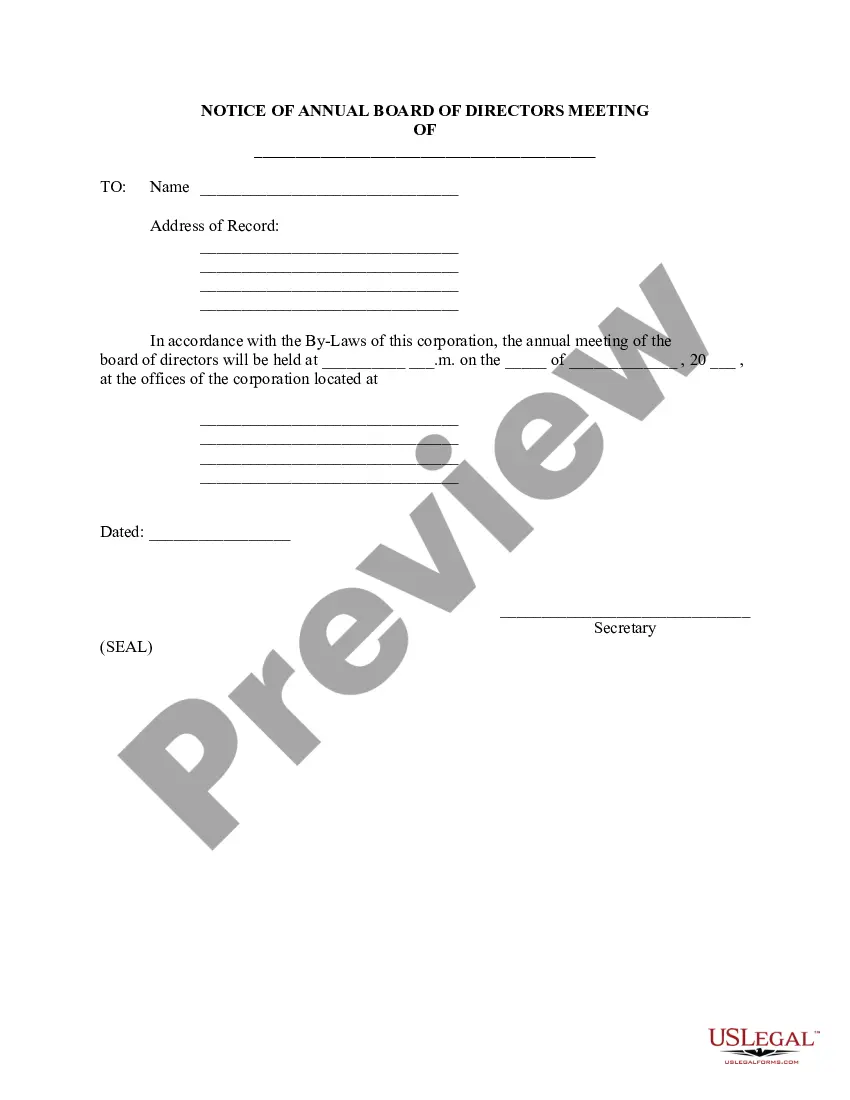
Contents of a notice of meeting Names and roles of all the invitees. Type of meeting — regular, annual, or special. Date, time and location of the meeting (the notice should also be dated) Purpose of the meeting, such as budget approval or discussing current operations.
How to Write the Notice of Meeting (With Template) Meeting Title. Date, Time, and Duration. Location. Attendees. Meeting Objectives. Agenda. Preparation Materials. RSVP Information.
Check it out: Step 1: Write a Direct Subject Line. Step 2: Use a Professional Greeting & Intro. Step 3: Explain the Need for the Meeting. Step 4: Request a Response. Step 5: Offer to Prepare and Send an Agenda. Step 6: Closing & Signature. Sample 5: Request for an Urgent Meeting Regarding a Crisis.
The _________________ Name of Governing Body of the _________________ Name of Public Entity (hereafter referred to as "governing body") will be holding a __________ regular or special meeting on _____________ Date at ________ Time.
