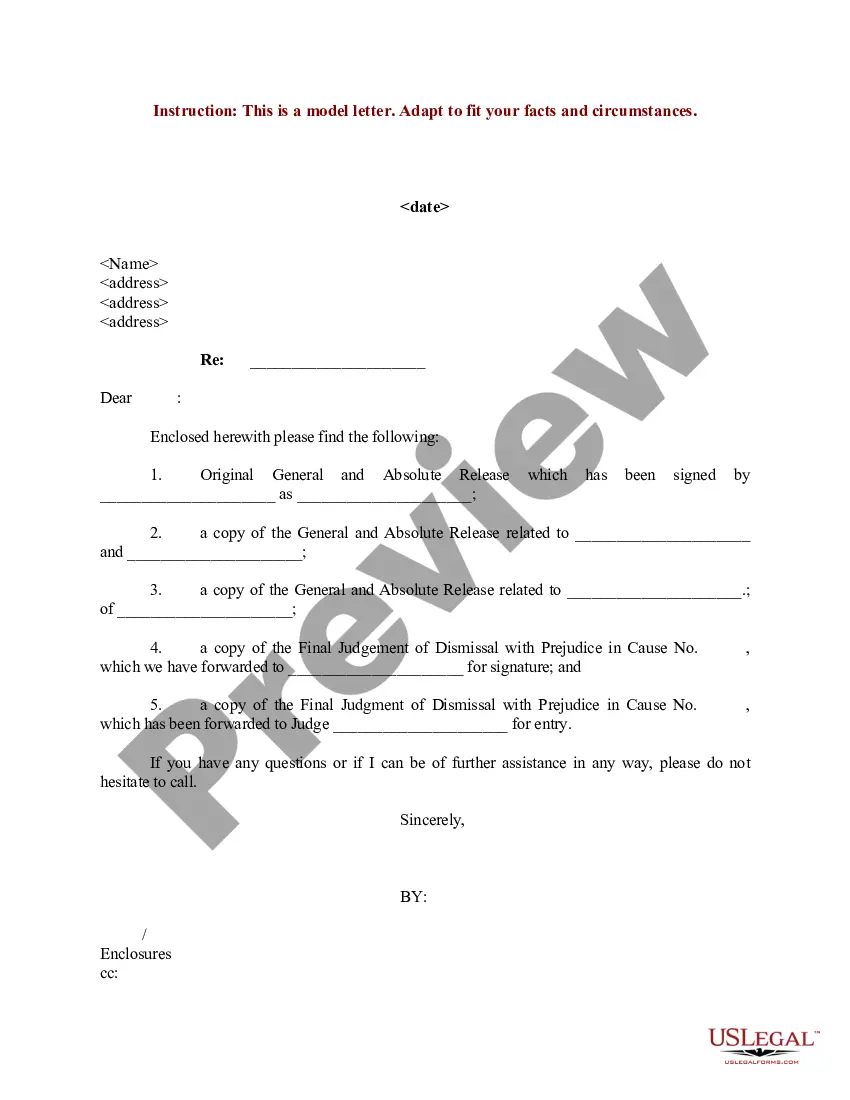
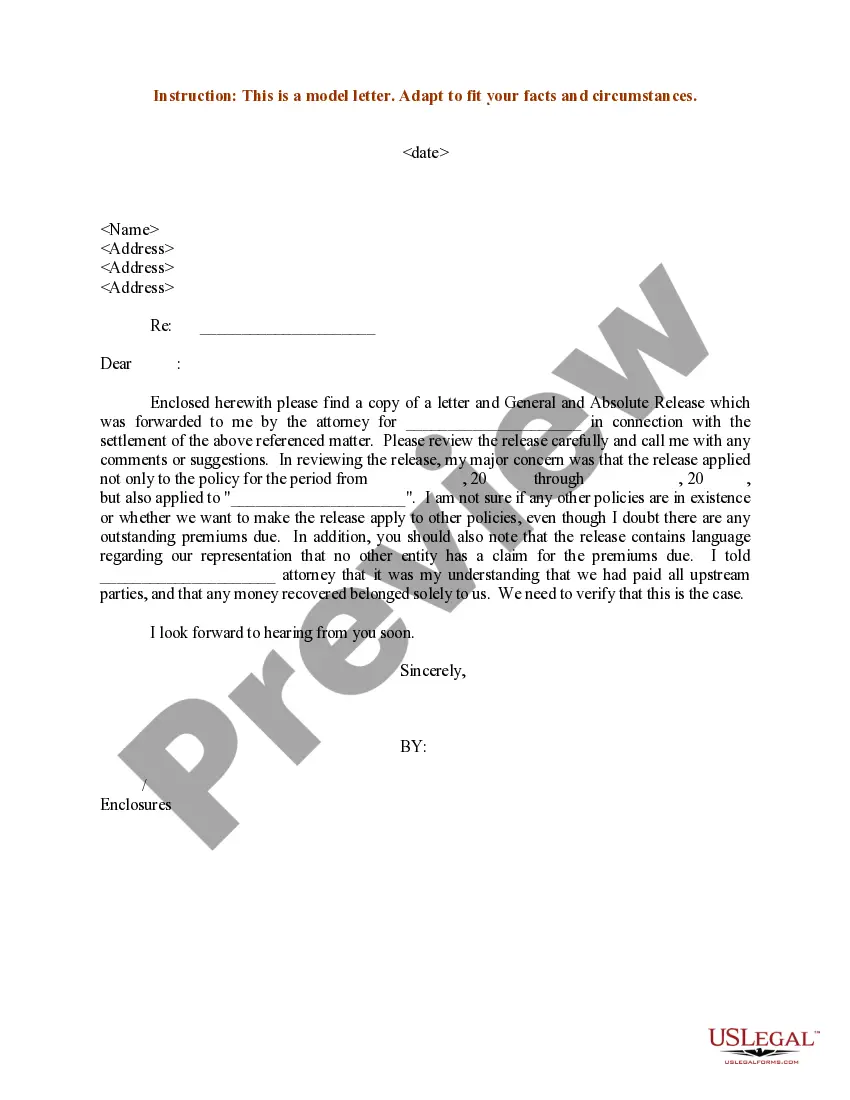
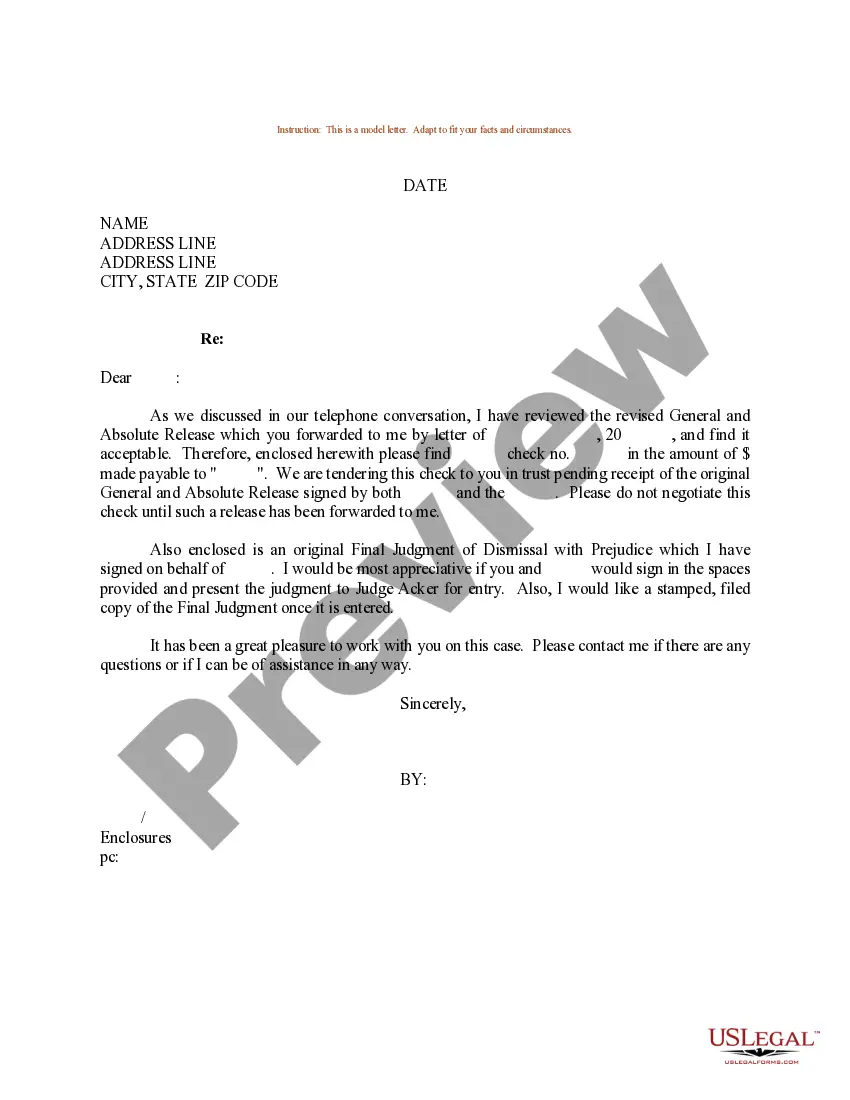
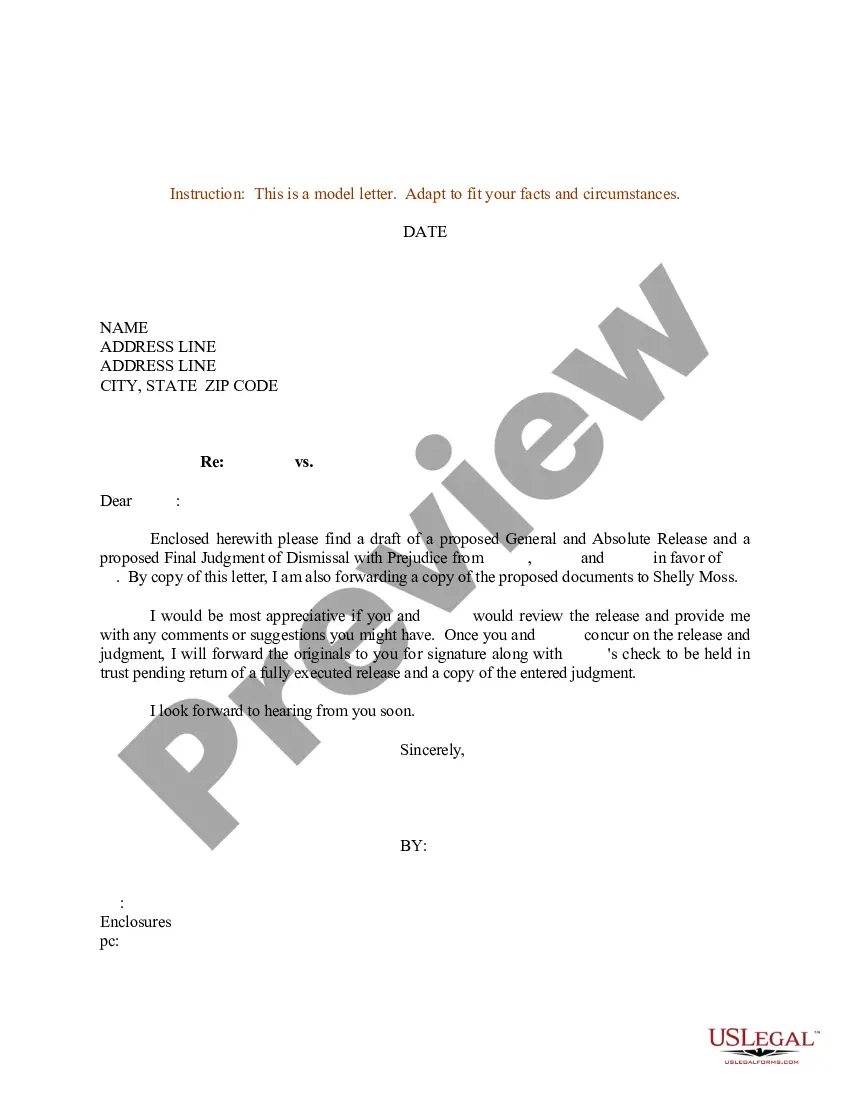
Release With Prejudice Without A Lawyer In Phoenix
Description

Get your form ready online
Our built-in tools help you complete, sign, share, and store your documents in one place.
Make edits, fill in missing information, and update formatting in US Legal Forms—just like you would in MS Word.
Download a copy, print it, send it by email, or mail it via USPS—whatever works best for your next step.
Sign and collect signatures with our SignNow integration. Send to multiple recipients, set reminders, and more. Go Premium to unlock E-Sign.
If this form requires notarization, complete it online through a secure video call—no need to meet a notary in person or wait for an appointment.
We protect your documents and personal data by following strict security and privacy standards.

Make edits, fill in missing information, and update formatting in US Legal Forms—just like you would in MS Word.

Download a copy, print it, send it by email, or mail it via USPS—whatever works best for your next step.

Sign and collect signatures with our SignNow integration. Send to multiple recipients, set reminders, and more. Go Premium to unlock E-Sign.

If this form requires notarization, complete it online through a secure video call—no need to meet a notary in person or wait for an appointment.

We protect your documents and personal data by following strict security and privacy standards.
Looking for another form?







Form popularity
FAQ
There is no limit to how much you can sue for in a civil case.
If you are an individual and want to file a lawsuit for $12,500 or less, you have the option to file either a small claims case or a limited civil case. If you are a business entity, like a corporation, you can file in small claims court for $6,250 or less.
Summary. The time limit for filing a civil suit in India is generally 3 years, although some specific suits may have different periods, such as 12 years for property recovery. Understanding these limits is crucial to ensuring that legal rights are protected within the prescribed time frame.
Fortunately, in Arizona, there are time limits for re-filing misdemeanor charges after dismissal without prejudice. The state has up to one year from the date of the offense or six months from the date of dismissal, whichever is longer, to re-file the charges.
As to remedy, in dismissal with prejudice, the remedy is an appeal; in dismissal without prejudice, the remedy is to refile, unless the order dismissing without prejudice may be the subject of an appropriate special civil action under Rule 65, provided that the requirements for a Rule 65 petition are present.
If a case is “reinstated” it is reopened after being dismissed. If your case was dismissed for want of prosecution, you can ask the judge to reopen your case by filing a Motion to Reinstate Case on Docket and Notice of Hearing (if you file by the deadline discussed below.) See Texas Rule of Civil Procedure 165(a)(4).
The without prejudice (WP) rule will generally prevent statements made in a genuine attempt to settle an existing dispute, whether made in writing or orally, from being put before the court as evidence of admissions against the interests of the party which made them.
CPL 210.40 (1), enacted in 1970, states that an indictment or a count thereof may be dismissed in furtherance of justice when, even though there may be NO BASIS TO DISMISS AS A MATTER OF LAW, dismissal is REQUIRED as a MATTER OF JUDICIAL DISCRETION by the existence of some COMPELLING FACTOR, CONSIDERATION OR ...
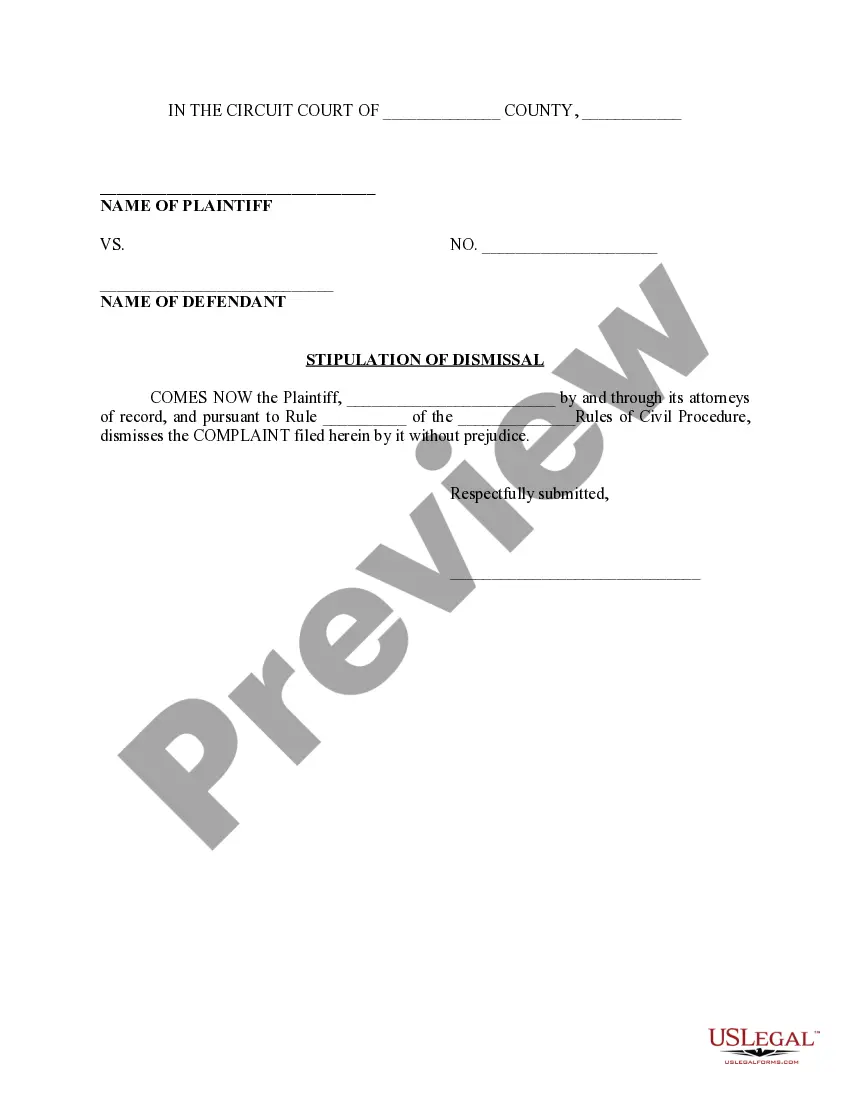
We distinguish a dismissal with prejudice from a dismissal without prejudice. The former disallows and bars the refiling of the complaint; whereas, the same cannot be said of a dismissal without prejudice. Likewise, where the law permits, a dismissal with prejudice is subject to the right of appeal.
Most commonly, a defendant will file a motion to dismiss if they believe there is a lack of evidence, improper jurisdiction, a breach of the statute of limitations or if they believe the other party is not complying with a court order.