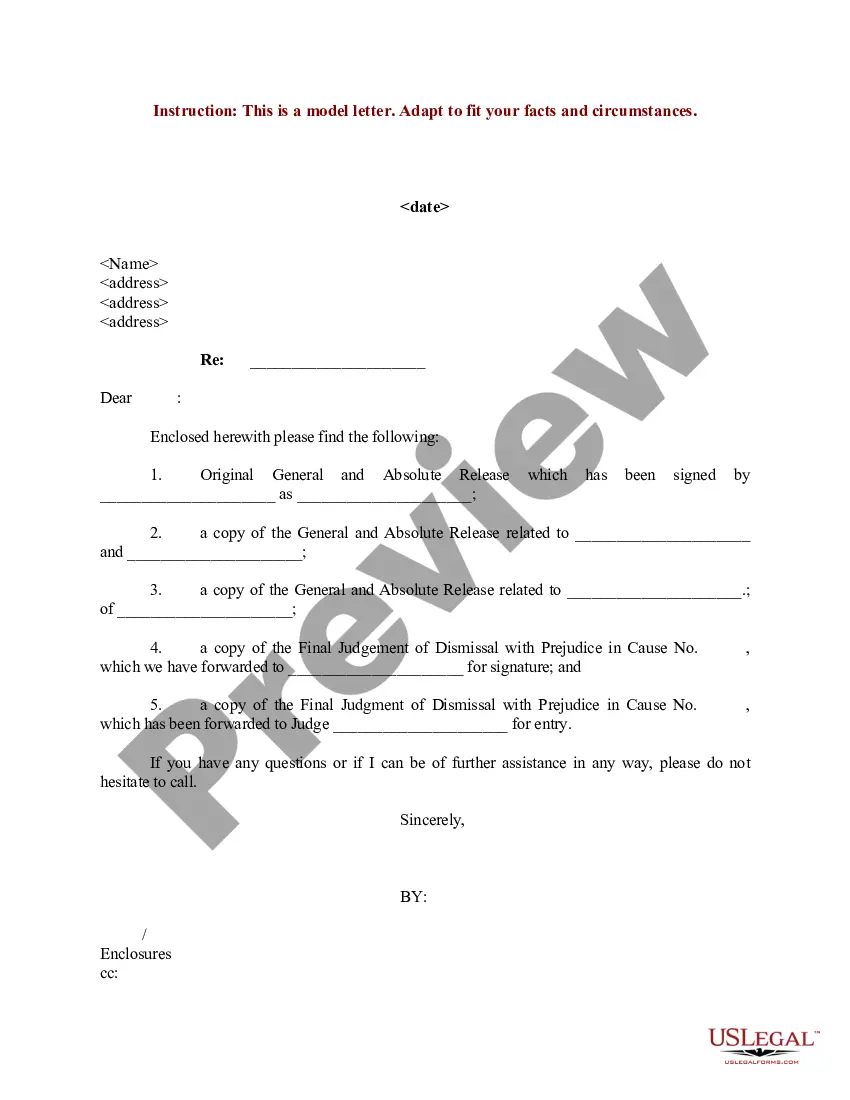
Release With Prejudice Without A Trial In Massachusetts
Description
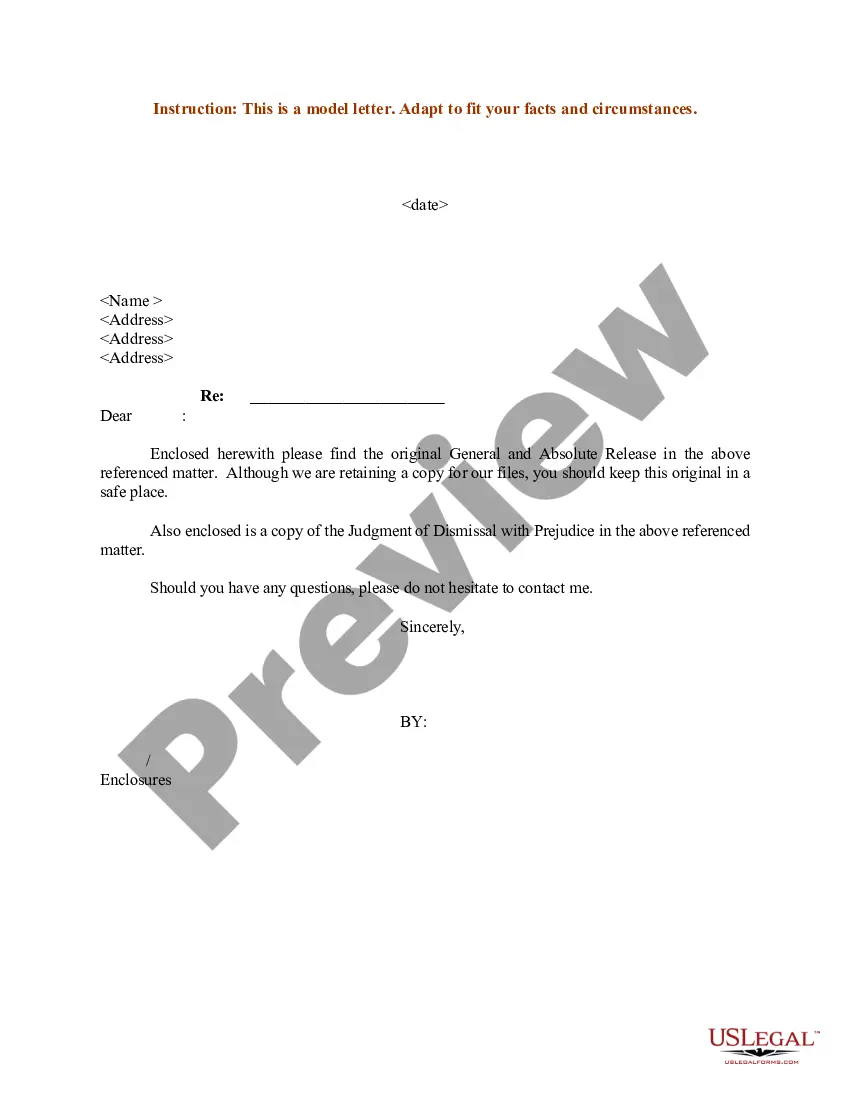
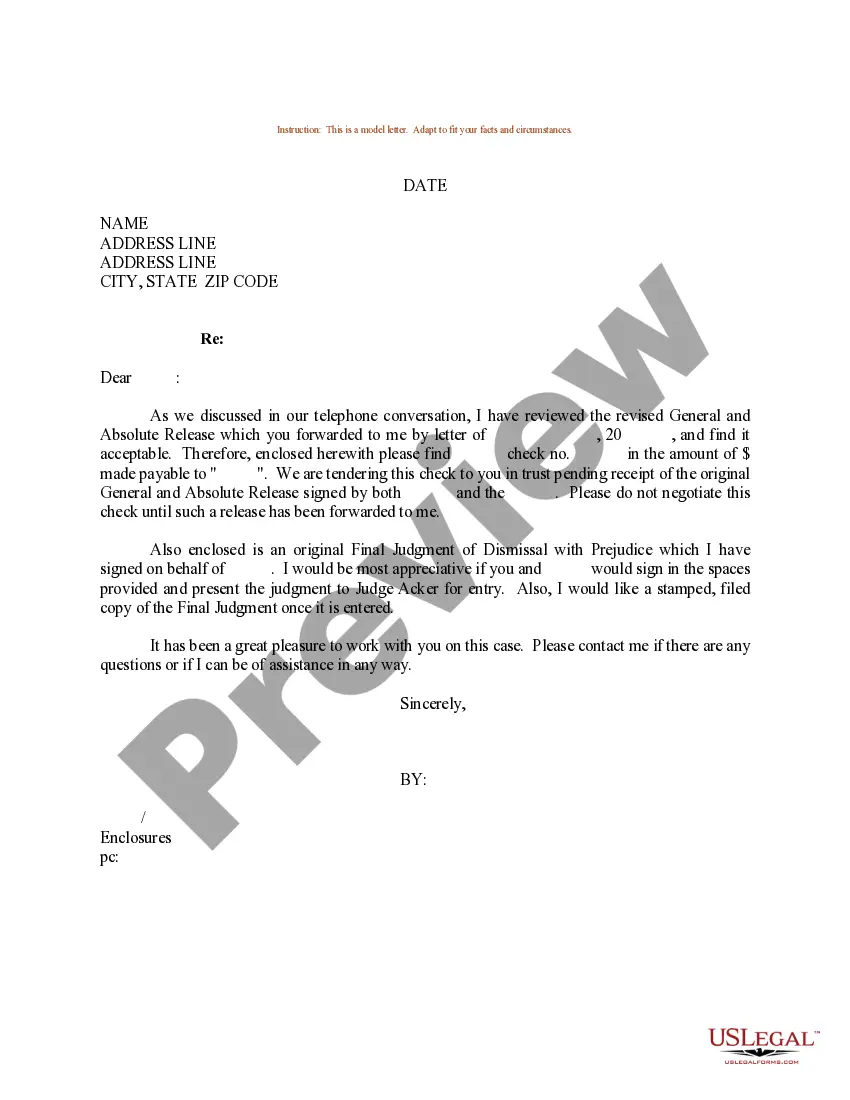
Get your form ready online
Our built-in tools help you complete, sign, share, and store your documents in one place.
Make edits, fill in missing information, and update formatting in US Legal Forms—just like you would in MS Word.
Download a copy, print it, send it by email, or mail it via USPS—whatever works best for your next step.
Sign and collect signatures with our SignNow integration. Send to multiple recipients, set reminders, and more. Go Premium to unlock E-Sign.
If this form requires notarization, complete it online through a secure video call—no need to meet a notary in person or wait for an appointment.
We protect your documents and personal data by following strict security and privacy standards.

Make edits, fill in missing information, and update formatting in US Legal Forms—just like you would in MS Word.

Download a copy, print it, send it by email, or mail it via USPS—whatever works best for your next step.

Sign and collect signatures with our SignNow integration. Send to multiple recipients, set reminders, and more. Go Premium to unlock E-Sign.

If this form requires notarization, complete it online through a secure video call—no need to meet a notary in person or wait for an appointment.

We protect your documents and personal data by following strict security and privacy standards.
Looking for another form?



Form popularity
FAQ
District Courts may dismiss with prejudice where the plaintiff acted irresponsibly or in bad faith, or where rehearing the claim would burden the court system.
If the judge dismisses the case with prejudice, it becomes a final judgment that can only be challenged in a higher court through the appellate process, not refiled in the same court.
In the formal legal world, a court case that is dismissed with prejudice means that it is dismissed permanently. A case dismissed with prejudice is over and done with, once and for all, and can't be brought back to court.
“With prejudice” means the decision is final. “Without prejudice” means it's not final and subject to future inquiry. If the judge announces a case is dismissed with prejudice, that means it's permanently dismissed and can't be retried.
Summary Judgment. (a) Motion for Summary Judgment or Partial Summary Judgment. A party may move for summary judgment, identifying each claim or defense – or the part of each claim or defense – on which summary judgment is sought.
In this case, Massachusetts absolutely guarantees trial by jury to persons accused of serious crimes, and the manner it has specified for exercising this right is fair and not unduly burdensome. ).
Rule 7 reflects the belief that extensive and complex pleadings are not desirable as a vehicle for the narrowing of issues in a case and that this function can be better performed by discovery and the use of the pretrial conference.
A party may serve upon any other party a written request for the admission, for purposes of the pending action only, of the truth of any matters within the scope of Rule 26(b)(1) set forth in the request that relate to statements or opinions of fact or of the application of law to fact, including the genuineness of any ...
Rule 12 - Defenses and Objections-When and How Presented-By Pleading or Motion-Motion for Judgment on Pleadings (a) When Presented. (1) After service upon him of any pleading requiring a responsive pleading, a party shall serve such responsive pleading within 20 days unless otherwise directed by order of the court.
Rule 12 - Defenses and Objections-When and How Presented-By Pleading or Motion-Motion for Judgment on Pleadings (a) When Presented. (1) After service upon him of any pleading requiring a responsive pleading, a party shall serve such responsive pleading within 20 days unless otherwise directed by order of the court.