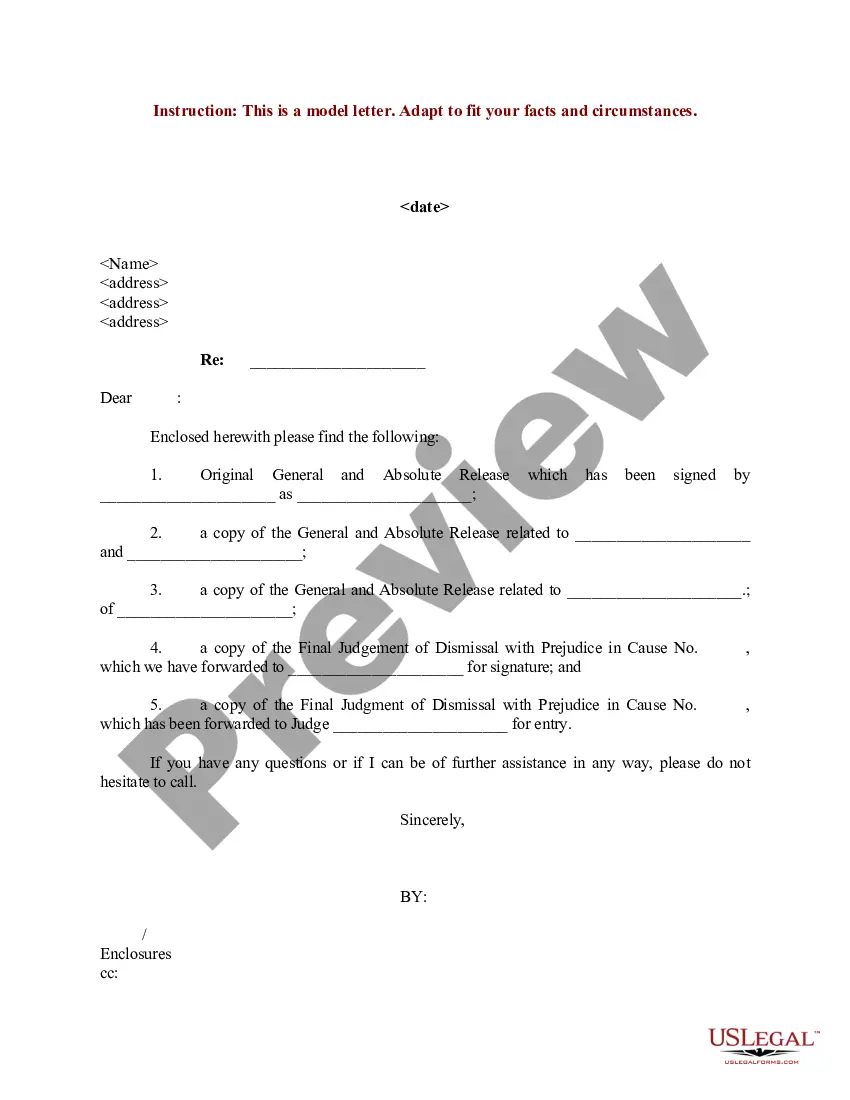
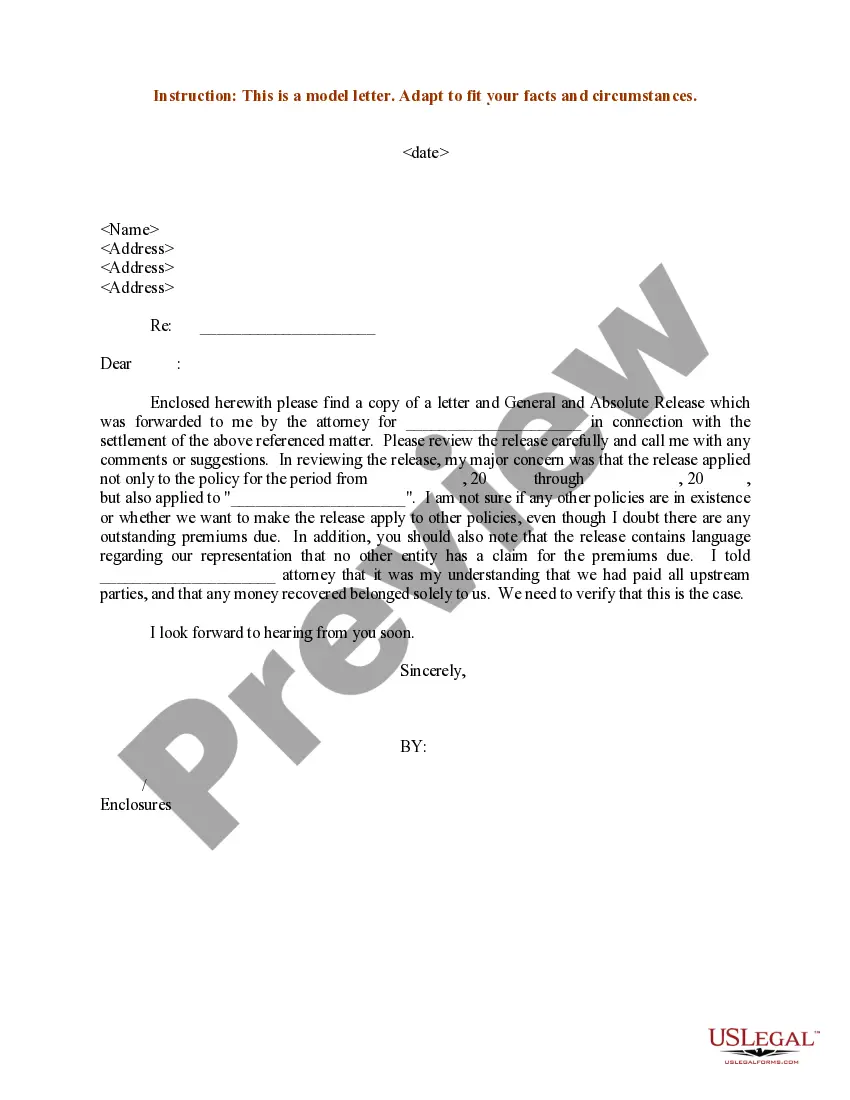
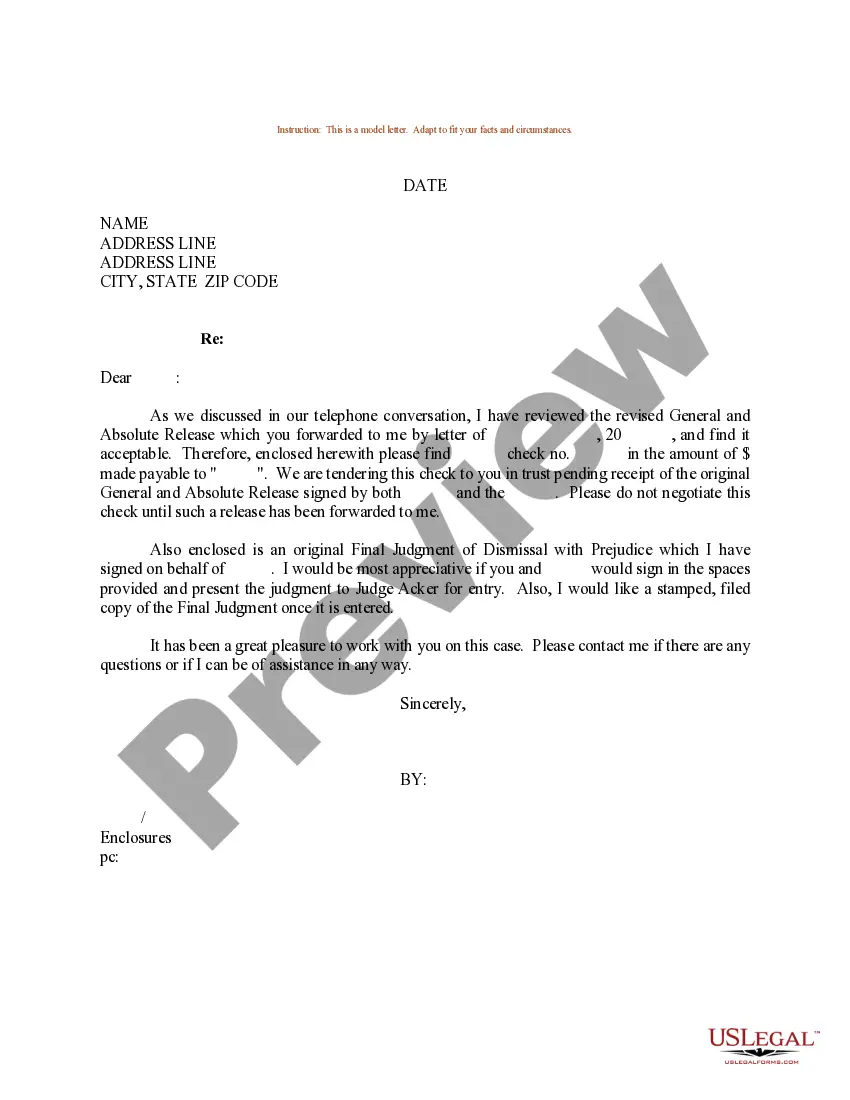
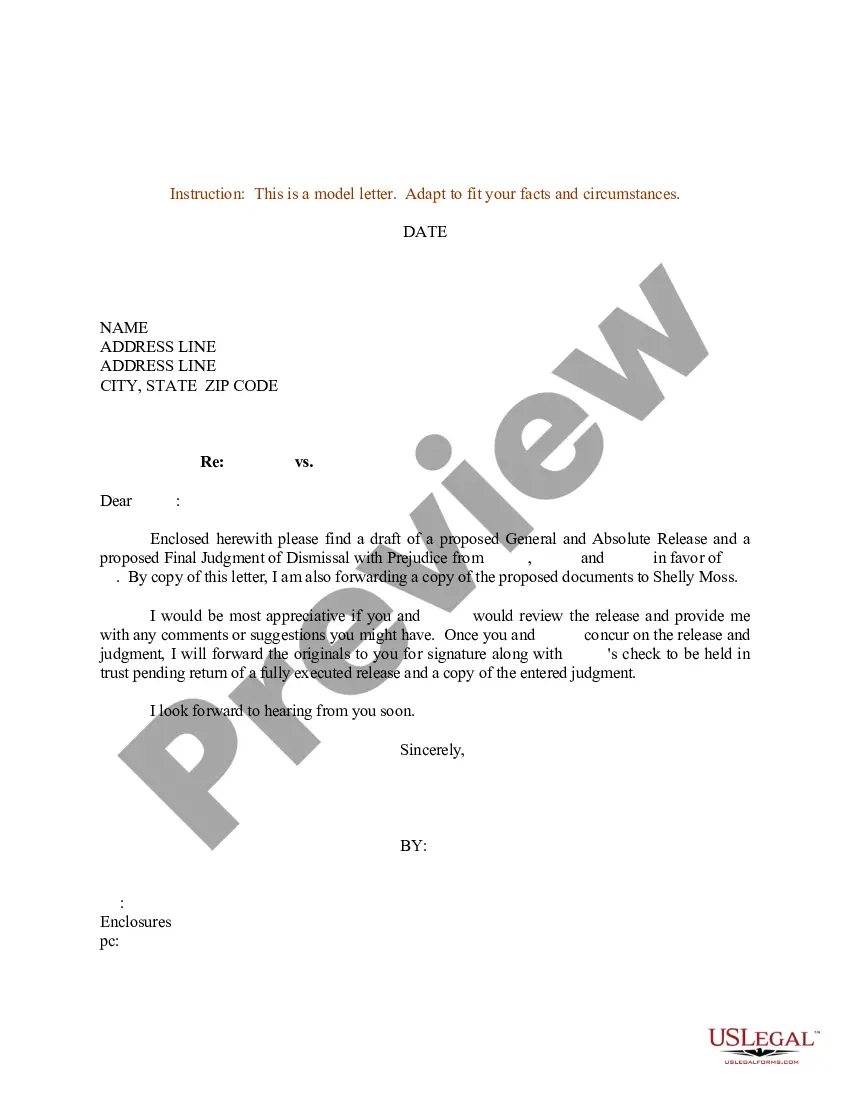
Release Letter Sample With Reference In Florida
Description

Get your form ready online
Our built-in tools help you complete, sign, share, and store your documents in one place.
Make edits, fill in missing information, and update formatting in US Legal Forms—just like you would in MS Word.
Download a copy, print it, send it by email, or mail it via USPS—whatever works best for your next step.
Sign and collect signatures with our SignNow integration. Send to multiple recipients, set reminders, and more. Go Premium to unlock E-Sign.
If this form requires notarization, complete it online through a secure video call—no need to meet a notary in person or wait for an appointment.
We protect your documents and personal data by following strict security and privacy standards.

Make edits, fill in missing information, and update formatting in US Legal Forms—just like you would in MS Word.

Download a copy, print it, send it by email, or mail it via USPS—whatever works best for your next step.

Sign and collect signatures with our SignNow integration. Send to multiple recipients, set reminders, and more. Go Premium to unlock E-Sign.

If this form requires notarization, complete it online through a secure video call—no need to meet a notary in person or wait for an appointment.

We protect your documents and personal data by following strict security and privacy standards.
Looking for another form?







Form popularity
FAQ
Although there are ready-made HHAs available online, they may not work in all jurisdictions or situations. To ensure your document provides you the best protection possible, be sure to consult with an attorney.
In many cases, a notary public is not a mandatory component for a waiver to be legally binding. However, notarizing a waiver can add an extra layer of credibility. And may serve as evidence that the document was voluntarily signed by the individual in question.
A liability waiver form is a legal contract that educates one party about the risks associated with an activity. Once signed, it prevents the participant from opening a lawsuit against the company in the event of damage or loss, effectively shifting responsibility for injuries from the company to the customer.
In Florida, a charging document is called an "Information". If an Information is filed with the clerk of court, the case is set for an arraignment. If the prosecutor decides not to pursue formal charges, he or she files what is called a "No Information" or a "Letter of Release" and prosecution is terminated.
A Release of Liability Form Florida template is used when a person engages in an activity, mishaps, accidents, or other factors that can result in an injury or harm being suffered. Ordinarily, this can lead to a claim for damages or even criminal charges.
Florida Rules for a Letter of Intent If the essential terms of the agreement are left open for negotiation in the letter of intent, then a Florida court may not enforce the agreement. The logic typically used in Florida for such cases is that an agreement with open-ended terms is essentially unenforceable.
Writing in a Professional Tone The best way to write a letter to a judge is in business style, which is a formal way of structuring your message (outlined below). In addition to following a business-style structure, you should write the letter in a professional tone to ensure the judge will take your letter seriously.
If formal charges are not filed within 33 days, your attorney may file a motion to have you released from custody. The court, on the 33rd day and with notice to the State Attorney, may order that you be released on your own recognizance on that 33rd day.