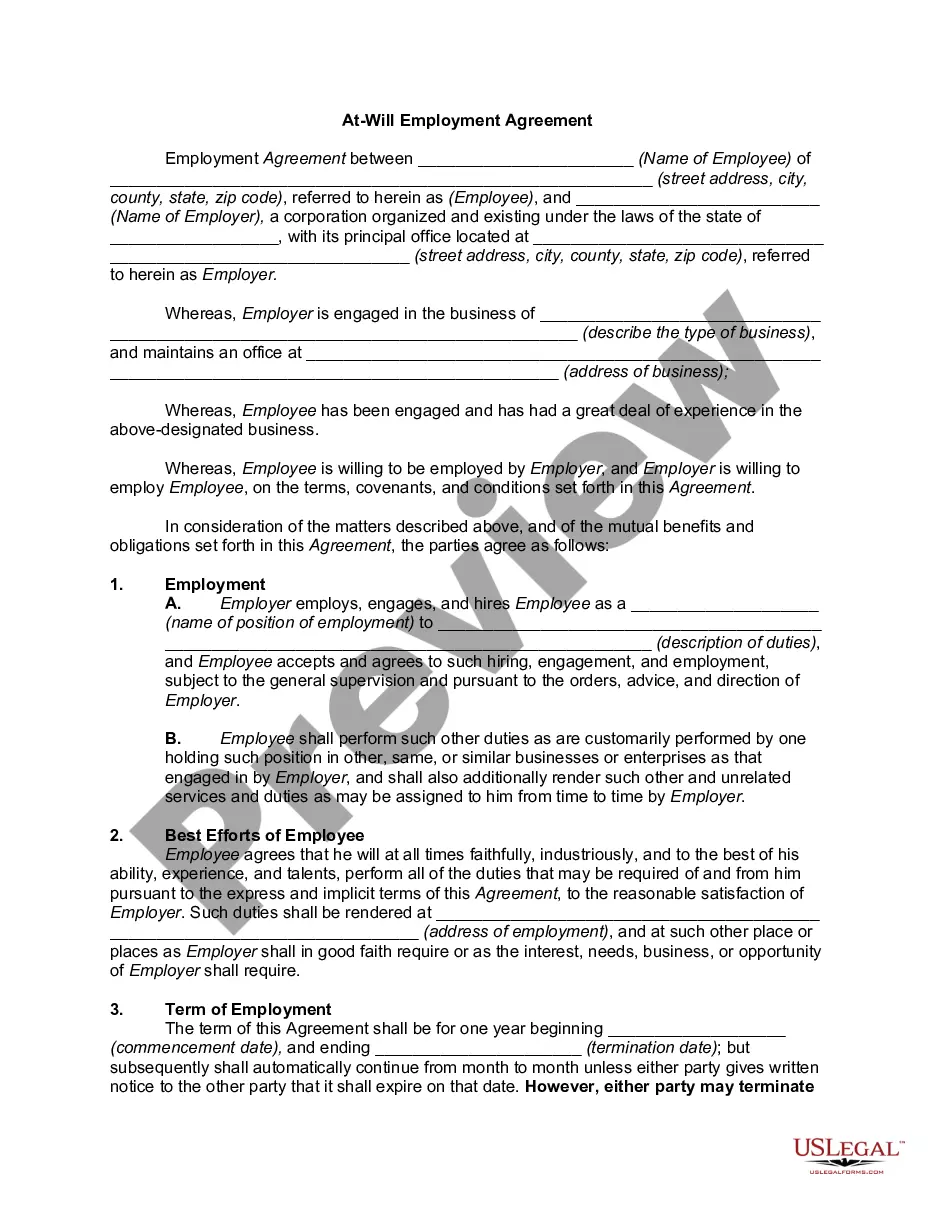
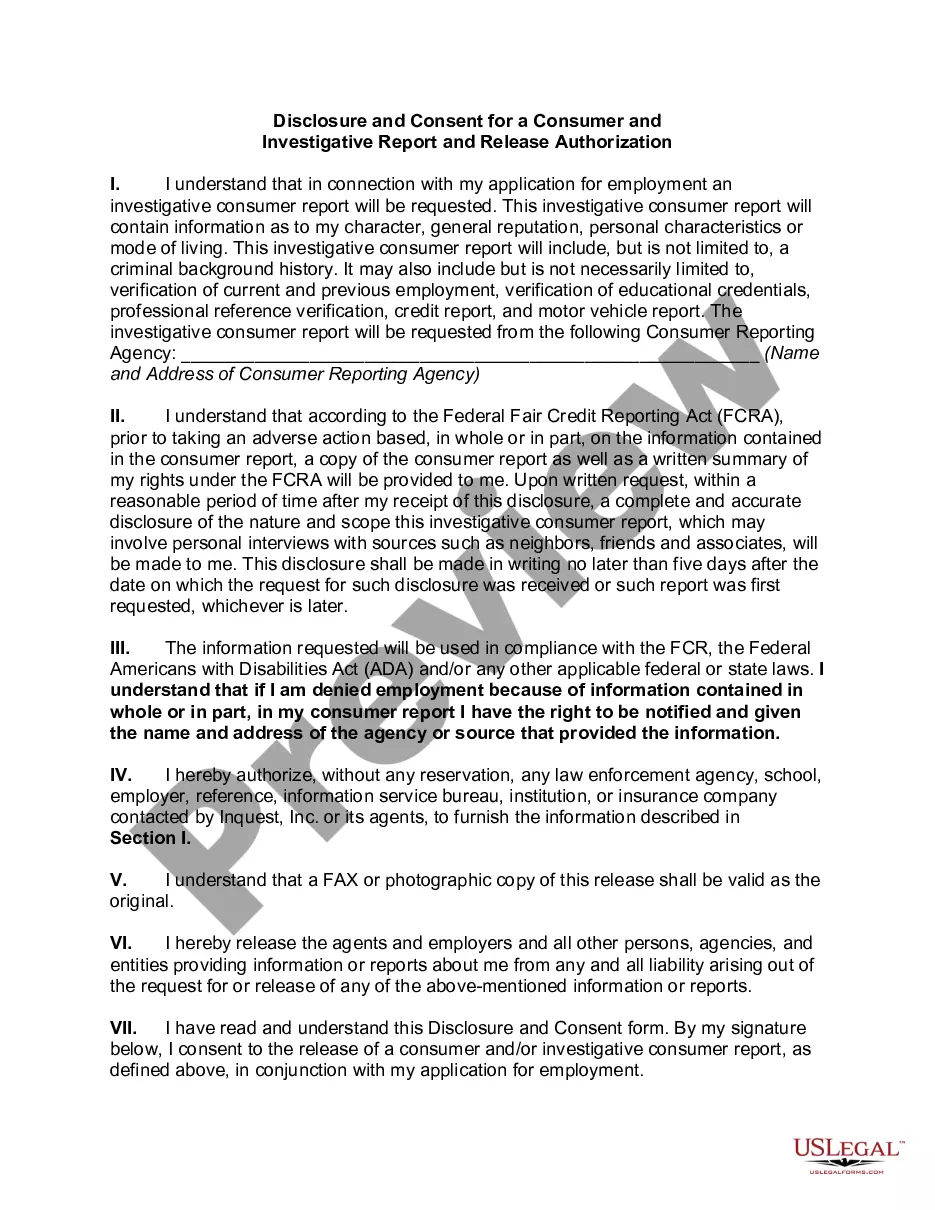
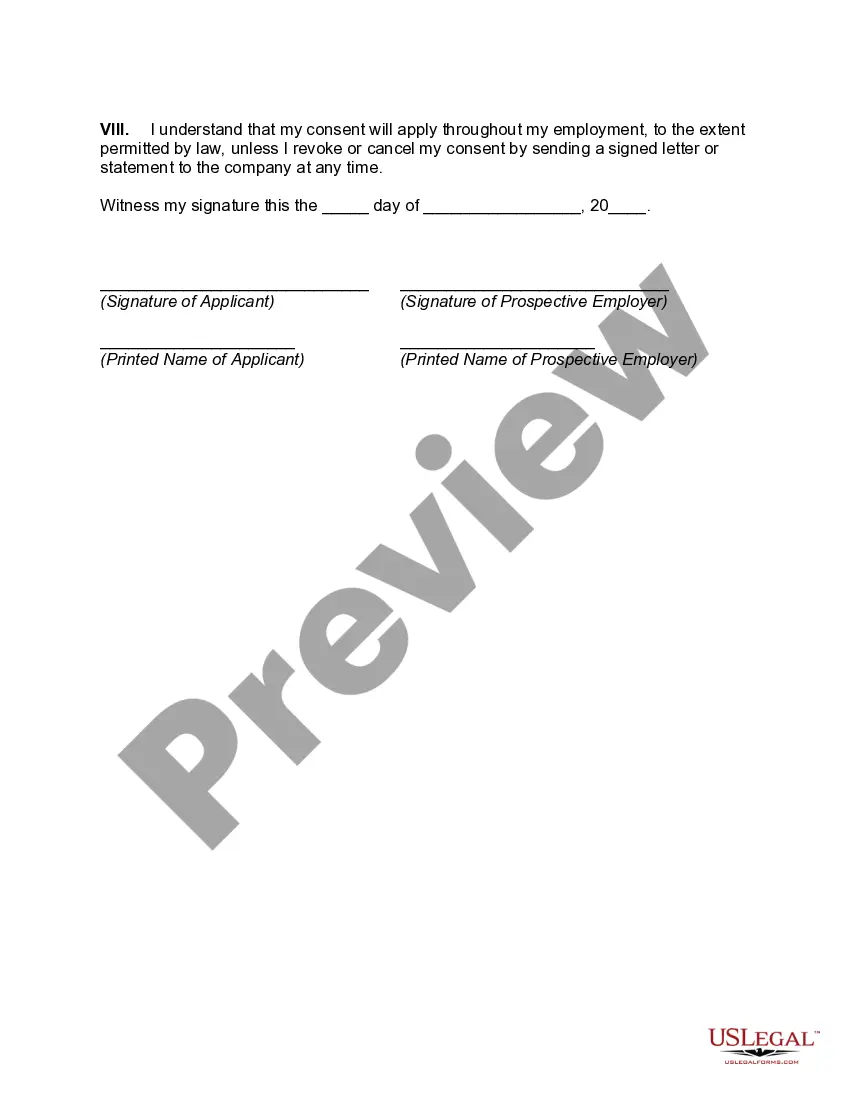
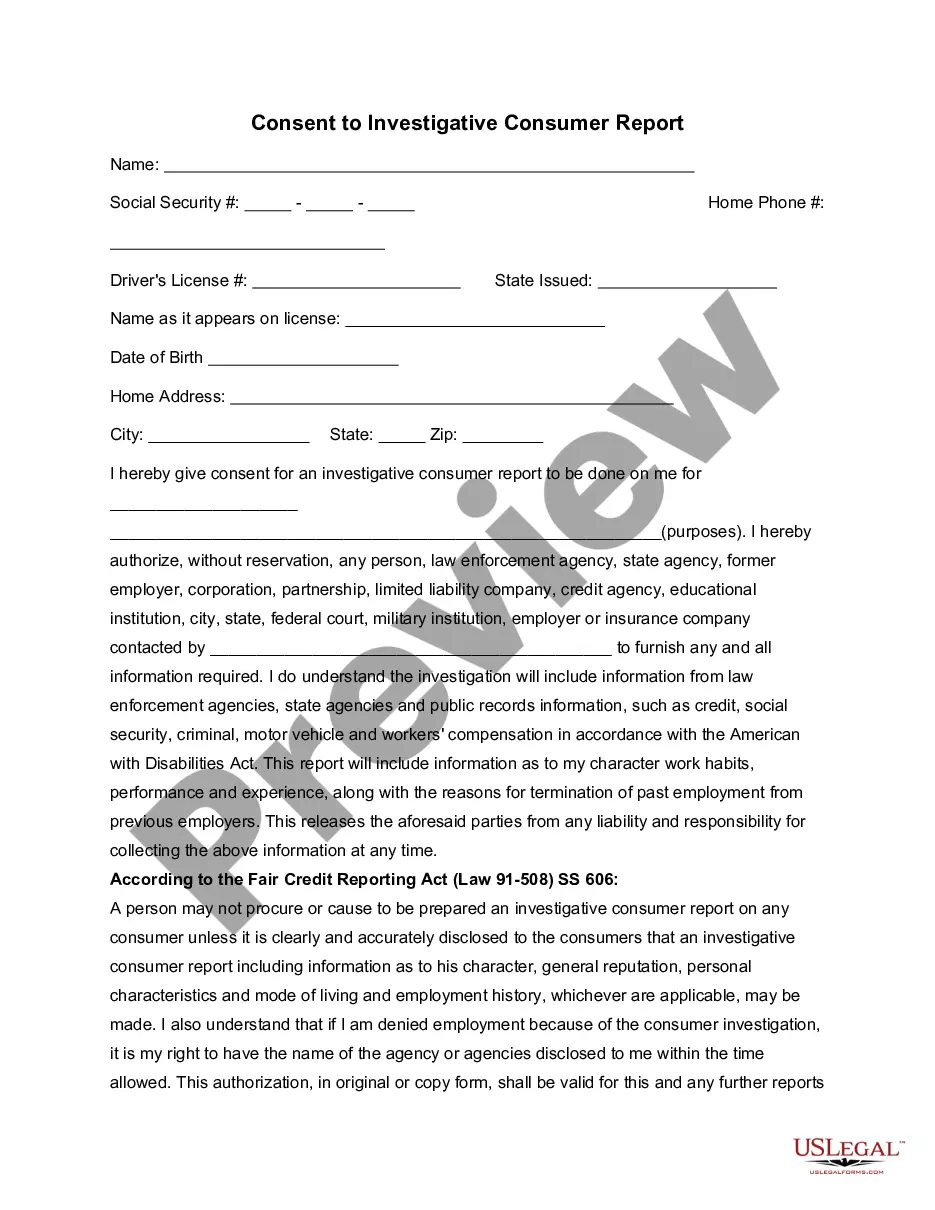
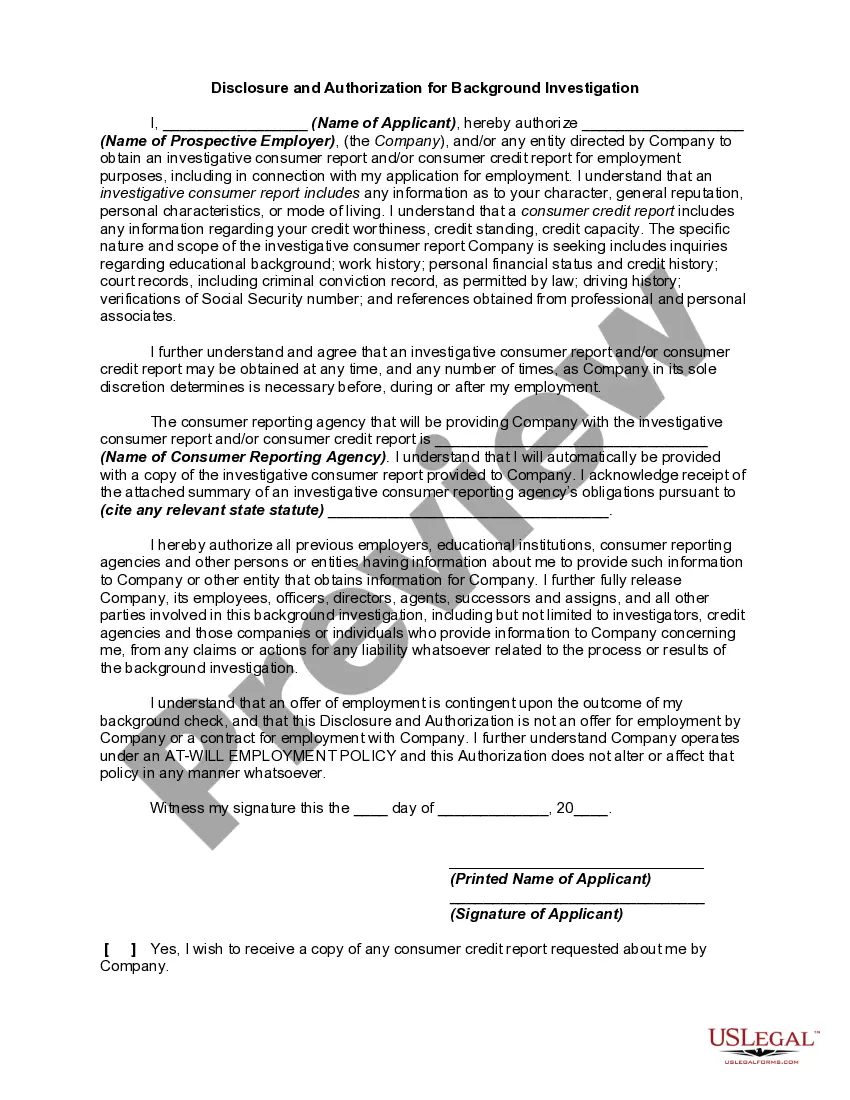
Consent Consumer Investigative For Employment In Salt Lake
Description
Get your form ready online
Our built-in tools help you complete, sign, share, and store your documents in one place.
Make edits, fill in missing information, and update formatting in US Legal Forms—just like you would in MS Word.
Download a copy, print it, send it by email, or mail it via USPS—whatever works best for your next step.
Sign and collect signatures with our SignNow integration. Send to multiple recipients, set reminders, and more. Go Premium to unlock E-Sign.
If this form requires notarization, complete it online through a secure video call—no need to meet a notary in person or wait for an appointment.
We protect your documents and personal data by following strict security and privacy standards.

Make edits, fill in missing information, and update formatting in US Legal Forms—just like you would in MS Word.

Download a copy, print it, send it by email, or mail it via USPS—whatever works best for your next step.

Sign and collect signatures with our SignNow integration. Send to multiple recipients, set reminders, and more. Go Premium to unlock E-Sign.

If this form requires notarization, complete it online through a secure video call—no need to meet a notary in person or wait for an appointment.

We protect your documents and personal data by following strict security and privacy standards.
Looking for another form?







Form popularity
FAQ
If you have a person's name, you can investigate their credit history, check their criminal record, find details about their driving record, and more. However, an important caveat is that you may not request a background check on a person without their consent.
The process of conducting a background check generally includes six steps: Create a background check policy. Maintain legal compliance. Choose a background check company. Communicate candidate rights. Select screening reports. Make hiring decisions.
In the US it's legal for employers to discriminate based on credit score/history, so unfortunately this is normal.
Section 1681a of the Fair Credit Reporting Act defines an “investigative consumer report” as “a consumer report or portion thereof in which information on a consumer's character, general reputation, personal characteristics, or mode of living is obtained through personal interviews with neighbors, friends, or ...
The process of conducting a background check generally includes six steps: Create a background check policy. Maintain legal compliance. Choose a background check company. Communicate candidate rights. Select screening reports. Make hiring decisions.
An investigative consumer reporting agency shall only furnish an investigative consumer report under the following circumstances: (a) In response to the order of a court having jurisdiction to issue the order. (b) In compliance with a lawful subpoena issued by a court of competent jurisdiction.
The most common types of employment background screening include: Address History, Civil Records, SSN Verification, Criminal Records, Resume Verification, Medical Registration and Sanctions, and Drug and Alcohol Testing.
The bottom line is that no company has the right to prevent a former employee from finding future work.
Yes. Most reputable, potential employers will pull various consumer reports during the application process. Any possible negative information in your credit reports may hinder your chances at landing the job.