Consumer Investigative Release With Case Laws In Arizona
Description
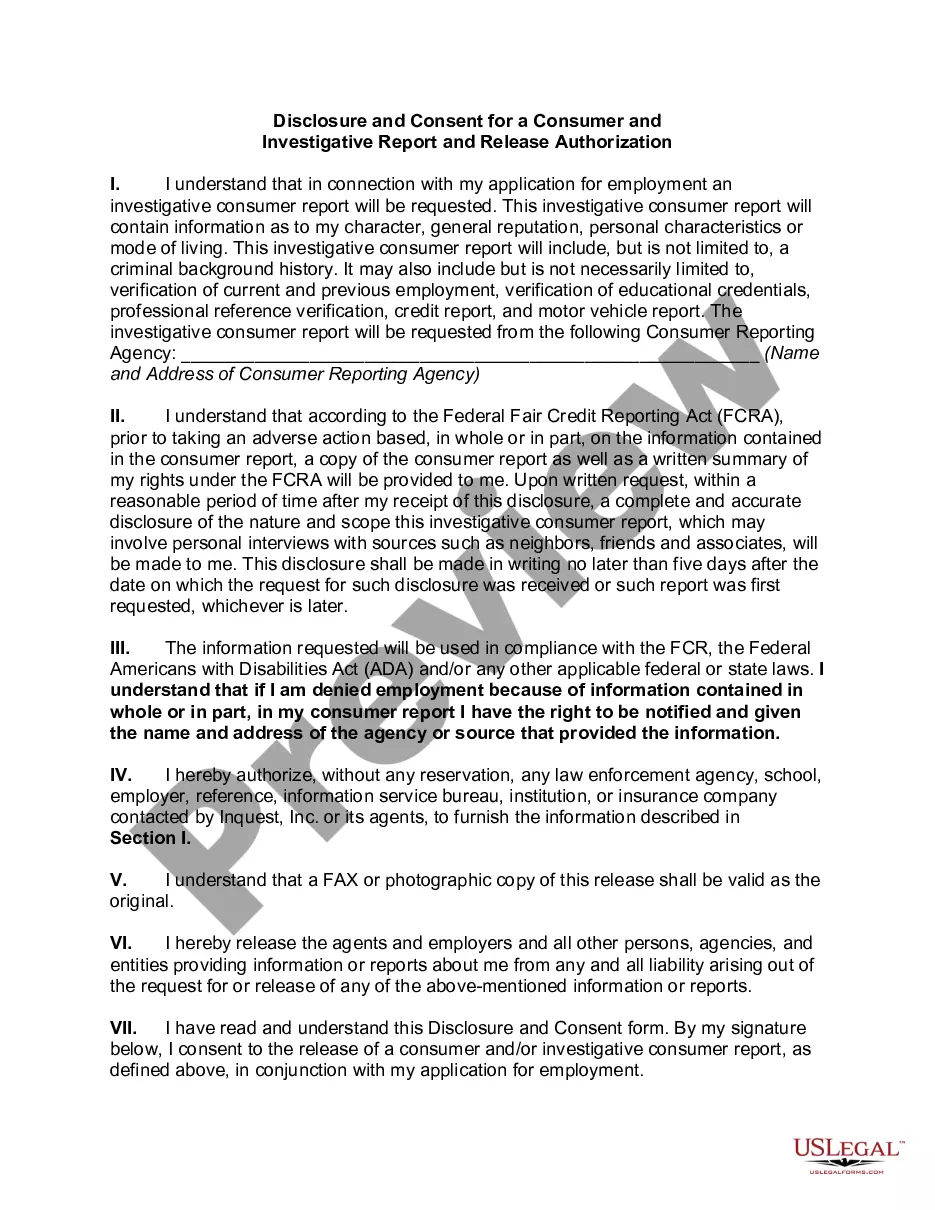
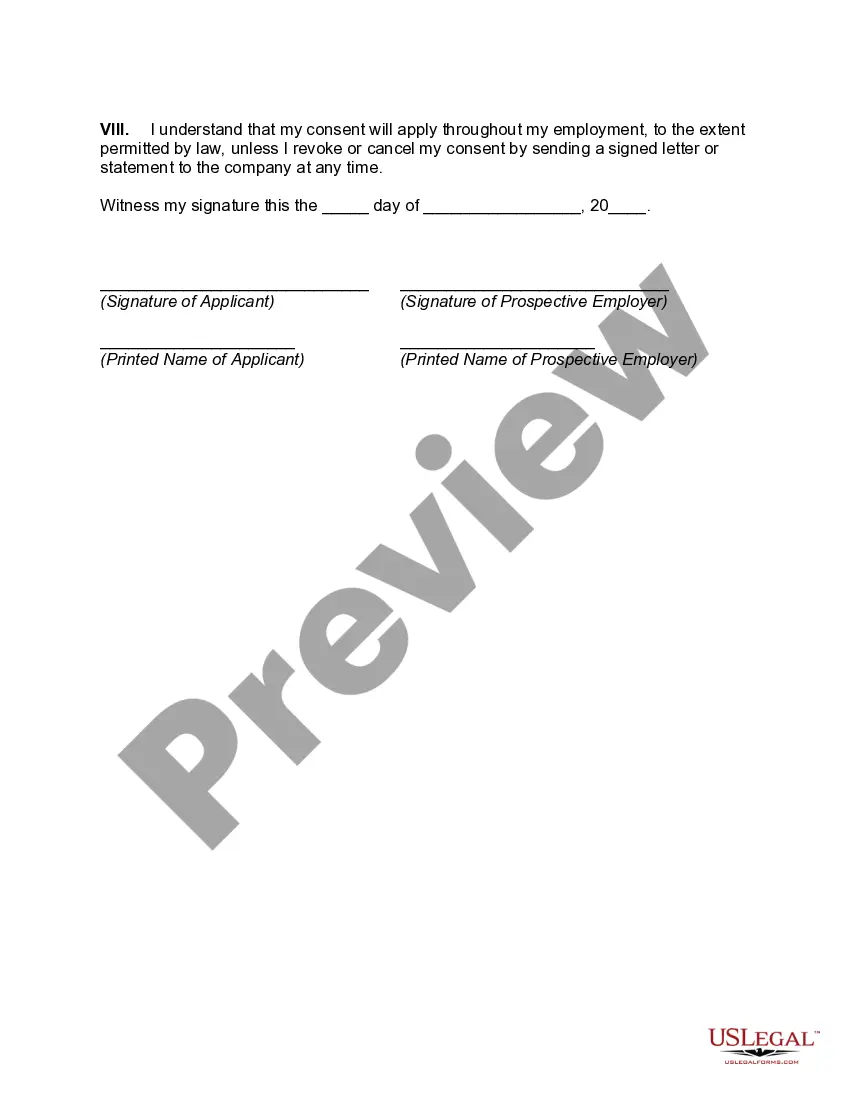
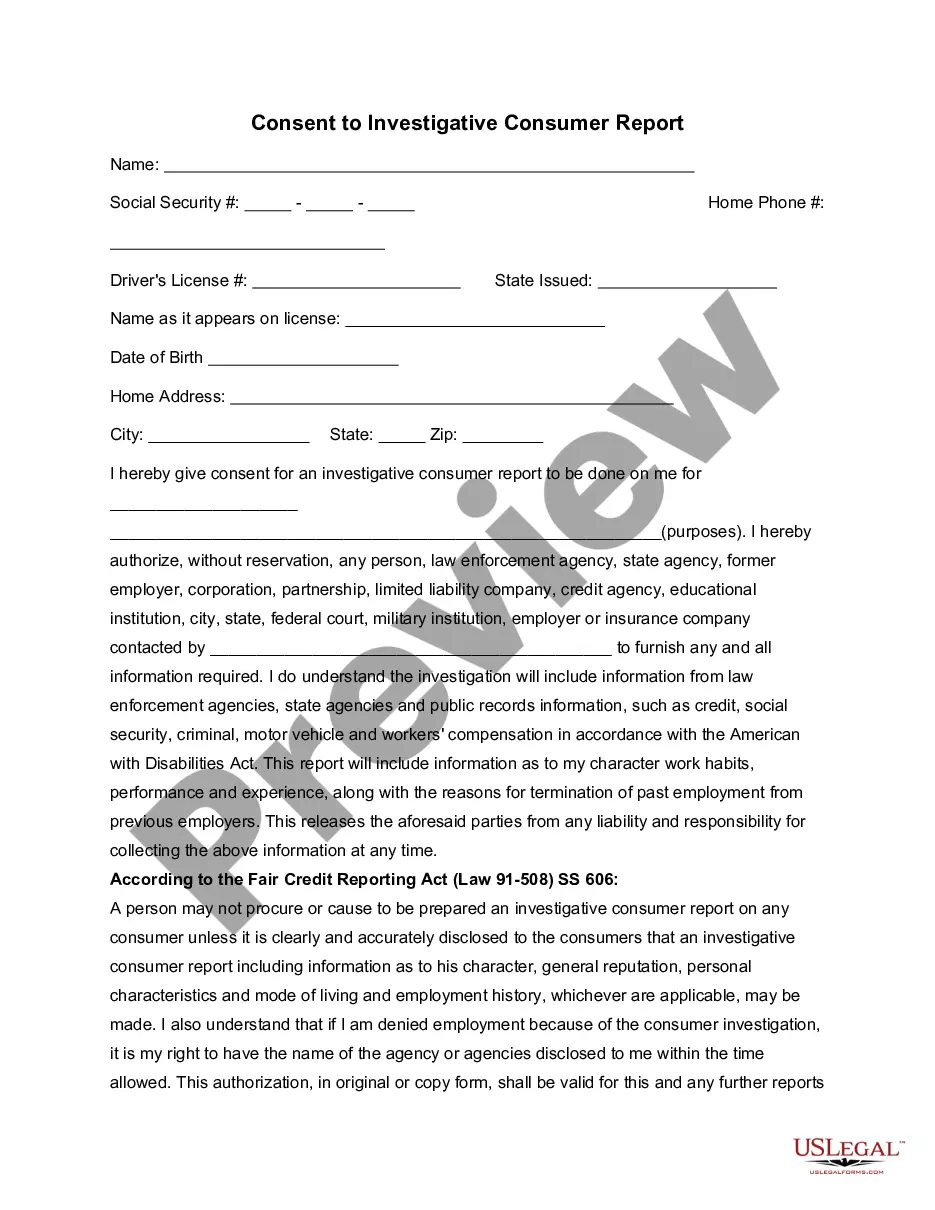
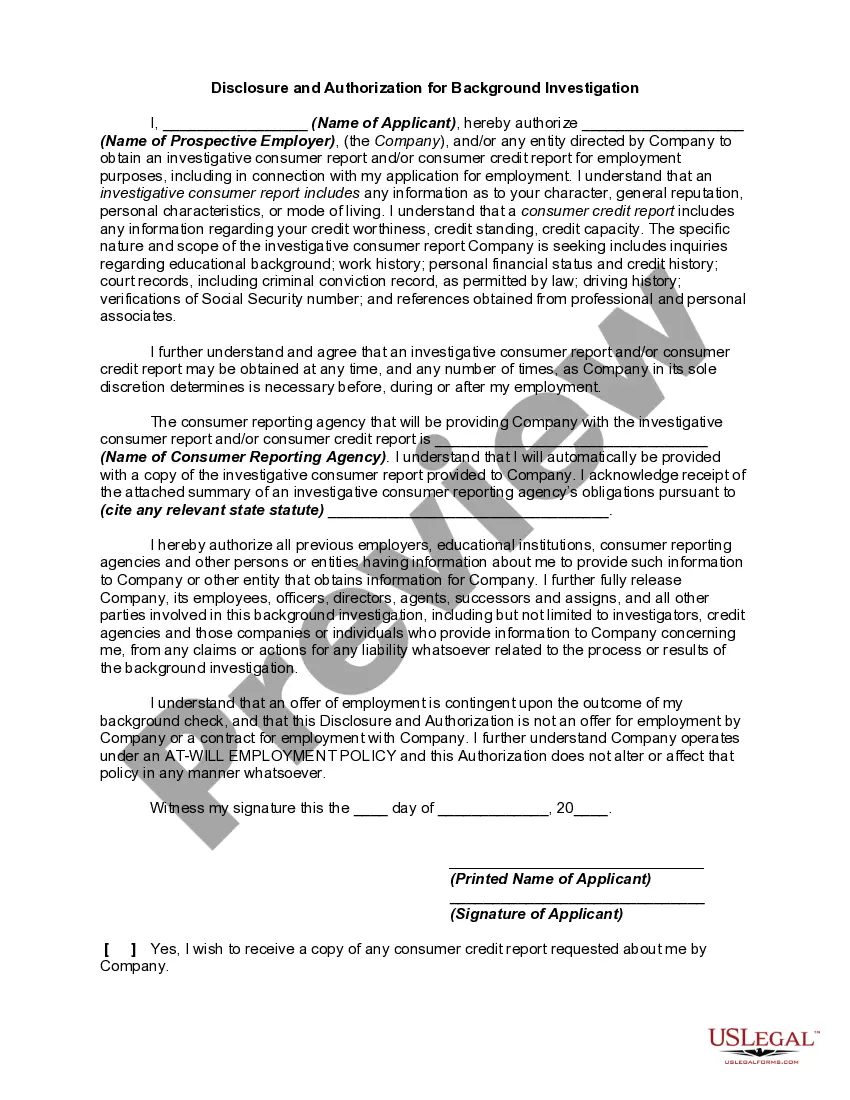
Get your form ready online
Our built-in tools help you complete, sign, share, and store your documents in one place.
Make edits, fill in missing information, and update formatting in US Legal Forms—just like you would in MS Word.
Download a copy, print it, send it by email, or mail it via USPS—whatever works best for your next step.
Sign and collect signatures with our SignNow integration. Send to multiple recipients, set reminders, and more. Go Premium to unlock E-Sign.
If this form requires notarization, complete it online through a secure video call—no need to meet a notary in person or wait for an appointment.
We protect your documents and personal data by following strict security and privacy standards.

Make edits, fill in missing information, and update formatting in US Legal Forms—just like you would in MS Word.

Download a copy, print it, send it by email, or mail it via USPS—whatever works best for your next step.

Sign and collect signatures with our SignNow integration. Send to multiple recipients, set reminders, and more. Go Premium to unlock E-Sign.

If this form requires notarization, complete it online through a secure video call—no need to meet a notary in person or wait for an appointment.

We protect your documents and personal data by following strict security and privacy standards.
Looking for another form?





Form popularity
FAQ
File a complaint with your local consumer protection office or the state agency that regulates the company. Notify the Better Business Bureau (BBB) in your area about your problem. The BBB tries to resolve your complaints against companies.
The FTC's Bureau of Consumer Protection stops unfair, deceptive and fraudulent business practices by: collecting complaints and conducting investigations. suing companies and people that break the law.
Telling the Federal Trade Commission helps us stop ripoffs, scams, and fraudsters. Your complaints matter here. To file a complaint, just go to ftc/complaint, and answer the questions. Or call That's all there is to it.
Consistent with applicable law, we securely share complaints with other state and federal agencies to, among other things, facilitate: supervision activities, enforcement activities, and. monitor the market for consumer financial products and services.
The FTC's Bureau of Consumer Protection stops unfair, deceptive and fraudulent business practices by collecting reports from consumers and conducting investigations, suing companies and people that break the law, developing rules to maintain a fair marketplace, and educating consumers and businesses about their rights ...
The Arizona Consumer Fraud Act (ACFA) is a package of Arizona state laws that give protections to consumers in almost any kind of transaction related to the sale or advertisement of merchandise.
Filing a Complaint Department of Consumer Affairs. File a complaint online at .dca.ca or call 800.952. 5210 to have a complaint form mailed to you. California Attorney General's Office.
Additional Protection The Arizona Attorney General has the authority investigate and prosecute violations of the Consumer Fraud Act and other state and federal consumer protection laws. A private citizen can also bring an action for a violation of the Consumer Fraud Act within one year from the date the claim arises.
The Arizona Consumer Fraud Act (ACFA) is a package of Arizona state laws that give protections to consumers in almost any kind of transaction related to the sale or advertisement of merchandise.
Consumer protection laws are made to protect consumers from fraudulent business practices, defective products, and dangerous goods and services. They play an important role in a reliable market economy, helping to keep sellers honest with no threat of unpleasant surprises.
