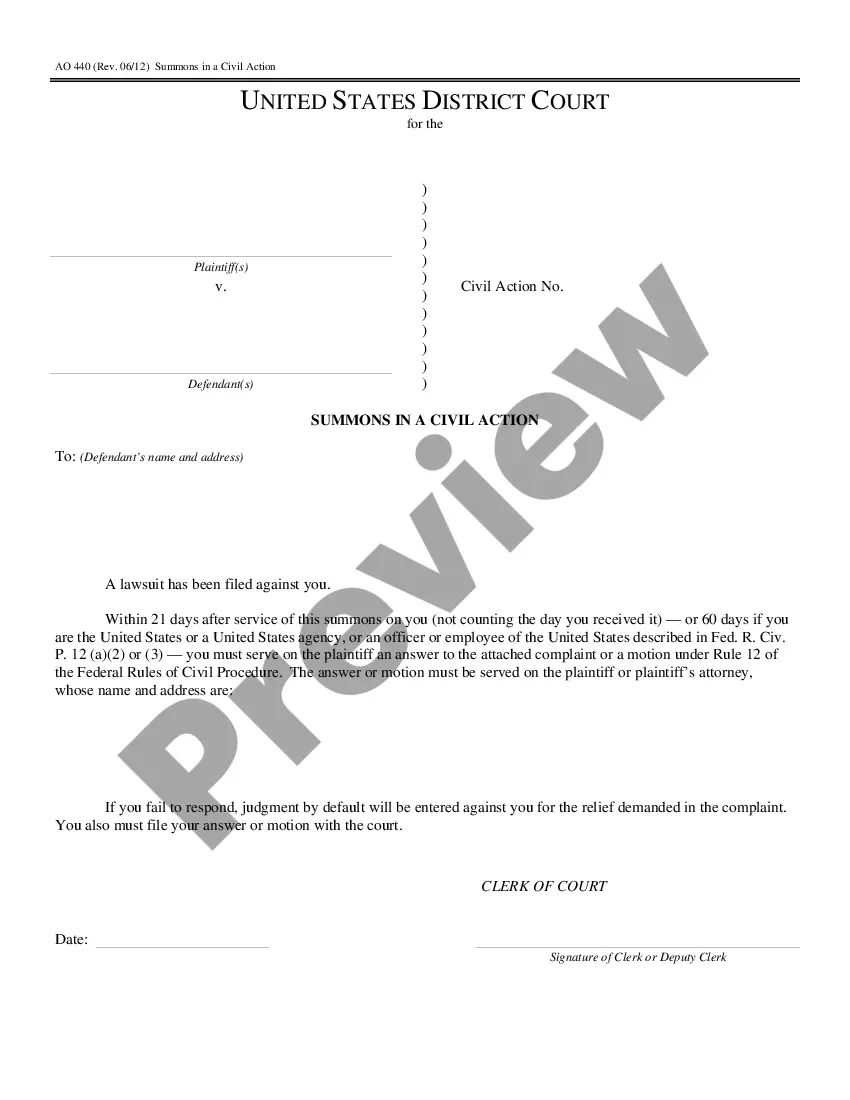
Distributorship Agreement Distributor Format India In Houston
Description

Get your form ready online
Our built-in tools help you complete, sign, share, and store your documents in one place.
Make edits, fill in missing information, and update formatting in US Legal Forms—just like you would in MS Word.
Download a copy, print it, send it by email, or mail it via USPS—whatever works best for your next step.
Sign and collect signatures with our SignNow integration. Send to multiple recipients, set reminders, and more. Go Premium to unlock E-Sign.
If this form requires notarization, complete it online through a secure video call—no need to meet a notary in person or wait for an appointment.
We protect your documents and personal data by following strict security and privacy standards.

Make edits, fill in missing information, and update formatting in US Legal Forms—just like you would in MS Word.

Download a copy, print it, send it by email, or mail it via USPS—whatever works best for your next step.

Sign and collect signatures with our SignNow integration. Send to multiple recipients, set reminders, and more. Go Premium to unlock E-Sign.

If this form requires notarization, complete it online through a secure video call—no need to meet a notary in person or wait for an appointment.

We protect your documents and personal data by following strict security and privacy standards.
Looking for another form?









Form popularity
FAQ
How to Find Distributors in India? Market Research. Define Your Distribution Channel. Industry Associations and Trade Shows. Online Directories and Portals. Networking. Distributor Directories. Local Chambers of Commerce. Online Marketplaces:
These are the ten steps to be followed when valuing a distribution business. Analyze Financial Statements. Review Client and Supplier Contracts. Evaluate Market Position. Consider Asset Value. Assess Growth Potential. Review Industry Comparables. Calculate Earnings Multiples. Analyze Operational Efficiency.
Based on market conditions, the value of the distribution rights is between 5x and 7x of gross profit.
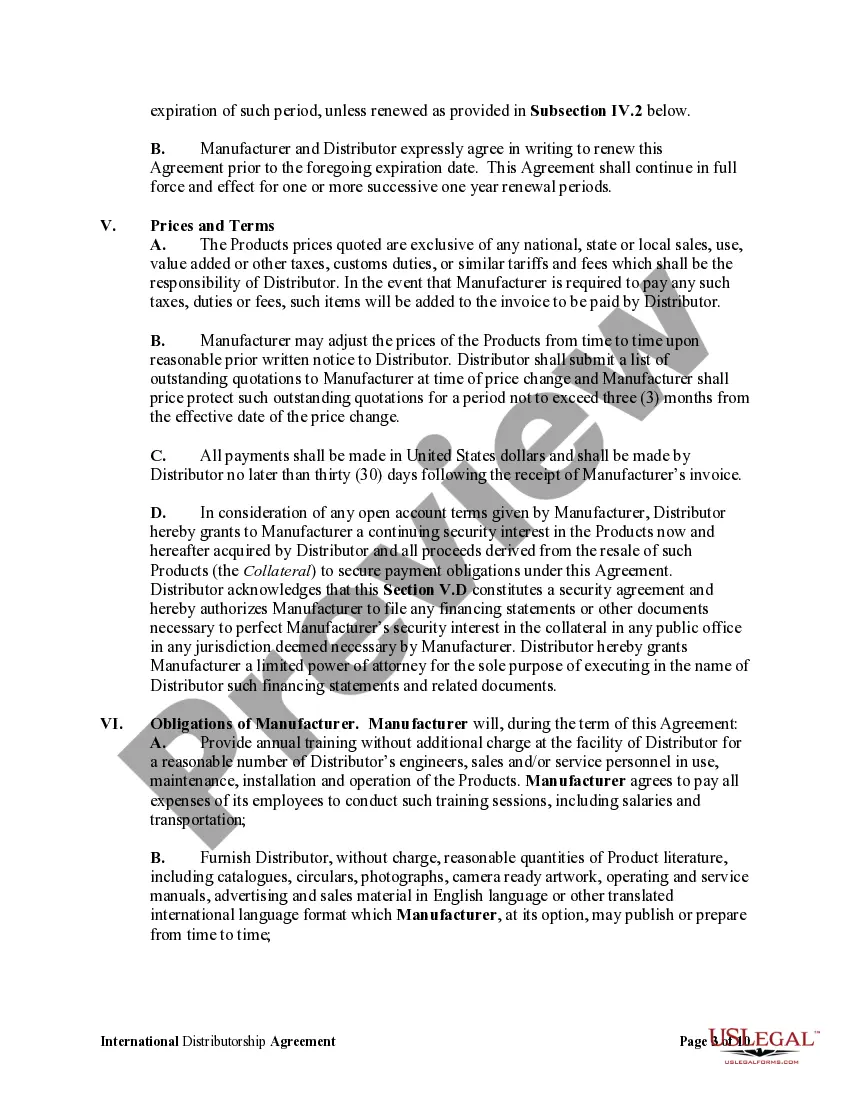
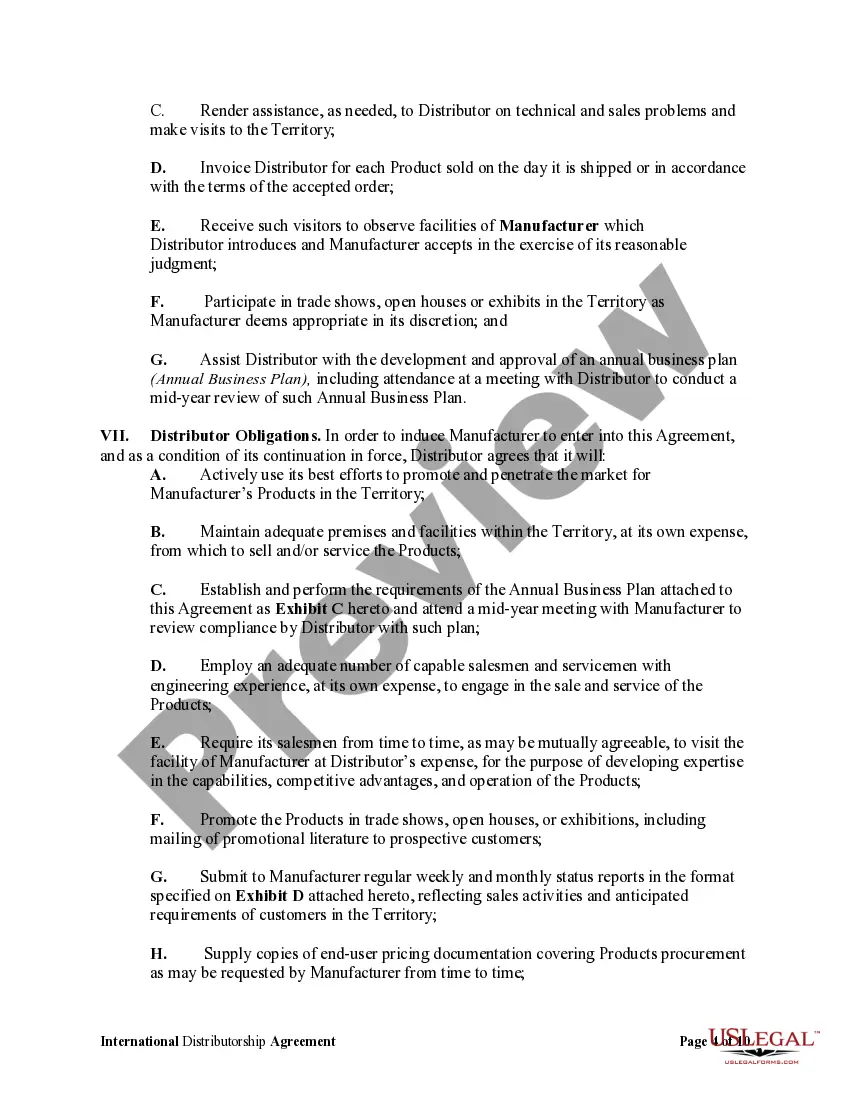
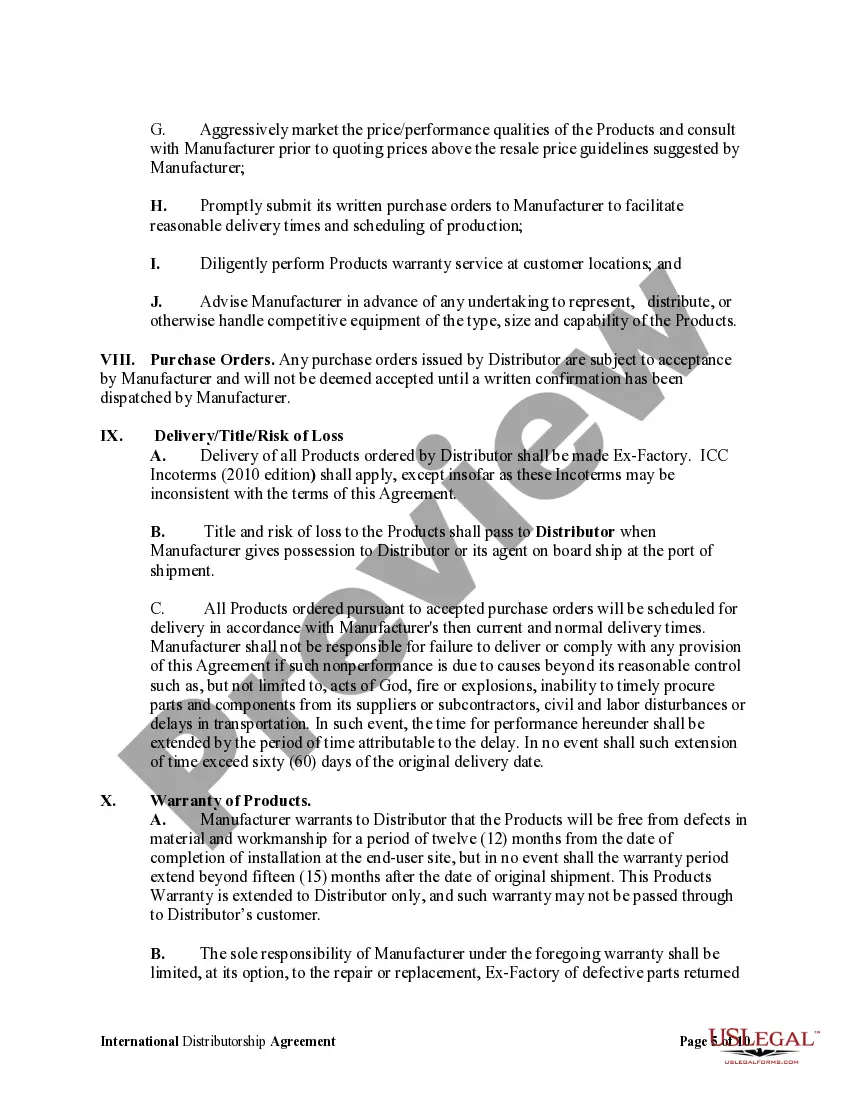
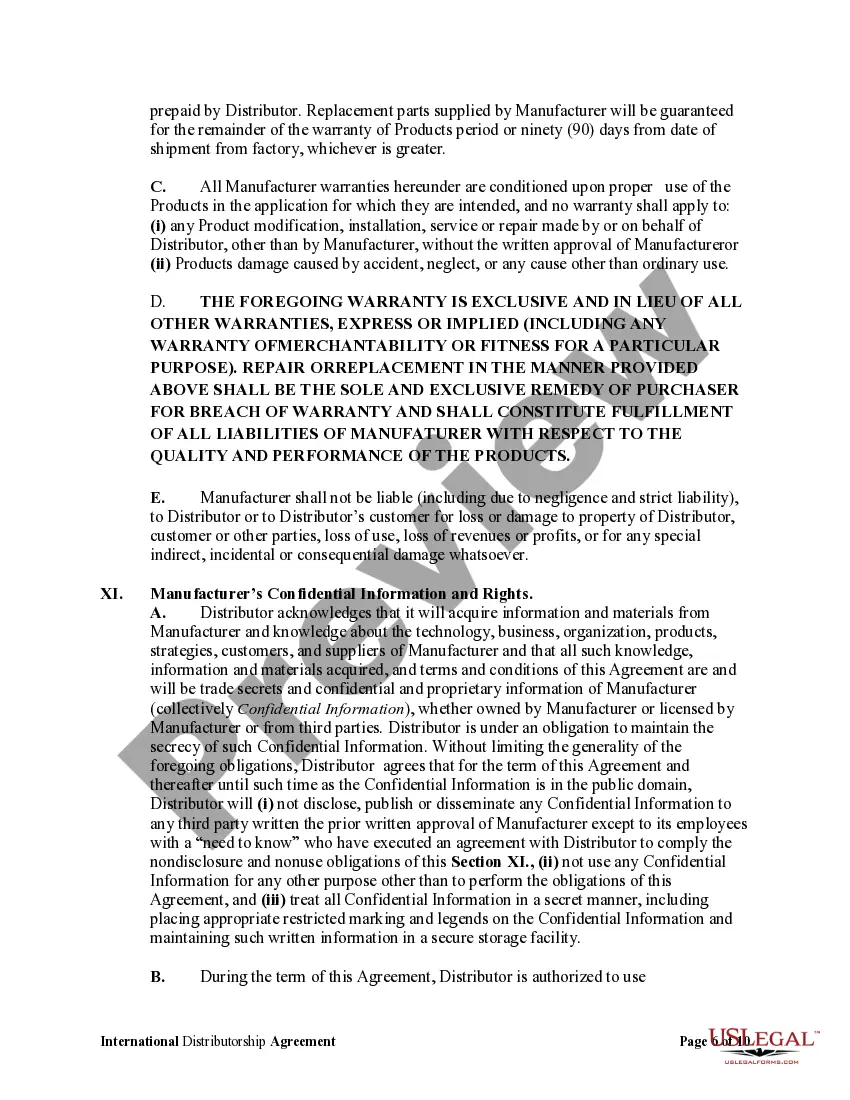
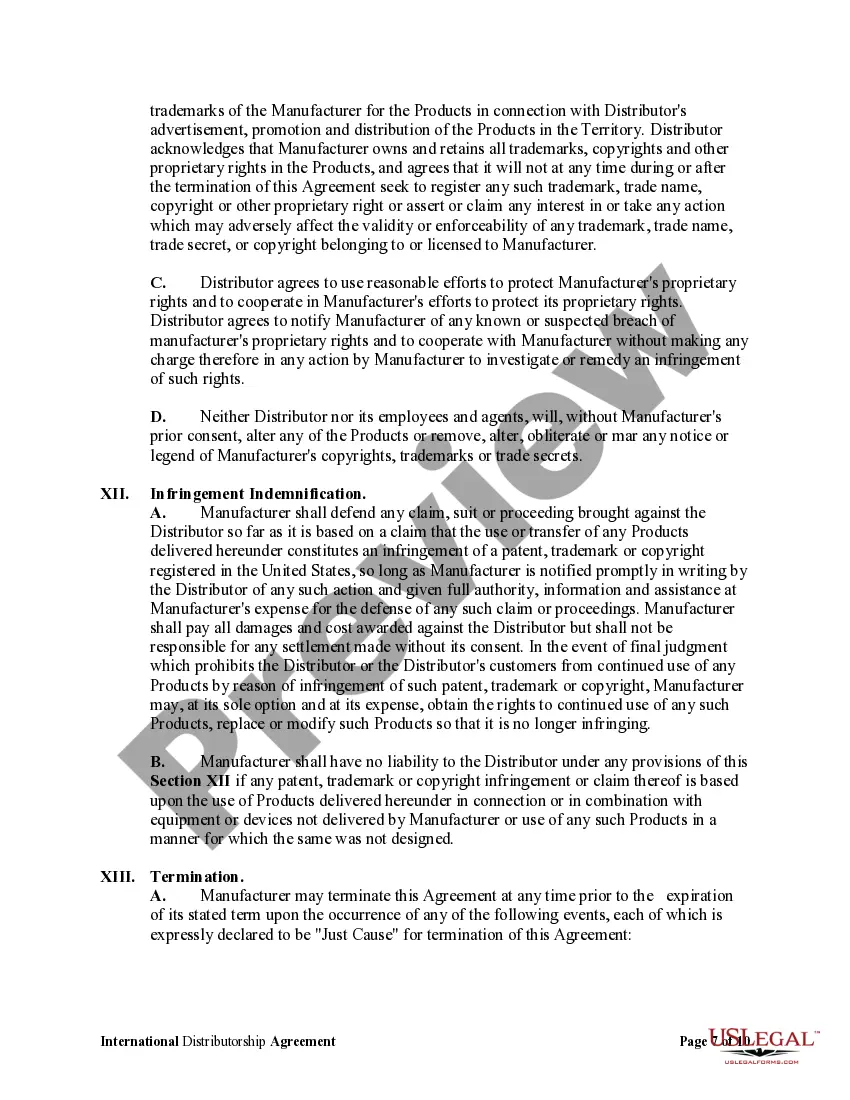
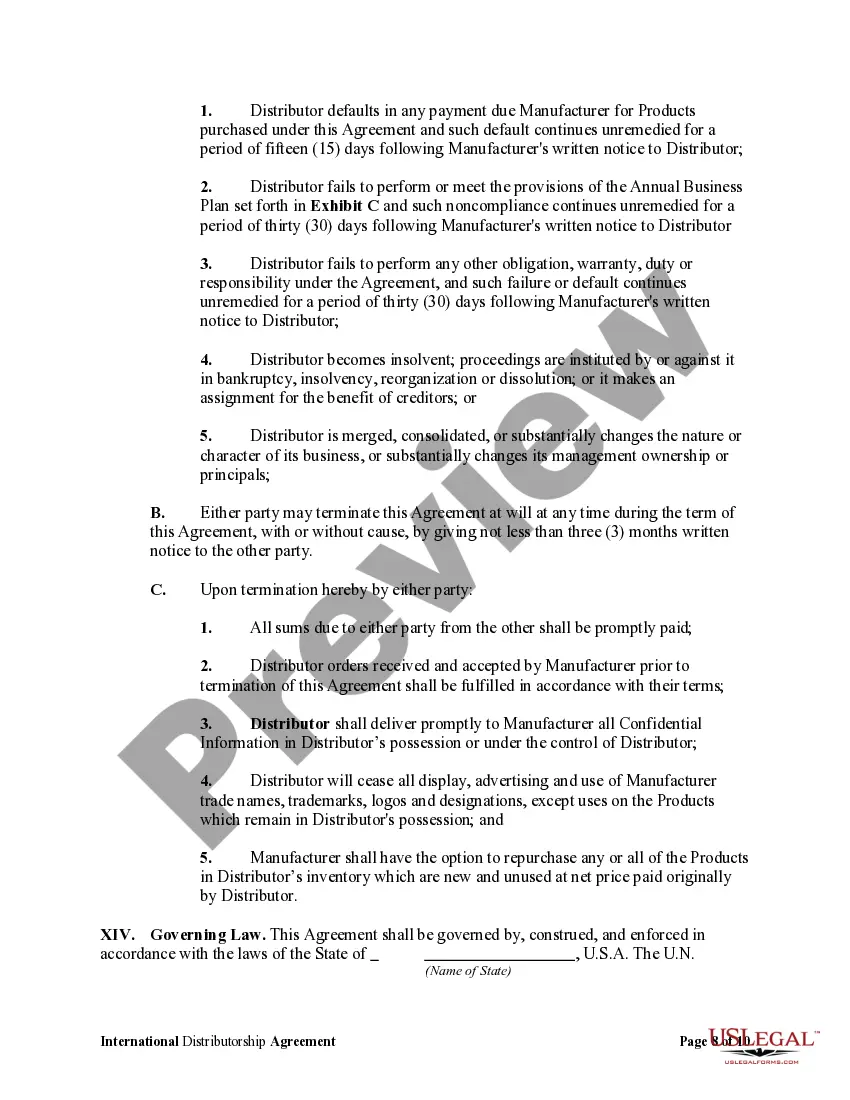
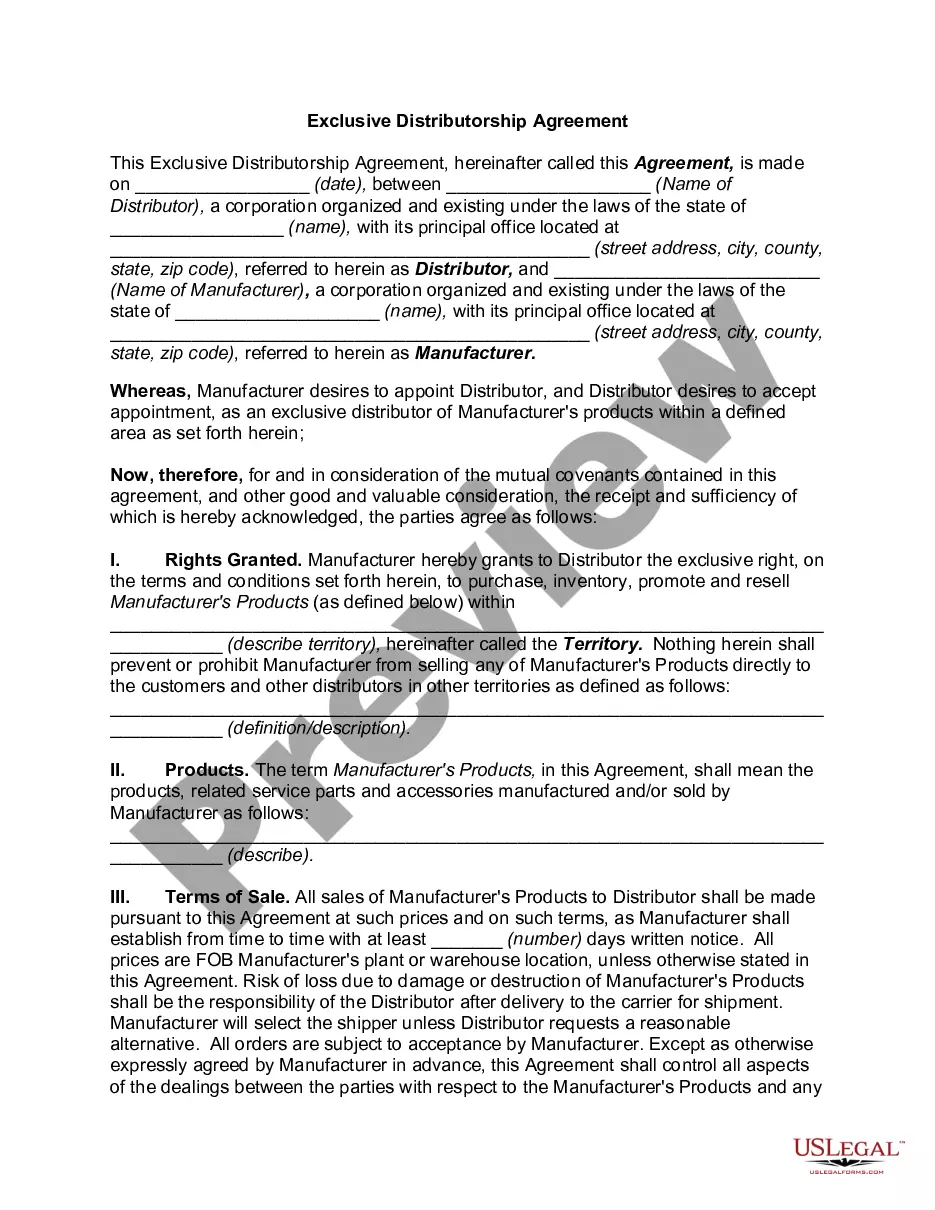
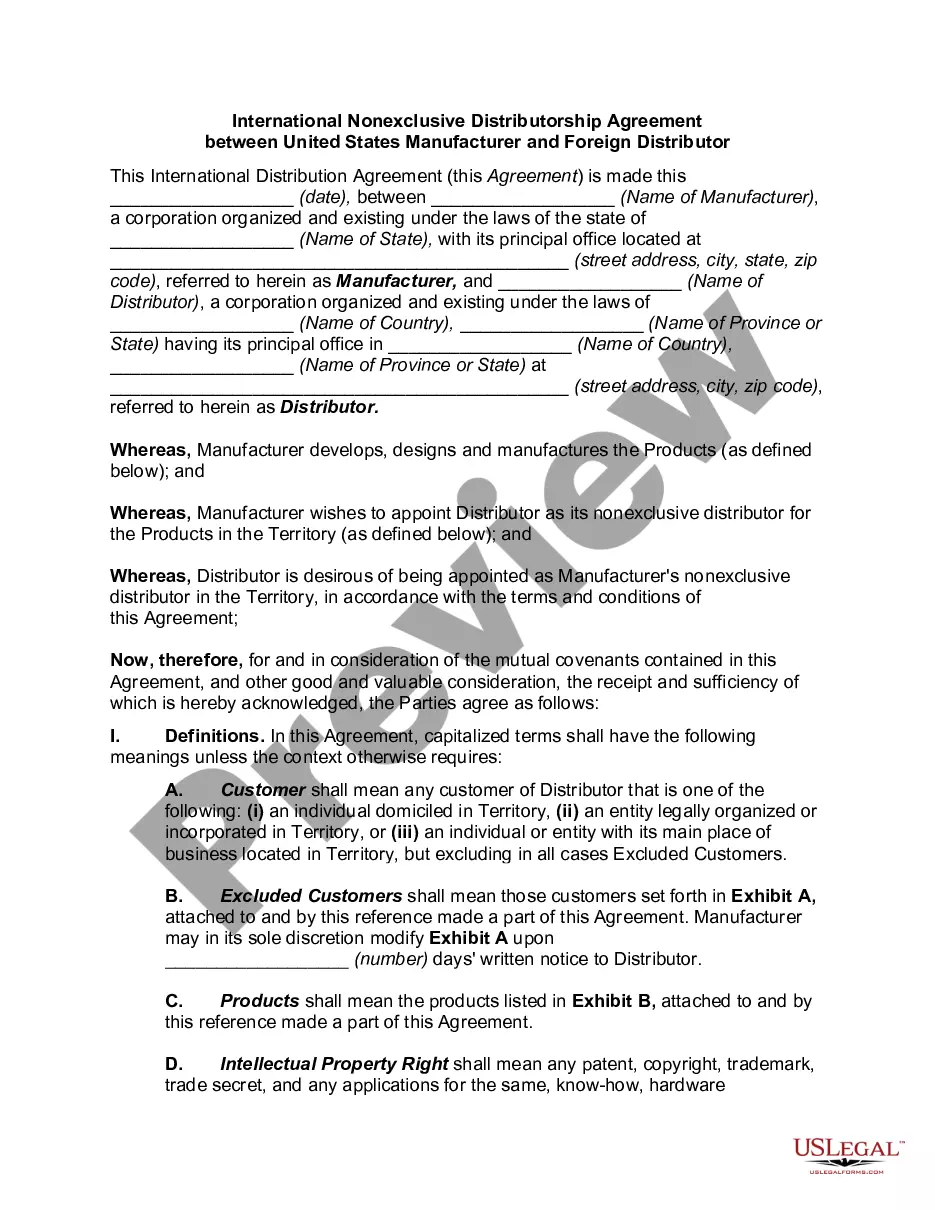
The basic elements of a distribution agreement include the term (time period for which the contract is in effect), terms and conditions of supply and the sales territories covered by the agreement (regions within the U.S. and/or international markets).
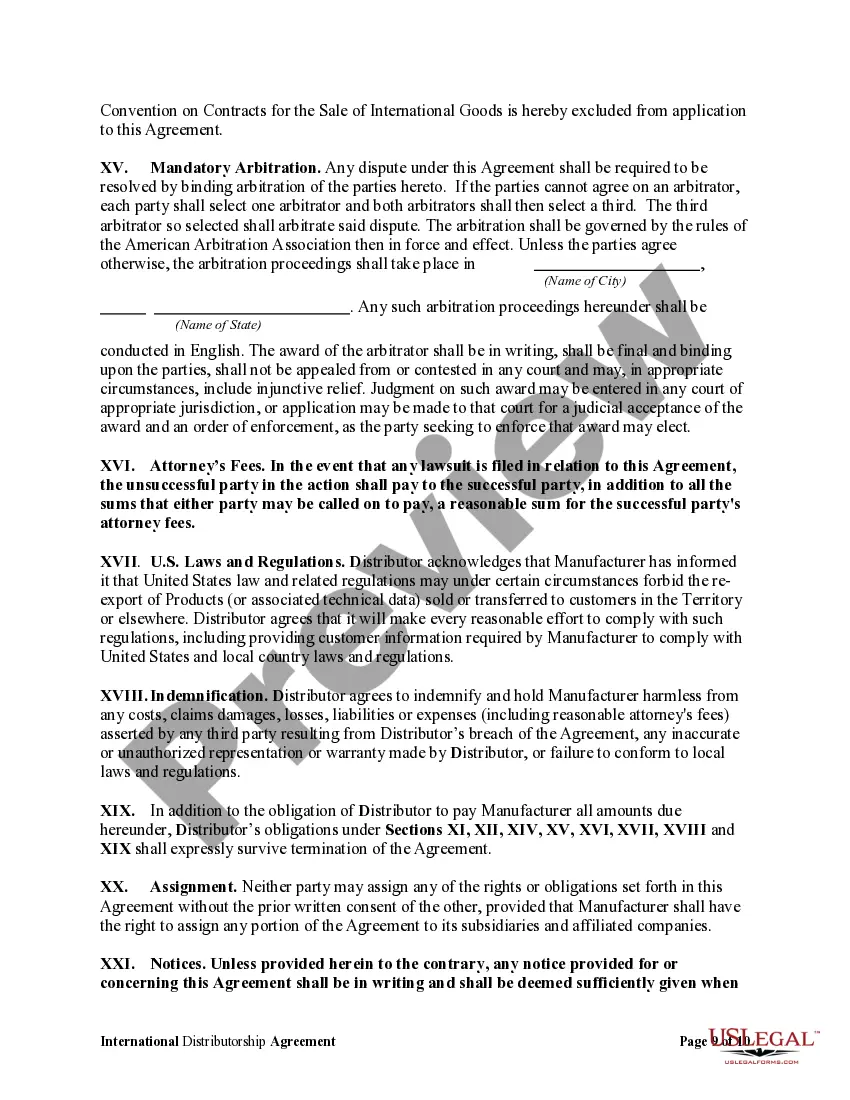
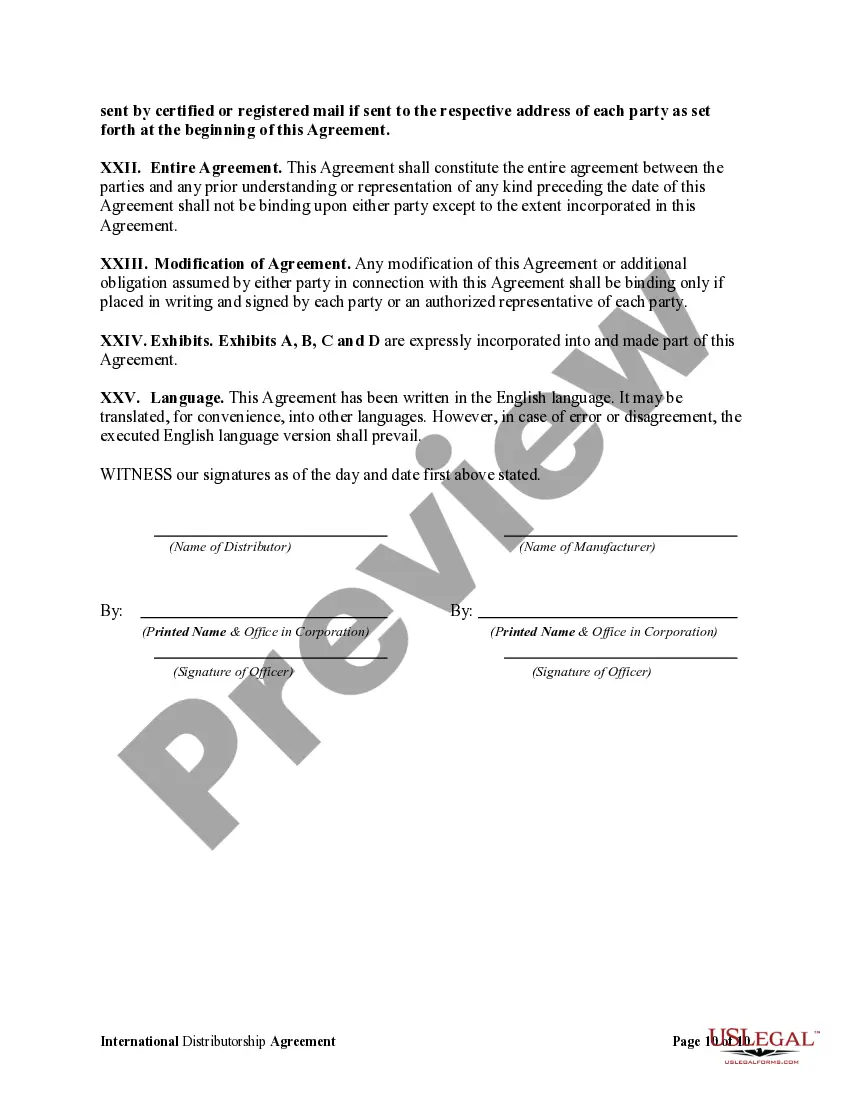
A distribution agreement, also known as a distributor agreement, is a contract between a supplying company with products to sell and another company that markets and sells the products. The distributor agrees to buy products from the supplier company and sell them to clients within certain geographical areas.
Prior Experience. Prior experience in distributorship will help the distributor in following ways. Infrastructure. Infrastructure required like manpower, vehicle, warehouse should be available of required quantity and quality. Market Reputation and Good Contacts. Market Knowledge. Latest Technology.
A distribution agreement is a contract between a manufacturer and a distributor. The manufacturer grants the distributor the right to sell its products or services in a specified territory or market.
Differences between agency and distribution An agent is appointed to negotiate or conclude contracts on the supplier's behalf. A distributor effectively becomes the supplier and contracts are made directly between the distributor and the customer.