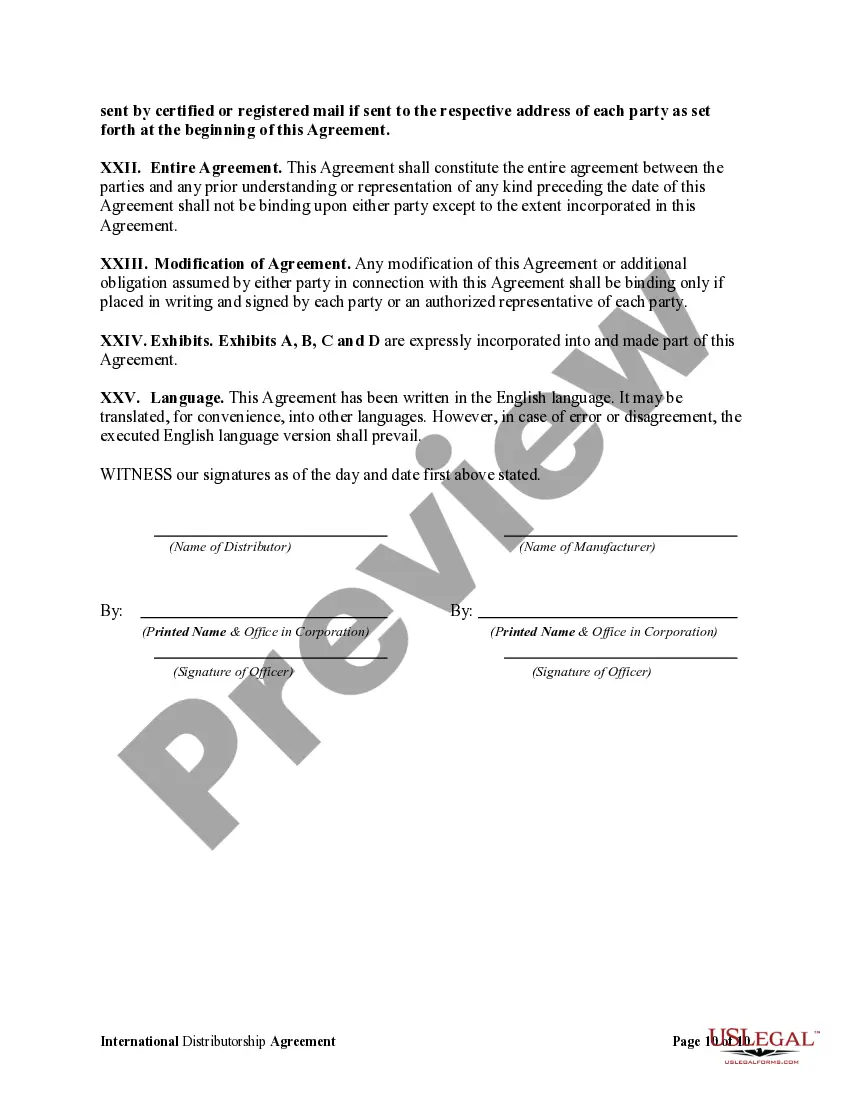
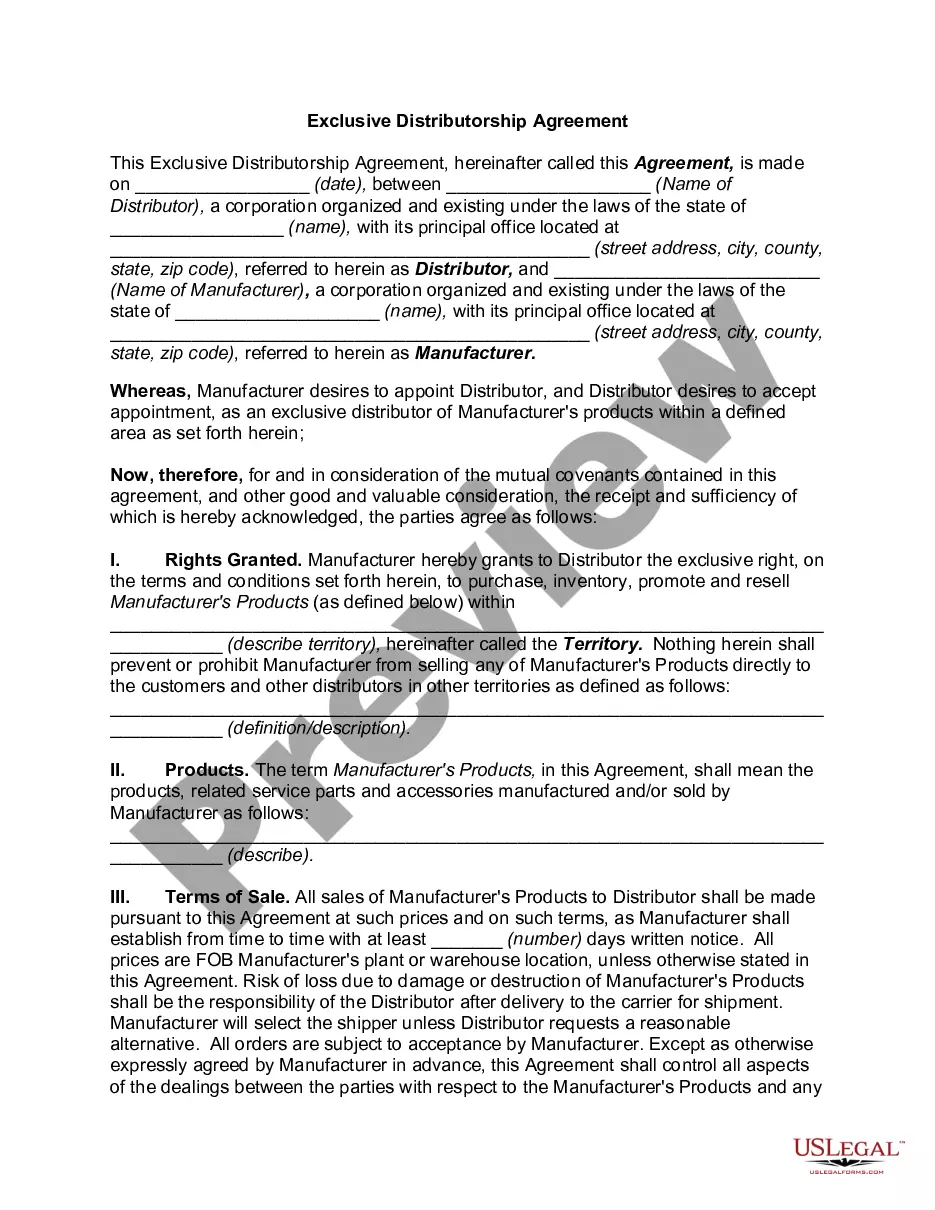
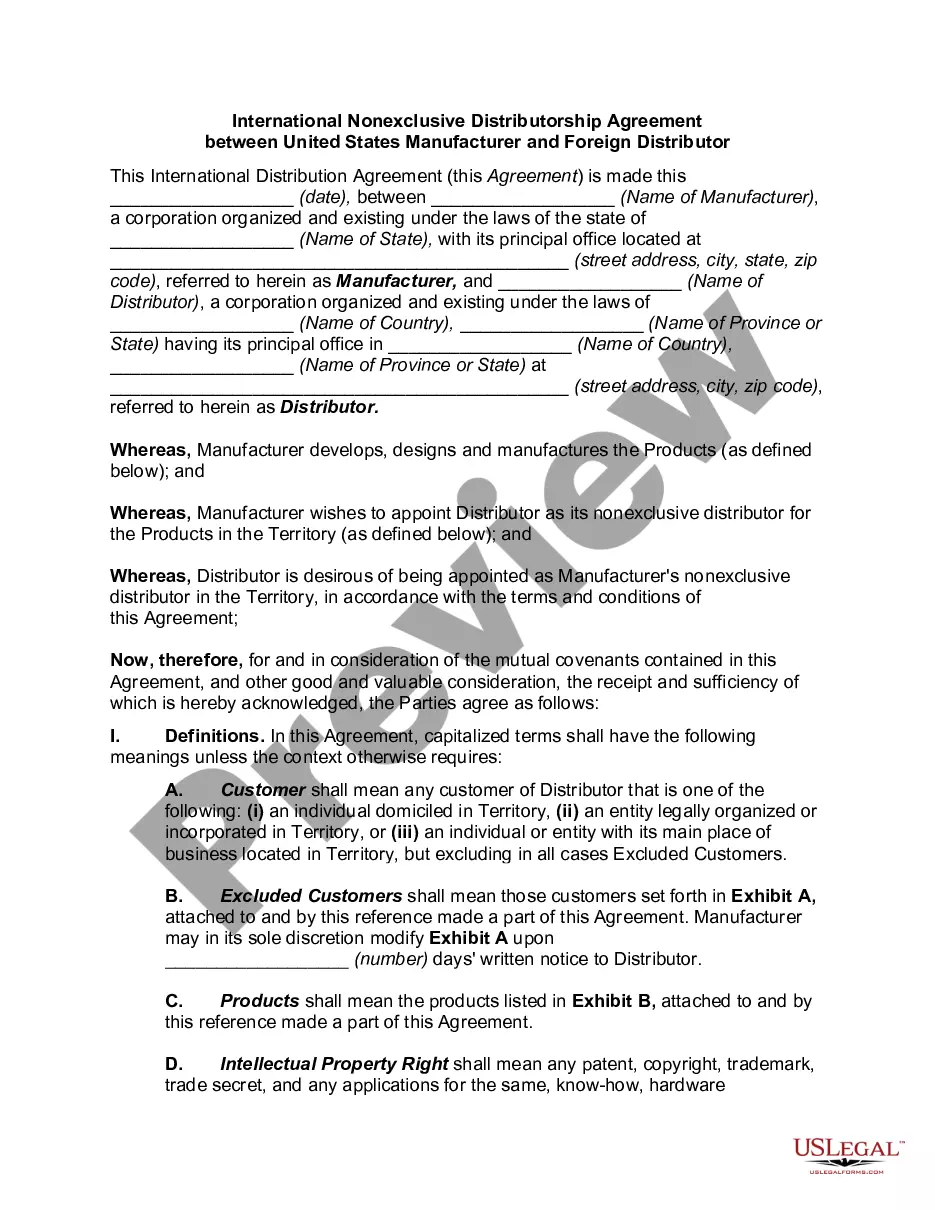
International Exclusive Distribution Agreement Format In Chicago
Description

Get your form ready online
Our built-in tools help you complete, sign, share, and store your documents in one place.
Make edits, fill in missing information, and update formatting in US Legal Forms—just like you would in MS Word.
Download a copy, print it, send it by email, or mail it via USPS—whatever works best for your next step.
Sign and collect signatures with our SignNow integration. Send to multiple recipients, set reminders, and more. Go Premium to unlock E-Sign.
If this form requires notarization, complete it online through a secure video call—no need to meet a notary in person or wait for an appointment.
We protect your documents and personal data by following strict security and privacy standards.

Make edits, fill in missing information, and update formatting in US Legal Forms—just like you would in MS Word.

Download a copy, print it, send it by email, or mail it via USPS—whatever works best for your next step.

Sign and collect signatures with our SignNow integration. Send to multiple recipients, set reminders, and more. Go Premium to unlock E-Sign.

If this form requires notarization, complete it online through a secure video call—no need to meet a notary in person or wait for an appointment.

We protect your documents and personal data by following strict security and privacy standards.
Looking for another form?









Form popularity
FAQ
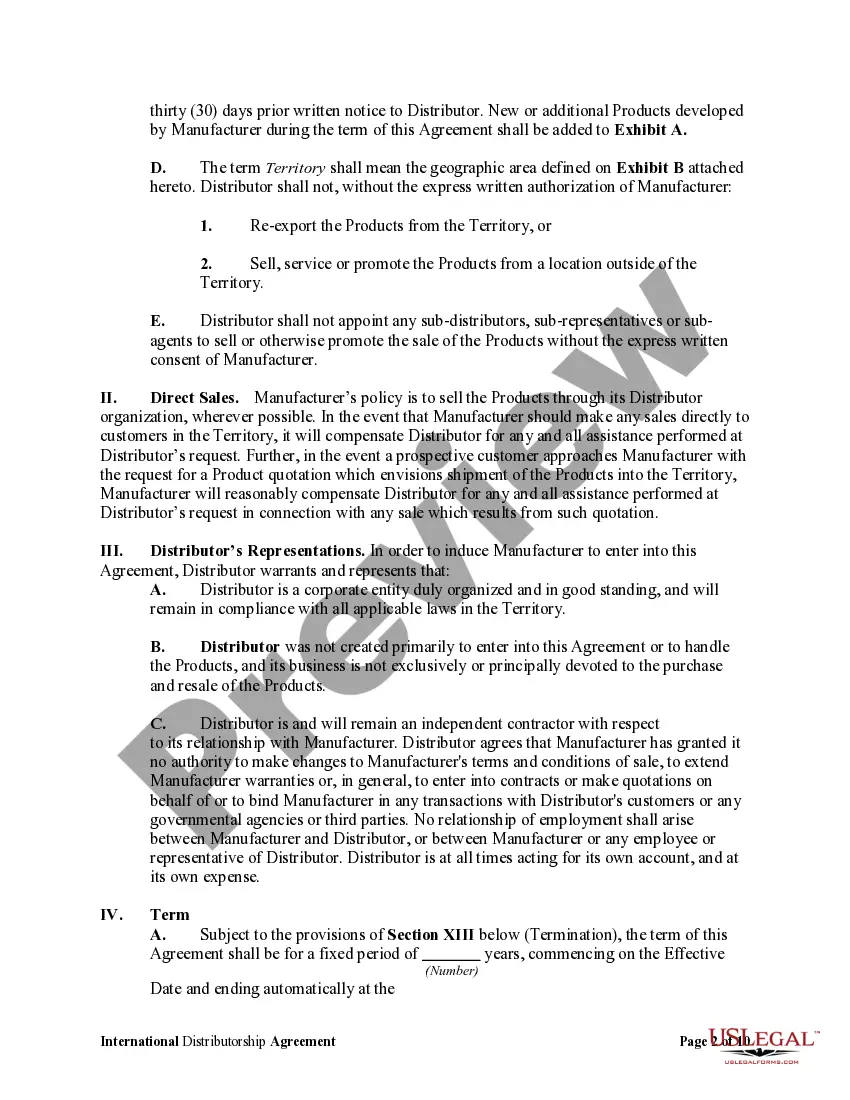
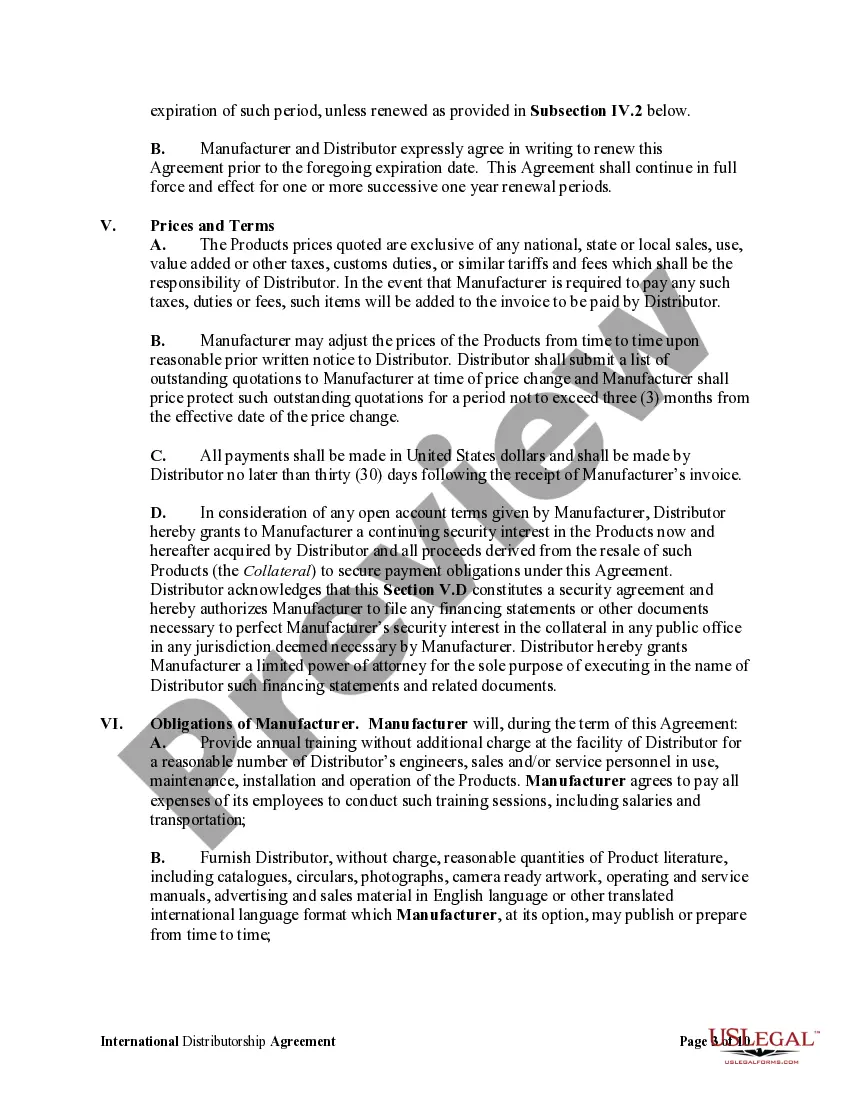
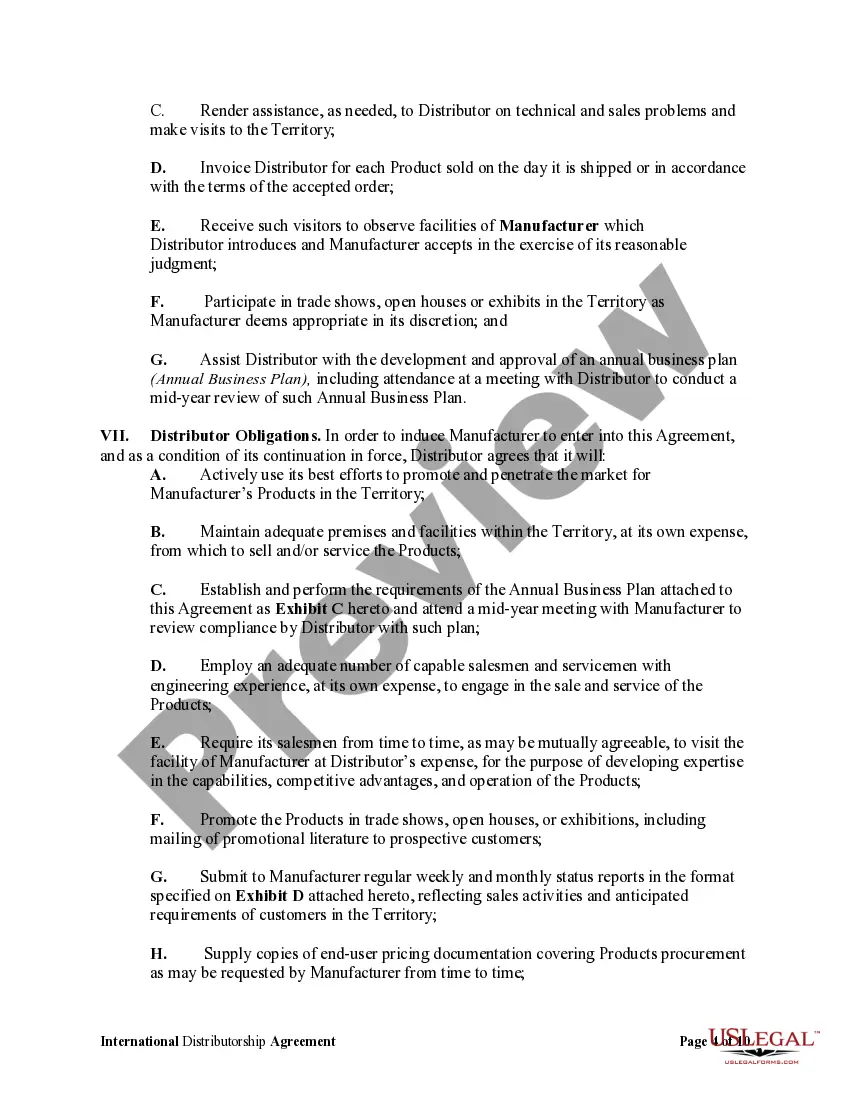
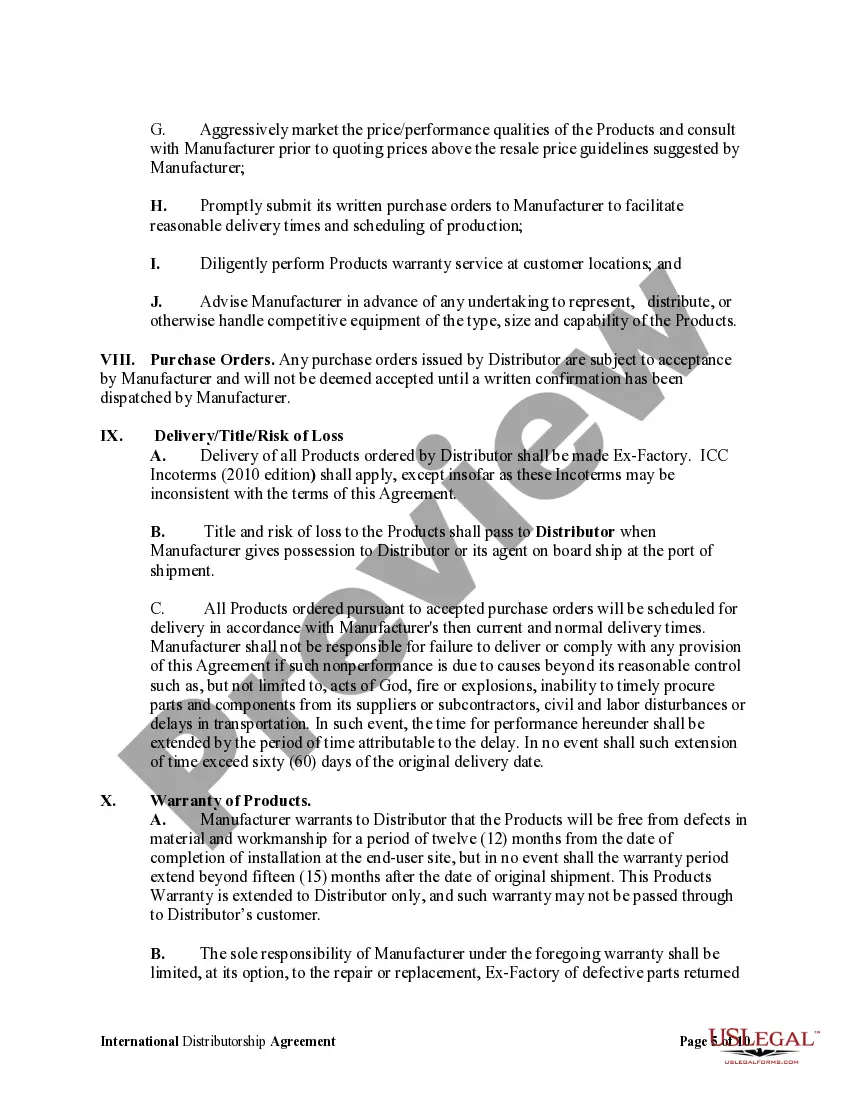
The international distribution contract is a framework agreement, which means that it establishes general obligations for each of the parties over a lengthy period and is supplemented by general conditions of sales which are often annexed to the contract in order to specify the products and/or services in question, ...
An example of a treaty that does have provisions for further binding agreements is the UN Charter. By signing and ratifying the Charter, countries agreed to be legally bound by resolutions passed by UN bodies such as the General Assembly and the Security Council.
The Company represents and warrants that no other person or entity has any rights to sell and promote the Company's products or services, including those products or services listed in Attachment A (the “Products”) hereto, within the Exclusive Territory in derogation of the rights granted to the Exclusive Distributor ...
An international distributor is not a sales representative. Instead, the international distributor purchases products and services from the US company and then resells them to customers in one or more foreign countries.
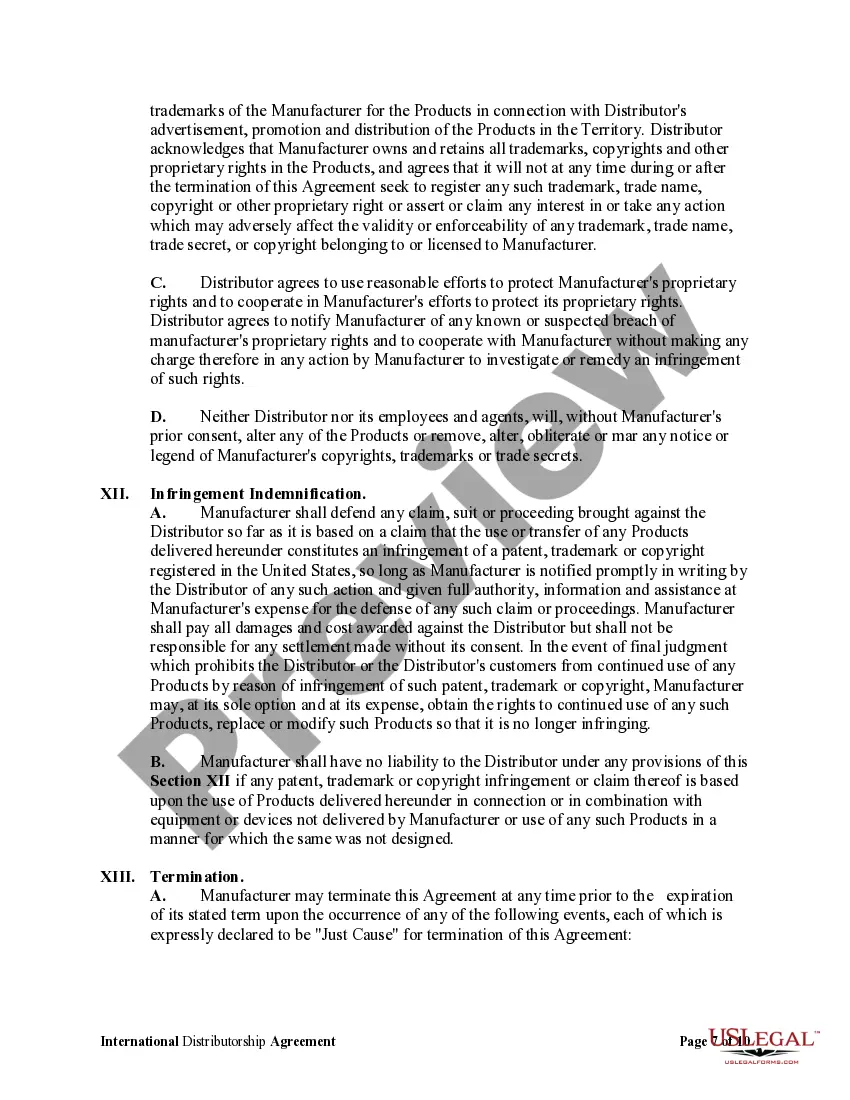
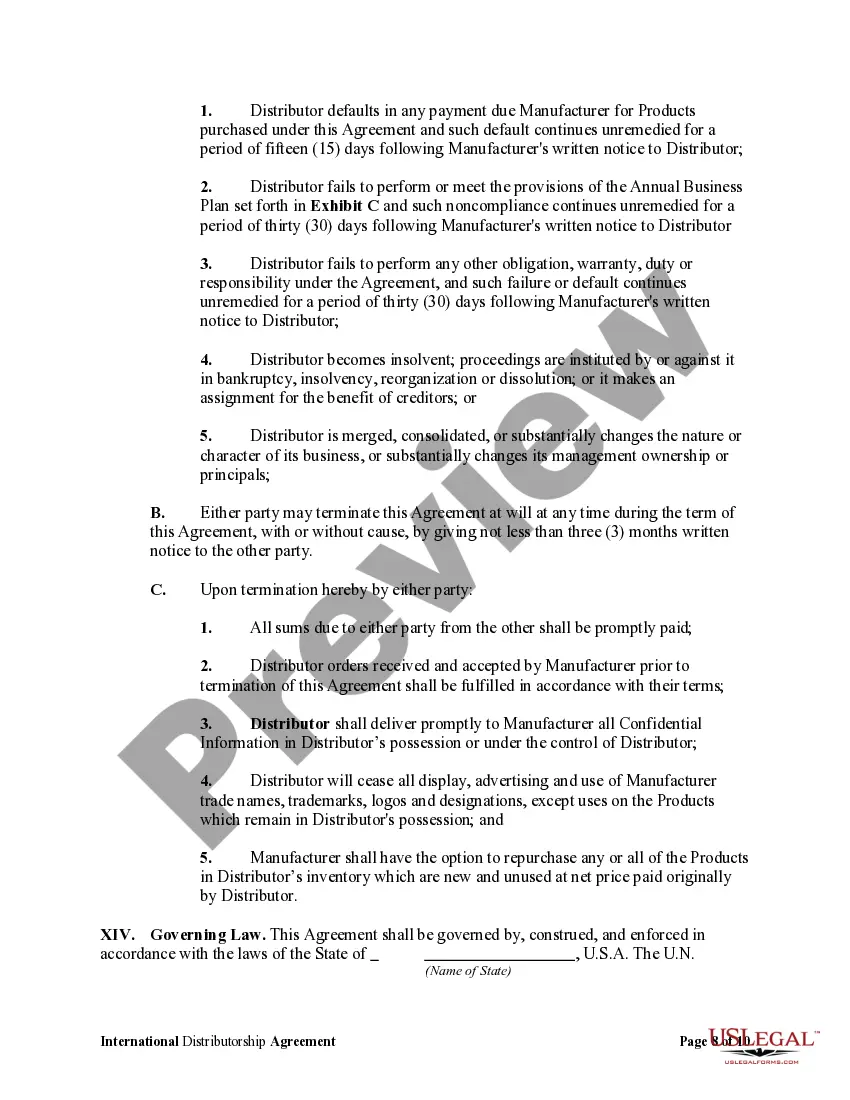
Distribution agreements often include terms about termination conditions, allowing either party to exit the contract under specified circumstances. These contracts can also address intellectual property rights, ensuring that distributors understand how to handle branding and proprietary information.
A distribution agreement is a powerful tool that defines the rules of engagement between suppliers and distributors. These agreements can not only streamline your distribution process but also shield your business from potential pitfalls.
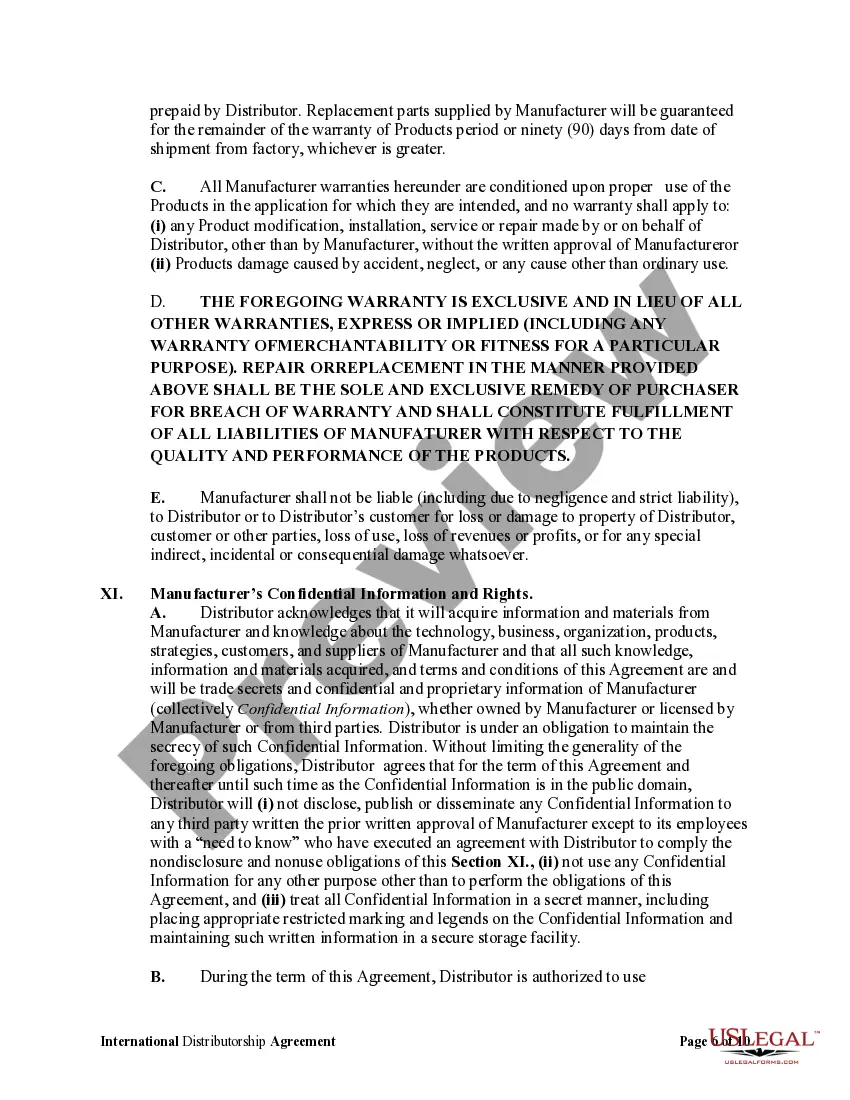
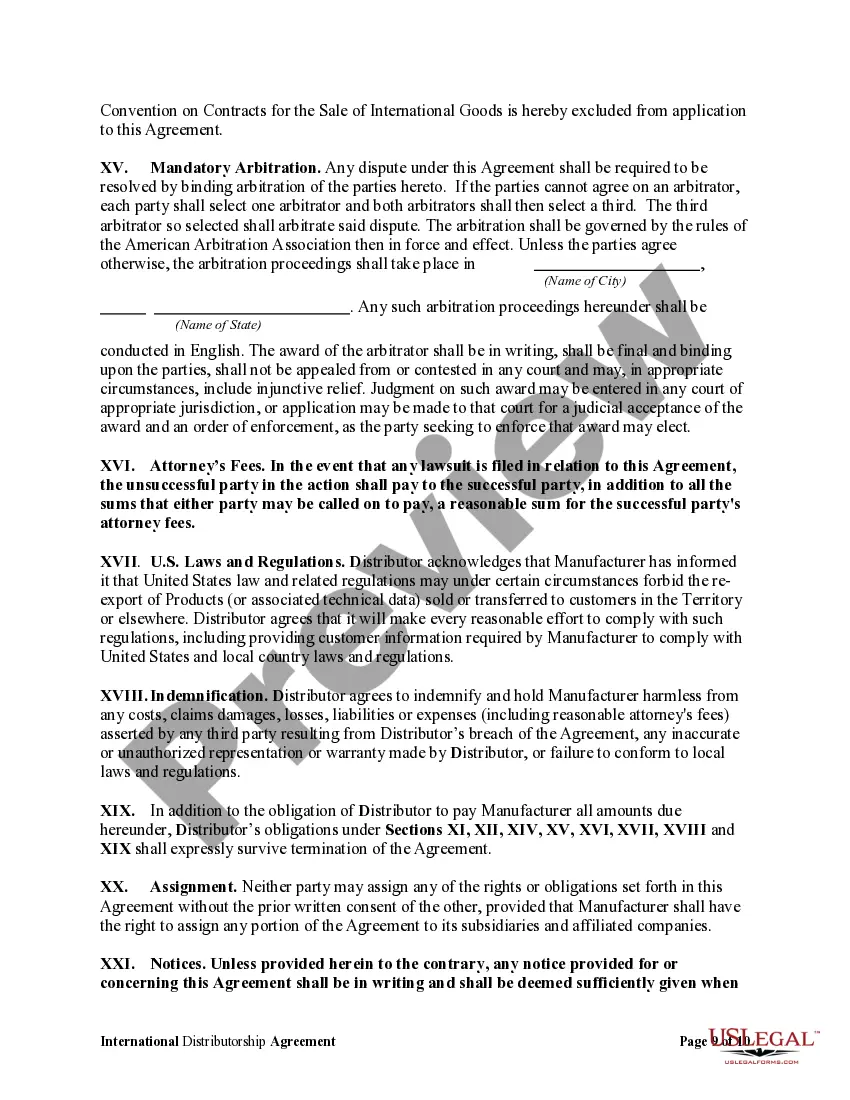
An international distribution agreement is a legal contract between two parties that authorizes one party to sell or distribute the other's products. This type of arrangement usually benefits both businesses because it makes the process more efficient and can help each company increase its customer base.
The CISG does not apply to distributorship agreements: Helen Kaminski Pty. Ltd. v. Marketing Australian Products, Inc.