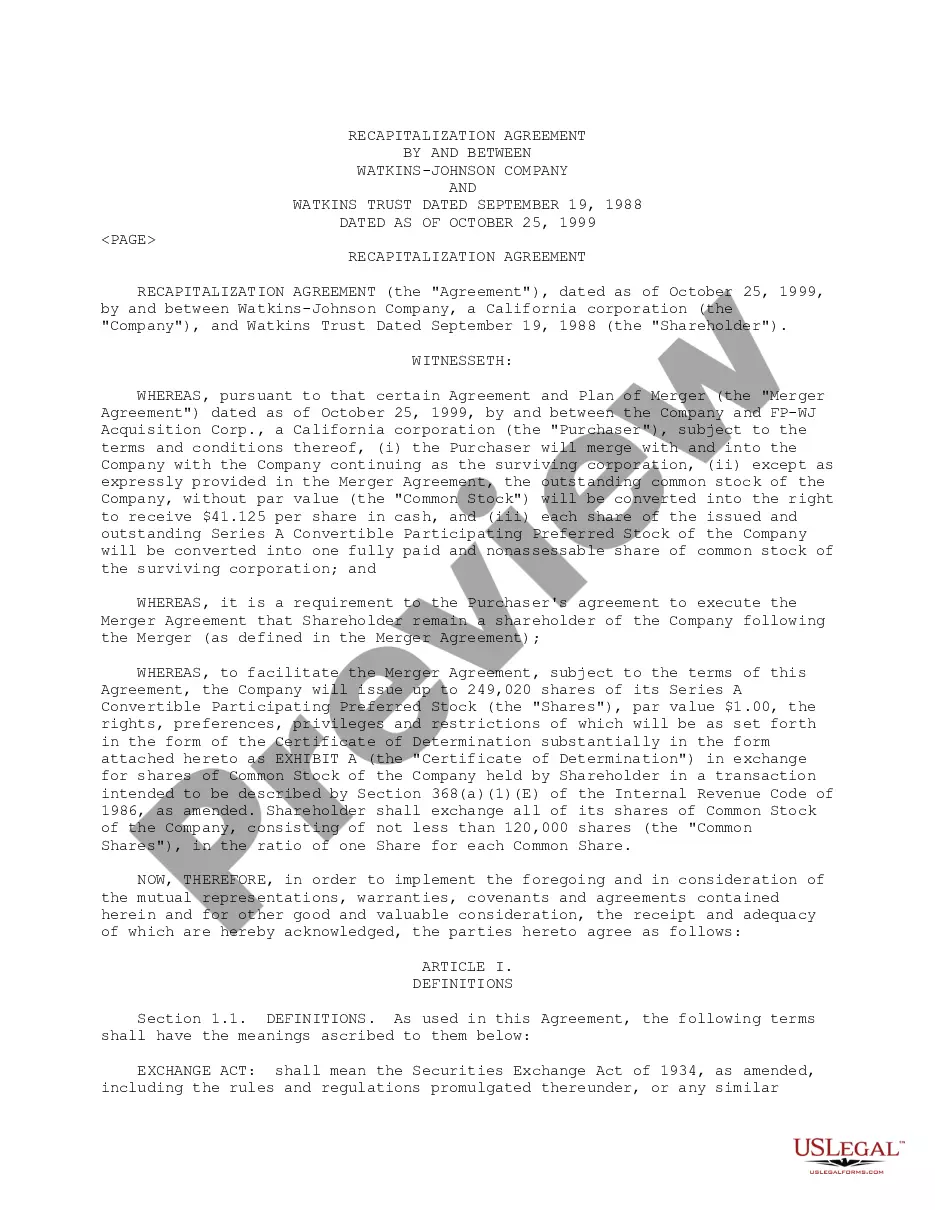
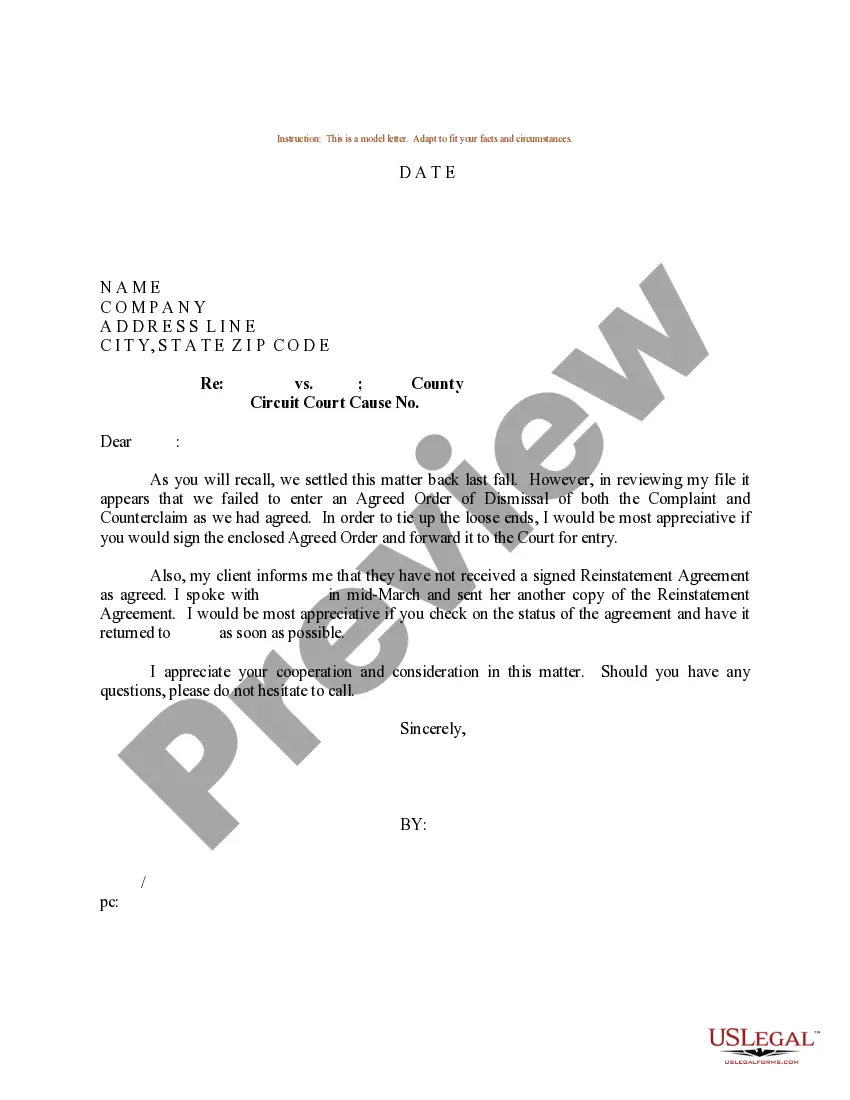
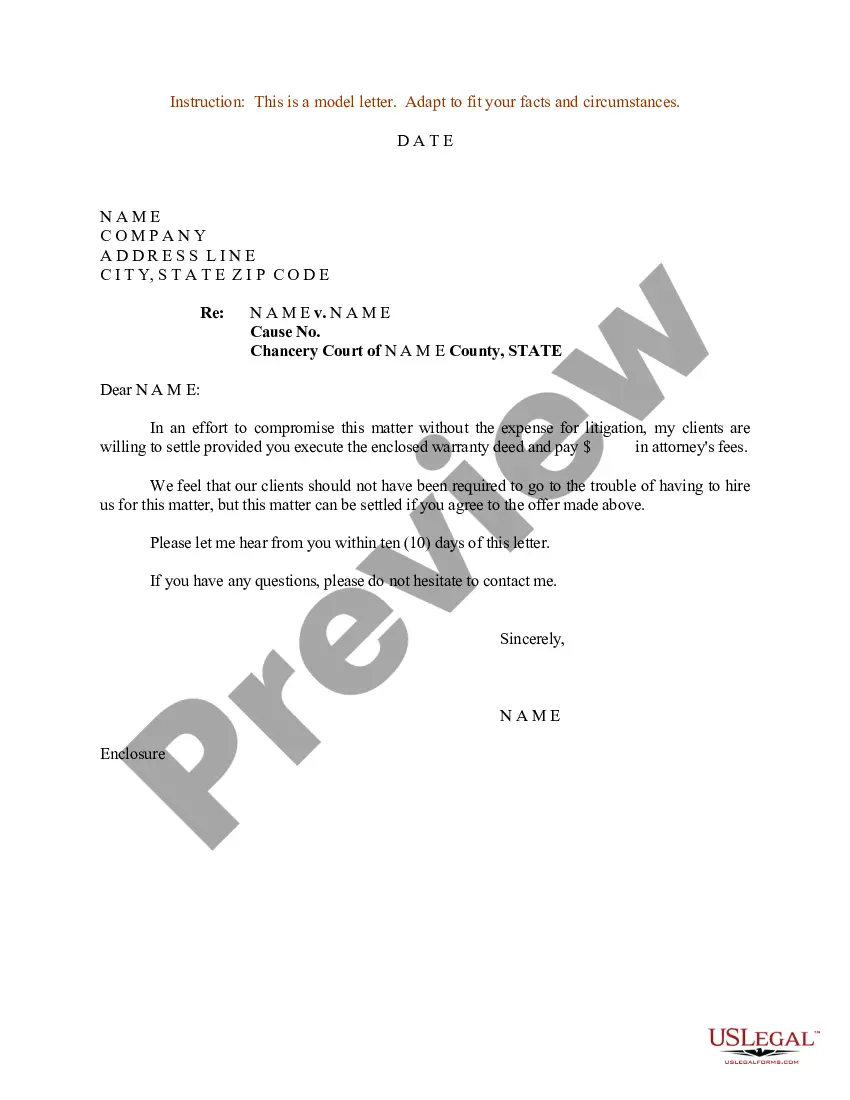
Debt Settlement Letter Example In Harris
Description

Get your form ready online
Our built-in tools help you complete, sign, share, and store your documents in one place.
Make edits, fill in missing information, and update formatting in US Legal Forms—just like you would in MS Word.
Download a copy, print it, send it by email, or mail it via USPS—whatever works best for your next step.
Sign and collect signatures with our SignNow integration. Send to multiple recipients, set reminders, and more. Go Premium to unlock E-Sign.
If this form requires notarization, complete it online through a secure video call—no need to meet a notary in person or wait for an appointment.
We protect your documents and personal data by following strict security and privacy standards.

Make edits, fill in missing information, and update formatting in US Legal Forms—just like you would in MS Word.

Download a copy, print it, send it by email, or mail it via USPS—whatever works best for your next step.

Sign and collect signatures with our SignNow integration. Send to multiple recipients, set reminders, and more. Go Premium to unlock E-Sign.

If this form requires notarization, complete it online through a secure video call—no need to meet a notary in person or wait for an appointment.

We protect your documents and personal data by following strict security and privacy standards.
Looking for another form?





Form popularity
FAQ
Tip for Drafting an Effective Settlement Letter Be concise. Your letter might be 20-30 pages long if your claim is complex. Be organized. Reread your letter to make sure you haven't said anything that the opposing party can twist around to use against you. Be polite and professional.
Consult a Credit Counselor Determine If Negotiation Is Right for You. Set Your Terms. Tell the Truth and Keep a Consistent Story. Learn Your Rights Under the Fair Debt Collection Practices Act (FDCPA) Keep Detailed Communication Notes. Negotiate with Creditors Directly. Get All Agreements in Writing.
The debt settlement company calls the borrower's creditor and negotiates a lump-sum debt payment of $20,000 to satisfy the previously required monthly debt payments of $10,000. The creditor, having written off the borrower due to non-payments for three months, accepts the lump-sum payment of $20,000.
Treat the following as a set of general guidelines: Gather complete information before you start writing. Describe your injuries and medical treatment. List your medical expenses, lost wages, and non-economic damages. Make a settlement demand. Include a deadline for legal action if you want to, but don't bluff.
Treat the following as a set of general guidelines: Gather complete information before you start writing. Describe your injuries and medical treatment. List your medical expenses, lost wages, and non-economic damages. Make a settlement demand. Include a deadline for legal action if you want to, but don't bluff.
These are the steps to follow: Work out what you can offer the people you owe. Send your offer to them in writing. Ask them to confirm they accept your offer in writing. Keep any letters your creditors send you about the settlement offer. Negotiate with your creditors if you need to.
Your settlement letter should begin with a heading that clearly identifies it as a settlement proposal. Be sure to include your contact information, such as your name, address and phone number so that the recipient can get in touch with you if necessary.
Sometimes known as debt relief, debt settlement occurs when you and a creditor agree to settle debt for less than what you owe. That settlement can involve reducing the principal amount in exchange for a lump-sum payment or decreasing the interest rate.
Payment settlement involves collecting the funds for the amount recorded for an order. For example, when using credit cards, the settlement process specifically involves contacting the payment system and collecting the required amount of funds against the credit card.
Options for debt relief include forgiving a portion of the debt, lowering the interest rate, stretching payments over a longer period, or consolidating multiple debts into a single, lower-interest one. Individuals, businesses, and governments may all seek debt relief when their debts have become unsustainable.