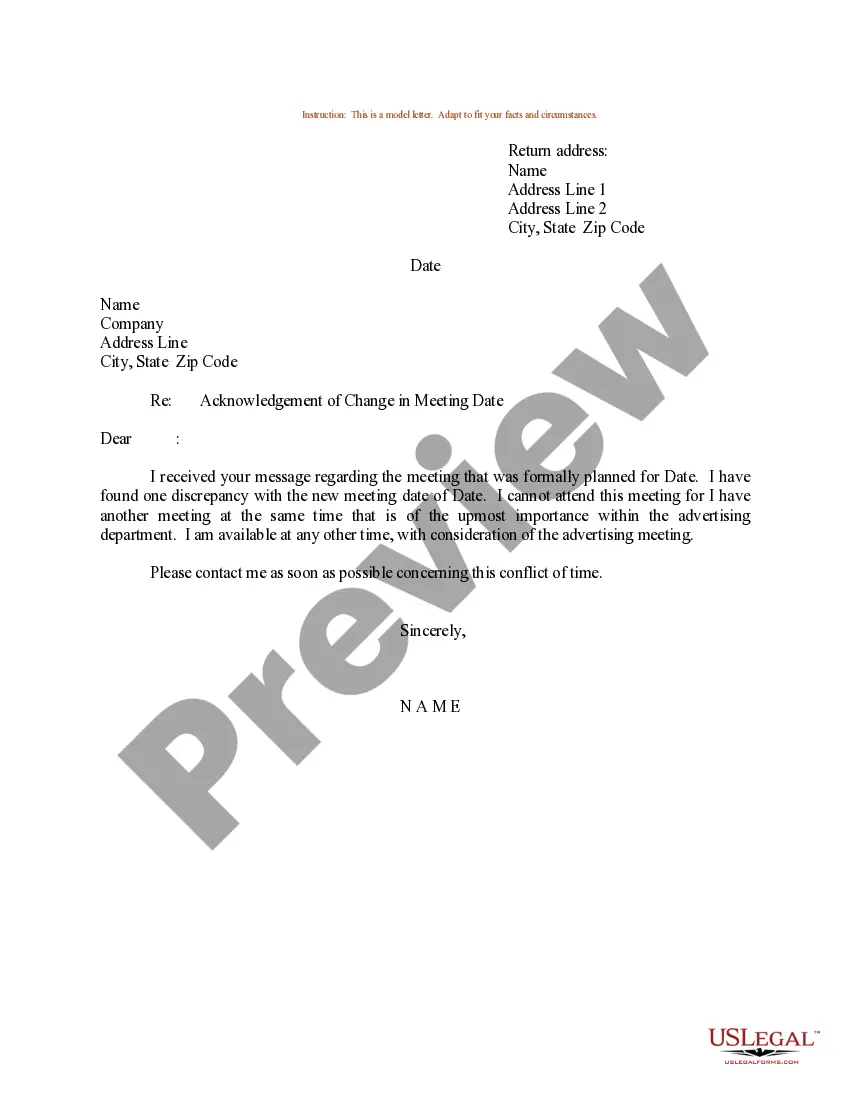
Letter Change Date Sample With Last In San Diego
Description

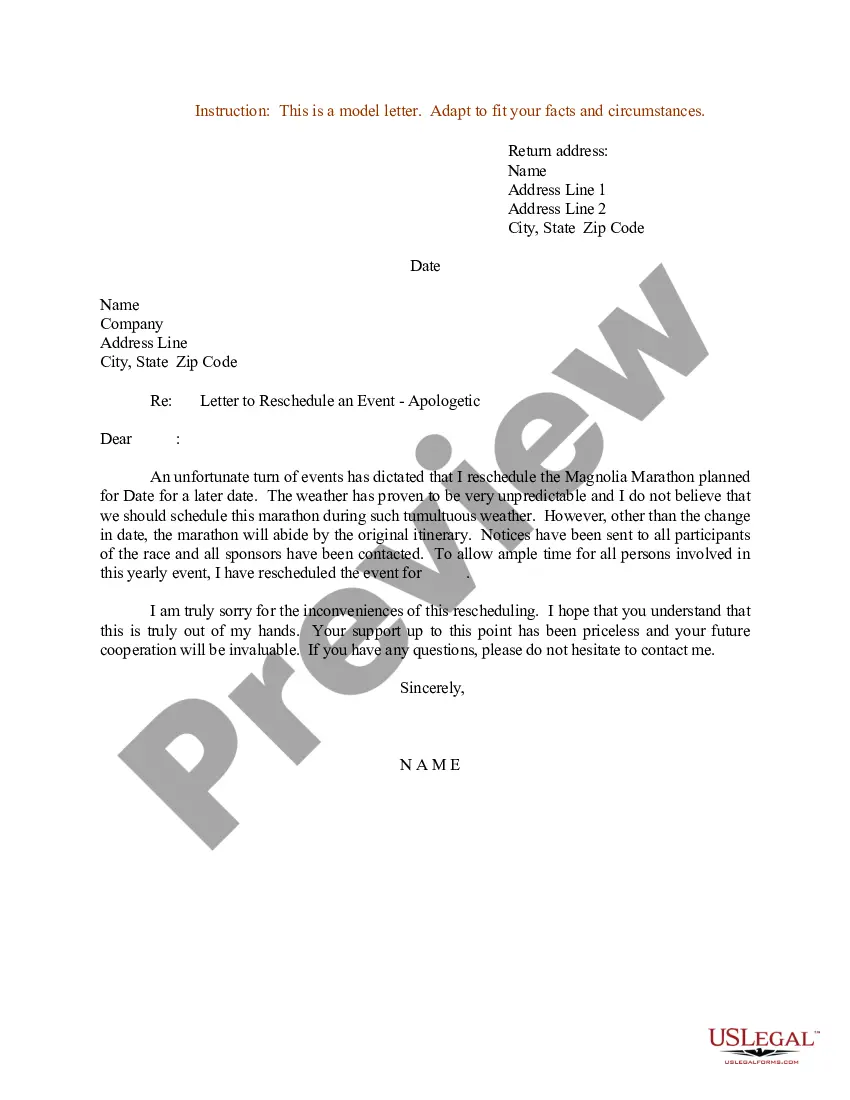
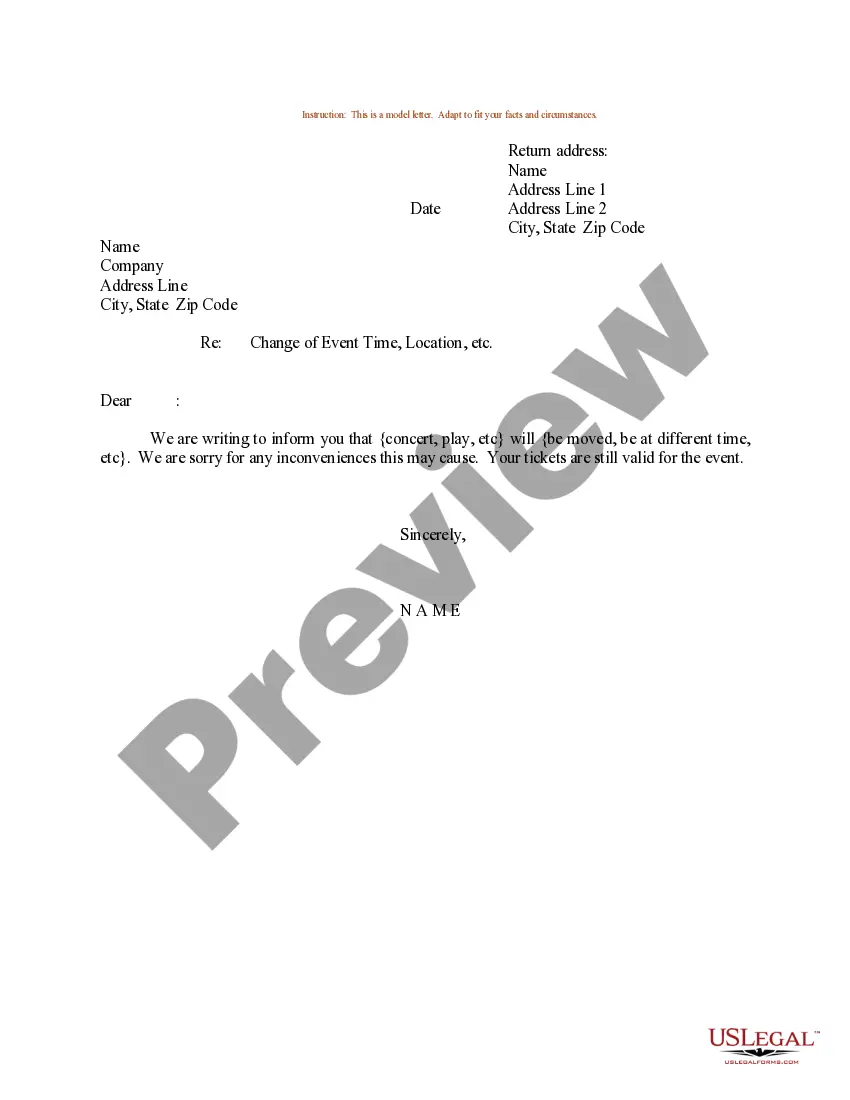
Get your form ready online
Our built-in tools help you complete, sign, share, and store your documents in one place.
Make edits, fill in missing information, and update formatting in US Legal Forms—just like you would in MS Word.
Download a copy, print it, send it by email, or mail it via USPS—whatever works best for your next step.
Sign and collect signatures with our SignNow integration. Send to multiple recipients, set reminders, and more. Go Premium to unlock E-Sign.
If this form requires notarization, complete it online through a secure video call—no need to meet a notary in person or wait for an appointment.
We protect your documents and personal data by following strict security and privacy standards.

Make edits, fill in missing information, and update formatting in US Legal Forms—just like you would in MS Word.

Download a copy, print it, send it by email, or mail it via USPS—whatever works best for your next step.

Sign and collect signatures with our SignNow integration. Send to multiple recipients, set reminders, and more. Go Premium to unlock E-Sign.

If this form requires notarization, complete it online through a secure video call—no need to meet a notary in person or wait for an appointment.

We protect your documents and personal data by following strict security and privacy standards.
Looking for another form?

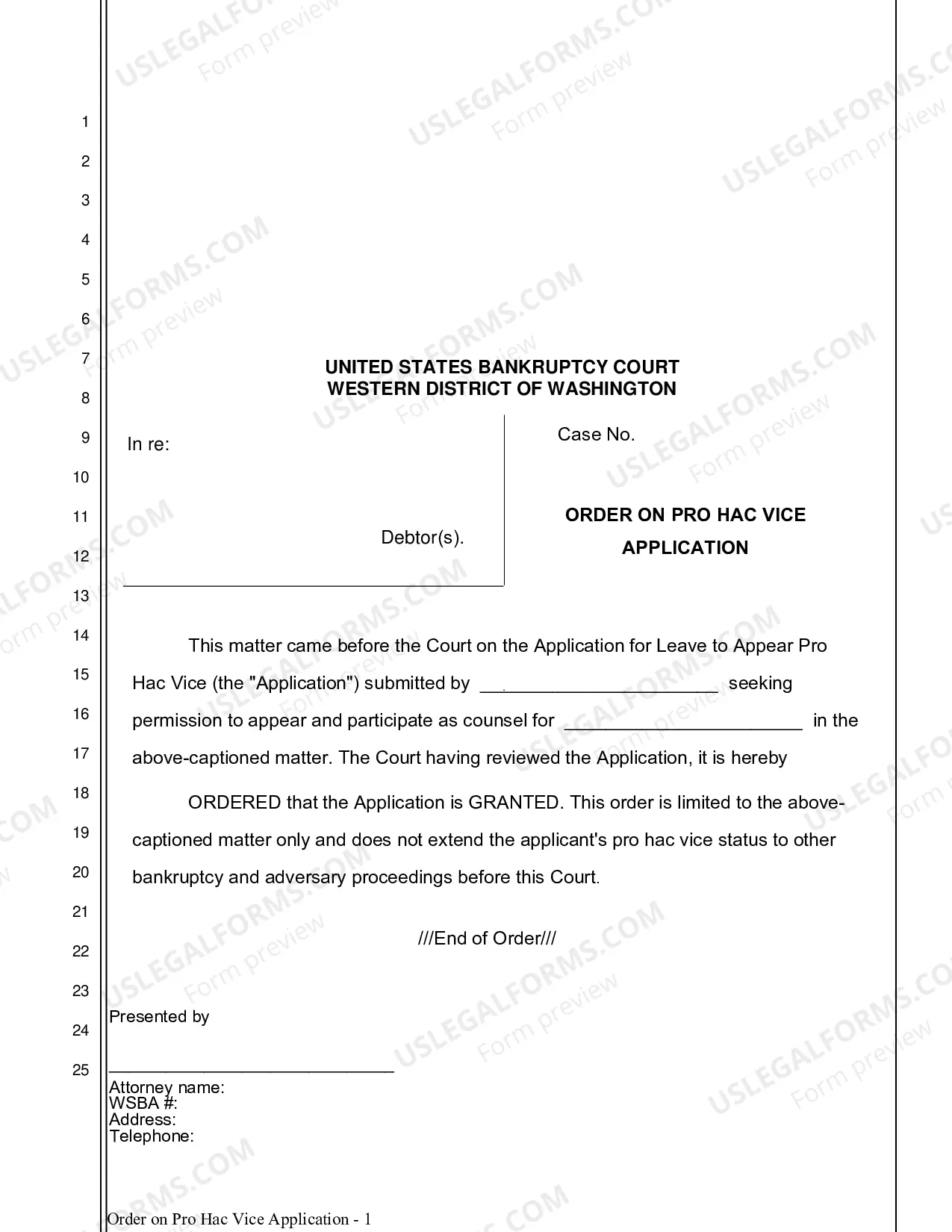





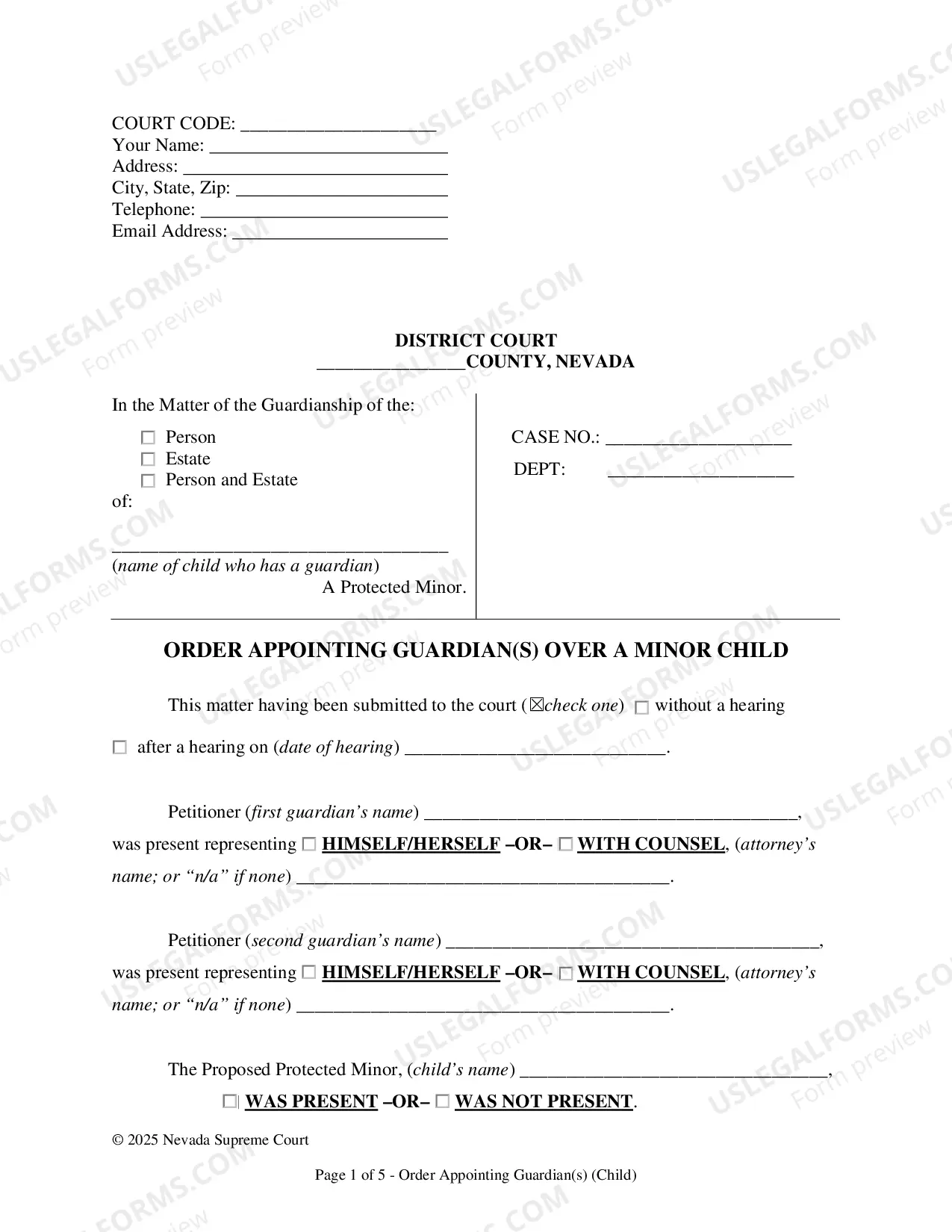
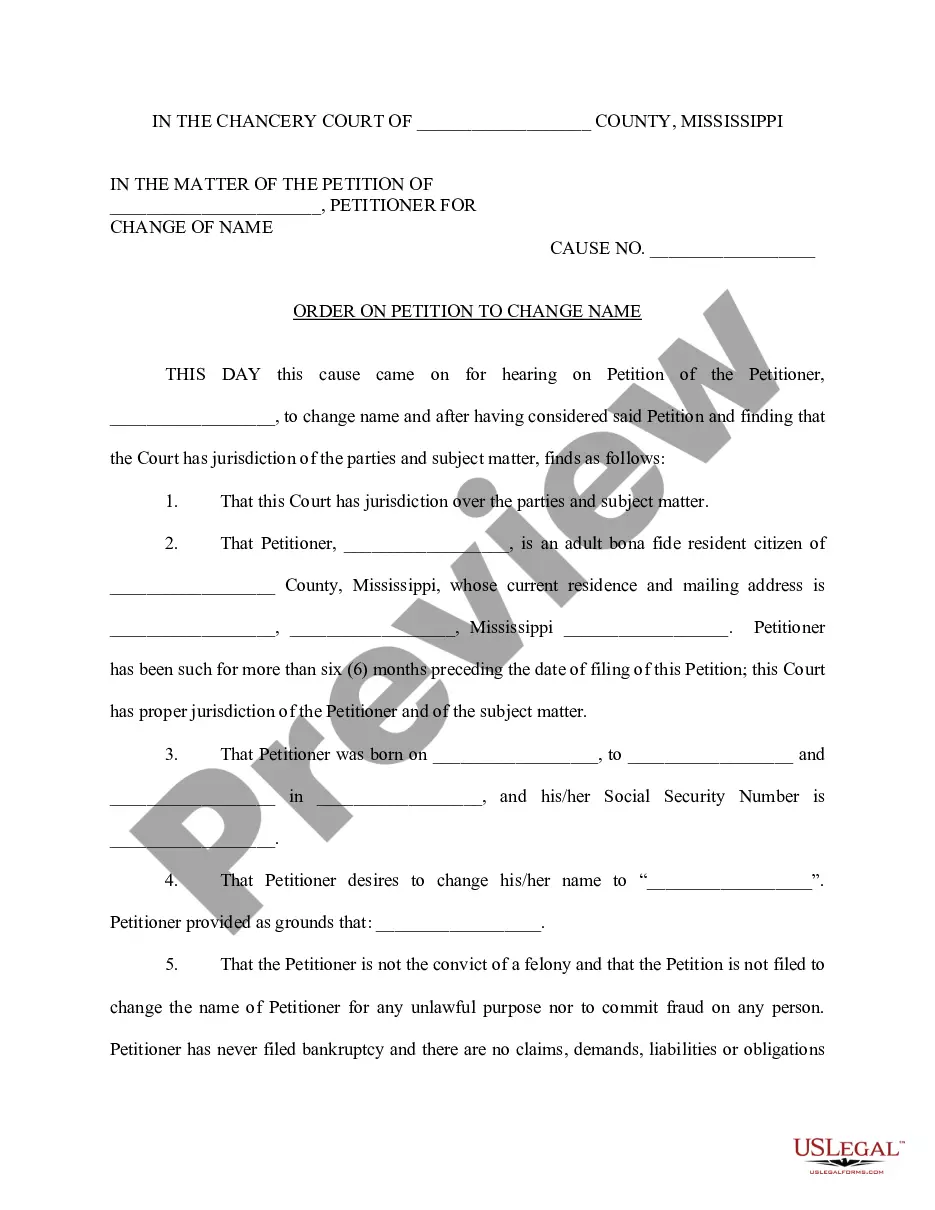
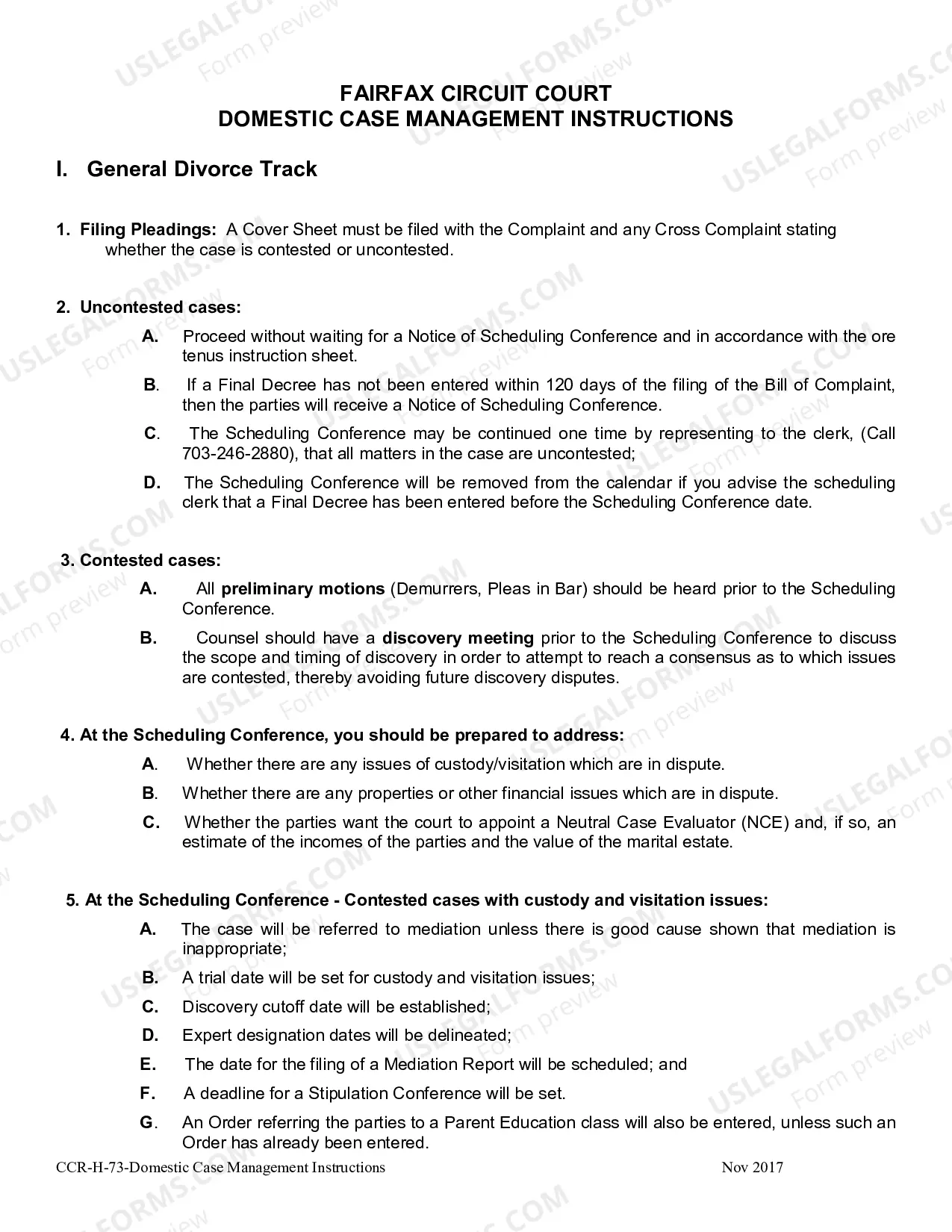
Form popularity
FAQ
Change your legal name Once the judge decides, you pick up a court decree (court order) with your new name. The process generally takes up to 3 months.
Use certified copies of marriage and divorce certificates or name change orders as proof to notify these federal and state agencies that you changed your name. Social Security card. Driver's license or state ID card. Tax returns. U.S. passport. Naturalization certificate and certificate of citizenship. Veterans benefits.
Generally, you can turn in a form to ask for a new court date and the court will make a decision and mail it to you. If the court date is less than 10 days away, though, you'll need to explain on the form why you waited so long to ask.
This is a good question, and the answer to that is yes, in certain very specific circumstances. Typically, the only way you will be able to reschedule your court date and not be held to additional criminal penalties will be in some type of emergency situation outside your control.
A “motion for a continuance” is a request asking the judge to make an order changing your hearing date. If the judge grants your motion, your court date will be postponed to a later time. For most requests for continuances, you must provide the judge with a suitable reason (“good cause”) for postponing your court date.
A party seeking a continuance of the date set for trial, whether contested or uncontested or stipulated to by the parties, must make the request for a continuance by a noticed motion or an ex parte application under the rules in chapter 4 of this division, with supporting declarations.
Begin with a formal salutation, such as "Dear Judge Last Name," and introduce yourself and your case. Clearly state your reasons for requesting a continuance and provide supporting evidence. Conclude your letter by expressing your gratitude and willingness to cooperate with the court's decision.
You should express to the lawyer you want a reschedule. The lawyer can let the court know they need more time to prepare for the hearing if that is the case.
There is no magic number of times you can ask. It depends on the judge and the reason for the request. You can't keep going to court asking for a continuance for the same reason over and over again.