Arbitration Case Law Examples In Utah
Description


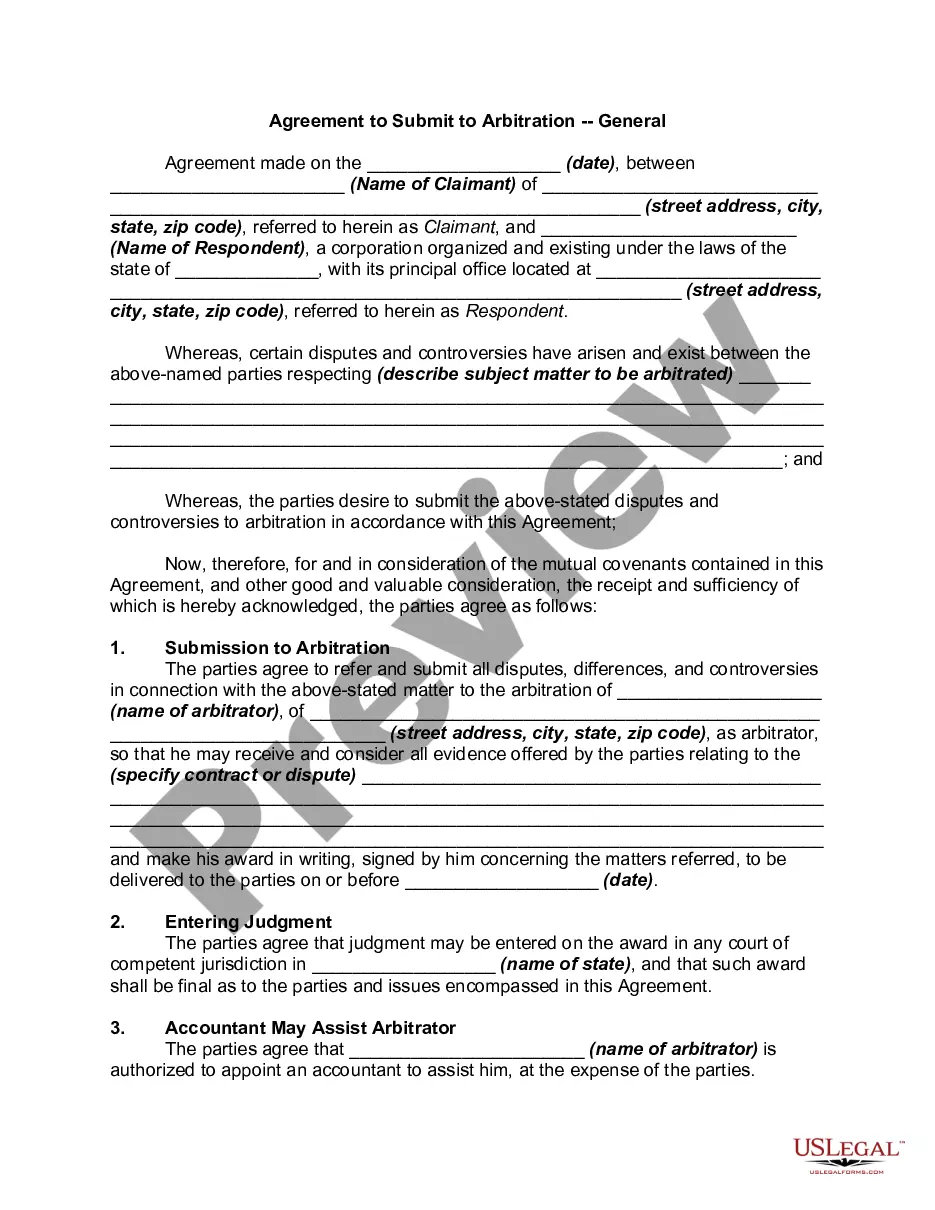

Get your form ready online
Our built-in tools help you complete, sign, share, and store your documents in one place.
Make edits, fill in missing information, and update formatting in US Legal Forms—just like you would in MS Word.
Download a copy, print it, send it by email, or mail it via USPS—whatever works best for your next step.
Sign and collect signatures with our SignNow integration. Send to multiple recipients, set reminders, and more. Go Premium to unlock E-Sign.
If this form requires notarization, complete it online through a secure video call—no need to meet a notary in person or wait for an appointment.
We protect your documents and personal data by following strict security and privacy standards.

Make edits, fill in missing information, and update formatting in US Legal Forms—just like you would in MS Word.

Download a copy, print it, send it by email, or mail it via USPS—whatever works best for your next step.

Sign and collect signatures with our SignNow integration. Send to multiple recipients, set reminders, and more. Go Premium to unlock E-Sign.

If this form requires notarization, complete it online through a secure video call—no need to meet a notary in person or wait for an appointment.

We protect your documents and personal data by following strict security and privacy standards.
Looking for another form?





Form popularity
FAQ
Never say anything to an arbitrator unless you are 100% sure it is correct. If you don't know the answer to a question, simply say, “I don't know the answer but will get it for you promptly.” Arbitrators respect lawyers who can zealously advocate for their clients and work out procedural issues with opposing counsel.
These cases range from breach of contract or licensing agreements, business torts, and franchise to construction and infrastructure disputes in companies from start-ups to the Fortune 500 in a variety of industries.
No. In many cases, if your contract states that all claims must be pursued through arbitration, then you can't sue in court. You must use arbitration. If your contract does not specify arbitration, you can go to court, but not after you've gone through binding arbitration.
If you lose the case, it's very hard to challenge a decision the arbitrator has made. You can't appeal if you simply disagree with the decision. If you think the case wasn't handled properly, you should get advice about what to do next. You may be able to make an appeal to court on a point of law.
Arguments should flow easily from the relevant facts and applicable law. Avoid exaggerating the strengths of your case as well as disparaging the opposing side. Remember that professionalism and credibility are critical to persuasiveness.
Your letter of arbitration should be concise, professional, and factual. Follow the standard business letter format, including your name and contact information at the top. Ensure that your writing is clear, and avoid using jargon or technical terms that may not be familiar to the reader.
“Any dispute arising out of or incidental or in connection with this Contract / Agreement, including any question regarding its existence, operation, termination, validity or breach thereof, shall be referred to and finally resolved by Arbitration administered by 'Hyderabad Arbitration Centre' (HAC), in ance with ...
An arbitration clause should clearly set forth (1) whether the submission of a dispute to arbitration is mandatory or optional, (2) what disputes will be arbitrated, (3) whether a court or arbitrator will decide whether the arbitration agreement is enforceable, (4) the rules that will govern the arbitration, (5) ...
"A dispute having arisen between the parties concerning , the parties hereby agree that the dispute shall be referred to and finally resolved by arbitration under the LCIA Rules. The number of arbitrators shall be one/three. The seat, or legal place, of arbitration shall be City and/or Country.
An example of a mandatory arbitration clause UberEATS imposes on its delivery workers: “This Arbitration Provision requires all such claims to be resolved only by an arbitrator through final and binding individual arbitration and not by way of court or jury trial.”